
Best Preamps and Power Amps for Clearer Audio and Flexible Setup
Answering common buyer needs, this guide compares five practical preamps and phono preamps to help you boost mic and turntable signals with clarity and low noise. It covers options for vocal mic setups, turntable systems, and compact home audio rigs. The best picks suit vocal studios, home listeners, and budget-conscious hobbyists who want better gain control, clean sound, and flexible inputs.
Summary of selected products:
- FOSA Microphone Preamp — Best for dynamic and condenser mics needing clean, quiet gain.
- Pyle Phono Turntable Preamp PP999 — Best for turning any turntable into a line-level source.
- Fosi Audio MC331 Tube Integrated Amplifier with DAC — Best for retro look with modern DAC and versatile inputs.
- Fosi Audio P4 Mini Preamp — Best for multiple RCA sources and precise gain control.
- KH866 12V RCA Preamplifier — Best for simple, low-noise MC/MM phono amplification.
FOSA Microphone Preamp For Vocal and Studio Use

The FOSA microphone preamp provides high gain with a balanced circuit and 20 dB gain. It includes 48V phantom power to support both dynamic and condenser mics and emphasizes ultra-low noise through a fully balanced design. This makes it suitable for vocal recordings, podcast setups, and home studios where clean gain is essential. Best for aspiring voice actors or singers who need transparent amplification without added coloration.
Who it’s best for and why: Ideal for creators needing reliable phantom power and quiet gain from a compact unit. It avoids sonic coloration, which is important for accurate vocal capture. A potential limitation is the absence of built-in DSP or advanced features beyond gain and phantom power.
Key considerations:
- Gain: 20 dB balanced amplification
- Phantom power: 48V for condenser mics
- Low noise: Fully balanced circuit
Pyle Phono Turntable Preamp PP999
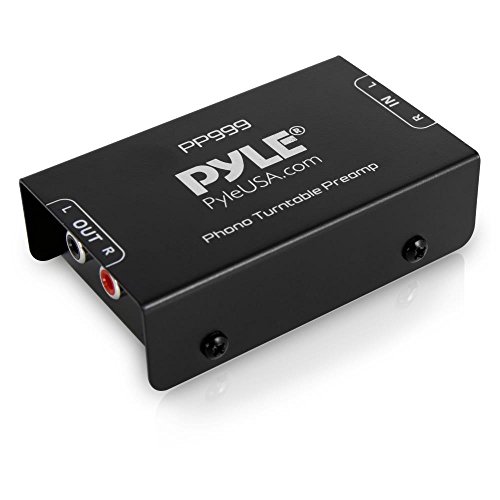
The Pyle PP999 converts phono signals to line level, enabling a turntable to feed modern receivers or powered speakers without an dedicated phono input. It supports magnetic cartridges with a 3 mV input sensitivity at 50K ohms and offers low-noise operation with standard 2V max output (p-p) at 10K ohms. Best for retro setups, computer desks, or dorm rooms where turning a turntable into a straight line signal is needed. Consider proximity to the audio source to minimize interference.
Who it’s best for and why: Choose this if you want to connect a legacy turntable to modern gear without a dedicated phono input. Limitation: It relies on external placement for optimal noise performance and may require physical routing considerations in tight spaces.
Important features:
- Phono-to-line conversion
- Low-noise operation
- 2V max output at 10K ohms
Fosi Audio MC331 Tube Integrated Amplifier With DAC
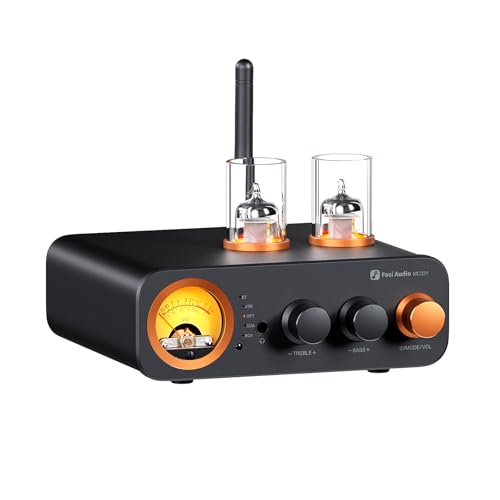
The MC331 is an all-in-one DAC, amp, preamplifier, and headphone amp. It features USB and Bluetooth inputs along with coaxial, optical, and RCA connectivity. The inclusion of vacuum tubes and a VU meter provides a warm aesthetic and sound, combining modern digital inputs with a vintage vibe. Best for compact hi-fi setups seeking a single unit to drive speakers and headphones while providing flexible source options.
Who it’s best for and why: Best for listeners who want a single device to handle digital sources and analog inputs with a touch of tube warmth. Limitation: As an integrated amp, it may be bulkier and more feature-rich than needed if you only want a simple mic or phono preamp.
Key features:
- Integrated DAC, amp, preamp, and headphone amp
- Bluetooth, USB, coaxial, optical, and RCA inputs
- Vacuum tube aesthetic with VU meter
Fosi Audio P4 Mini Preamp

The P4 Mini Preamp offers three RCA inputs and a motorized volume control with three-level gain options (3/6/9 dB). It includes bass and treble controls and a remote for easy setup, making it suitable for multi-source listening rooms, home studios, or small PA setups. Best for users who need seamless source switching and precise tone adjustments without stepping up to a full mixer or processor.
Who it’s best for and why: Choose this when you need a compact, versatile preamp that handles several RCA sources with convenient tone controls. Limitation: It lacks built-in phono stage for direct turntable use unless your turntable has its own preamp or you’re using line-level sources.
Highlights:
- Three RCA inputs with source switching
- Three-level gain and tone controls
- Motorized potentiometer for smooth adjustments
KH866 12V RCA Preamplifier For Phono And Line Levels

The KH866 is a 12V phono preamplifier designed to raise weak turntable signals to line level. It uses dual NE5532 op-amps to minimize noise and improve signal clarity. It supports a maximum impedance of 16 ohms for optimal listening and includes a headphone amp output for private listening separate from other outputs. Best for simple, dedicated phono amplification in compact spaces.
Who it’s best for and why: Best for users needing clean phono amplification with dedicated headphone output and straightforward operation. Limitation: It emphasizes phono use; those needing versatile line-level sources might prefer a multi-input preamp.
Representative features:
- Phono preamplification with gain up to 20 dB
- Dual NE5532 circuit for noise reduction
- Dedicated headphone output
Buying Guide: Key Considerations For Preamps And Phono Preamps
What type of device do I need?
Determine whether you need a mic preamp (for vocals and microphones), a phono preamp (for turntables without built-in phono stages), or a multi-input preamp (for multiple sources). If you work primarily with microphones, prioritize low-noise, phantom-powered units. If you use vinyl, a phono preamp with proper gain and RIAA equalization is essential.
How much gain and noise matter?
Look for a preamp with clean gain (measured in dB) and a fully balanced circuit when possible to minimize noise and hum. In studios, ultra-low noise designs preserve the natural character of mics. For turntables, ensure the phono stage provides suitable gain and low noise to maintain signal integrity.
Phantom power and microphone compatibility
Phantom power (48V) is required for condenser mics. If you only use dynamic mics, phantom power may be unnecessary but having it offers versatility. Check compatibility with your mic types and impedance requirements.
Inputs, outputs, and integration
Assess how many sources you need and which outputs you require (RCA, XLR, USB, etc.). For simple setups, a compact preamp with several RCA inputs and a line-level output may suffice. For integrated systems, consider DACs and built-in EQ or tone controls.
Placement and space considerations
Compact units save desk space and reduce signal path length. However, ensure adequate cooling and easy access to controls and phantom power switches if you rely on them regularly.
Budget and future-proofing
Prioritize essential features first. If you plan to expand later, choose a flexible preamp that can handle additional inputs or connect to an external DAC, mixer, or audio interface without replacing the unit.
Quick comparison at a glance
- Best for vocal mic work: FOSA Microphone Preamp — clean, low-noise gain with phantom power.
- Best for turntable to line-level: Pyle PP999 — simple phono-to-line conversion for any system.
- Best for integrated DAC and warmth: Fosi MC331 — tube vibe with modern inputs.
- Best for multi-source control: Fosi P4 — multiple RCA inputs and motorized gain.
- Best for dedicated phono and headphone: KH866 — clean phono stage with headphone output.
FAQ: Quick answers for buyers
- What is a preamp used for? It amplifies low-level audio signals from mics or turntables to line level for recording or playback.
- Do I need phantom power? Use it if you have condenser mics; dynamic mics work without it, but some preamps require it.
- Can I connect multiple sources to one preamp? Yes, if the preamp offers multiple inputs; consider an external mixer for many sources.
- Is a tube preamp better? Tube stages add harmonic warmth; they are a preference, not a necessity, for most critical material.
- What should I avoid when buying? Avoid preamps with excessive noise or limited gain for your mic or turntable; ensure compatibility with your gear.
- Do I need a dedicated phono preamp for vinyl? Yes, phono preamps provide RIAA equalization and appropriate gain for turntables without built-in preamps.