
Compact Guide: Below are top powered subwoofers and related powered bass solutions selected for pro audio use, home theater, studio monitoring, and multimedia setups. The quick summary table highlights each pick and its core strength.
| Product | Brand | Core Strength |
|---|---|---|
| PreSonus Eris Sub 8BT | PreSonus | Studio-Grade Compact Subwoofer With Bluetooth |
| SVS SB-1000 Pro Sealed Subwoofer | SVS | High-Performance Sealed Pro Sub With DSP |
| Behringer Eurolive B1200D-PRO | Behringer | Portable 12″ Powered Sub For Live Sound |
| Polk Audio PSW10 | Polk Audio | Compact 10″ Home Theater Subwoofer |
| Fosi Audio BT30D Pro (Subwoofer Amp) | Fosi Audio | High-Power 2.1 Amplifier For Passive Subs |
PreSonus Eris Sub 8BT — 8″ Powered Subwoofer

The PreSonus Eris Sub 8BT Is A Compact, Front-Firing Active Subwoofer Designed For Studio Reference, Home Audio, And Multimedia Use. It Offers Bluetooth Wireless Connectivity For Convenient Streaming And A 100-Watt Amplifier That Reaches Down To 30 Hz.
- Features Referenced: Woven-composite 8″ woofer for tight, accurate bass; 100 W power; Bluetooth wireless; front-firing design.
- Use Cases: Nearfield studio monitoring where accurate low-frequency extension is needed in a small footprint.
- Adaptive Notes: Compact size suits desktop or small-room placement; tailorable for mixing and listening where space is limited.
SVS SB-1000 Pro Sealed Subwoofer (Black Ash)
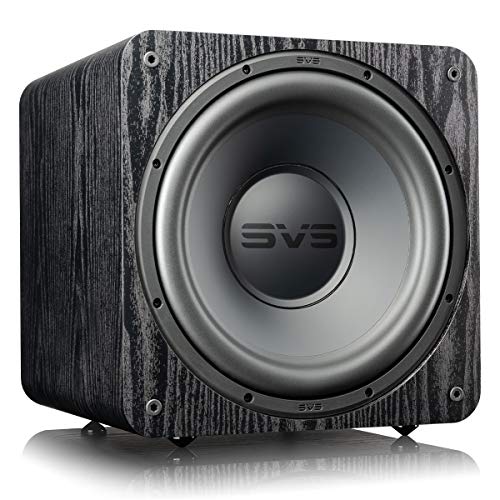
The SVS SB-1000 Pro Is A Compact, High-Output Sealed Subwoofer Intended For Critical Listening, Home Theater, And Professional Audio Applications. It Combines A High-Excursion 12″ Driver With A Powerful Built-In Amplifier And Advanced DSP For Precise Control.
- Features Referenced: 325 W RMS Class D (Sledge STA-325D) with peak capability; 12″ high-excursion driver; 50MHz DSP for room tuning and accurate frequency response.
- Use Cases: Small-to-medium rooms requiring deep extension and tight control—suitable for professional mixes and immersive home theater bass.
- Adaptive Notes: Sealed enclosure favors accuracy and transient response; DSP tuning helps integrate with room acoustics and mains speakers.
Behringer Eurolive B1200D-PRO 12″ Powered Subwoofer

The Behringer Eurolive B1200D-PRO Is A 12″ Powered Subwoofer Geared Toward Live Sound And Portable PA Applications. It Includes Front-Facing Controls For Crossover And Filters To Integrate With PA Systems.
- Features Referenced: 12″ driver with built-in crossover; variable high-cut filter; high-pass filtered outputs for satellite speakers.
- Use Cases: Live sound reinforcement, mobile DJs, small venue PA augmentation where portability and built-in filtering simplify setup.
- Adaptive Notes: Designed For Stage/PA Integration; rugged build and crossover options help combine with active satellites or mixers.
Polk Audio PSW10 10″ Powered Subwoofer
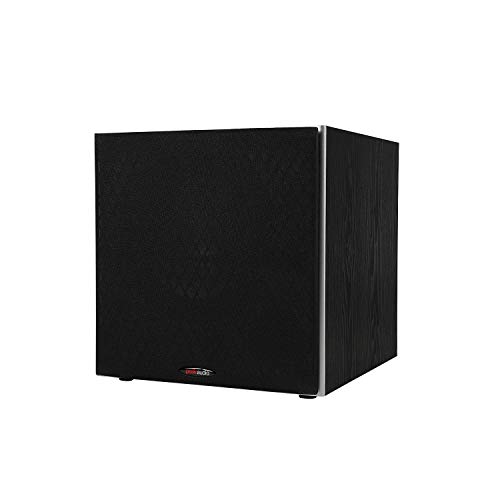
The Polk Audio PSW10 Is A Compact 10″ Powered Subwoofer Targeted At Home Theater And Stereo Systems. It Uses Polk’s Directed Port And Dynamic Balance Woofer To Deliver Deep, Tuned Bass From A Small Cabinet Footprint.
- Features Referenced: 10″ Dynamic Balance woofer; directed Power Port technology; built-in amplifier up to 100 W dynamic power.
- Use Cases: Home theater systems in small-to-mid-size rooms, or as an entry-level studio subwoofer when budget and space are constraints.
- Adaptive Notes: Ported design increases output efficiency at low frequencies; consider room placement to minimize port-induced boominess.
Fosi Audio BT30D Pro 2.1 Subwoofer Amplifier

The Fosi Audio BT30D Pro Is A 2.1 Integrated Amplifier With Dedicated Subwoofer Outputs And DSP-Like Controls For Passive Subwoofers. It Uses High-Performance TPA3255 Class-D Chips To Deliver High Power And Low Distortion.
- Features Referenced: Two speaker outputs plus passive subwoofer output; 165 W x 2 + 350 W sub capability; SUB FREQ and SUB VOL control knobs for precise tuning.
- Use Cases: Users Who Prefer To Use Passive Subwoofers Or Want A Versatile Amplifier To Drive Passive Subs In 2.1 Desktop, Bookshelf, Or Outdoor Setups.
- Adaptive Notes: Offers flexibility for upgrading passive subs to pro-level power without swapping speakers; frequency and volume controls help match the sub to main speakers and room acoustics.
Buying Guide: How To Choose A Pro Audio Powered Subwoofer
Selecting A Powered Subwoofer For Pro Audio Or Home Theater Involves Several Interconnected Factors. Below Are Key Considerations And Comparison Perspectives To Help Match A Subwoofer To Your Needs.
Application And Room Size
Determine Primary Use: Studio Monitoring Requires Tight, Accurate Bass And Often Benefits From Sealed Designs And DSP Room Tuning. Home Theater Often Prioritizes Output And Extension—Ported Or Large Drivers May Be Preferred. Live Sound Favors Rugged Enclosures, Built-In Crossovers, And High Output.
Driver Size And Enclosure Type
Larger Drivers (10–12″+) Typically Produce Deeper, Louder Bass; Smaller Drivers (8″) Offer Faster Transients And Fit Small Rooms Better. Sealed Enclosures Deliver Accurate, Controlled Bass Ideal For Mixing. Ported Enclosures Increase Efficiency In The Low End But Can Be Less Tame In Challenging Rooms.
Amplifier Power And Headroom
Look For RMS Power Ratings And Amplifier Class. Class D Amplifiers Provide Efficient, High-Current Output In A Compact Package. Higher RMS Power Gives Better Headroom For Peaks, While DSP/High-Quality Amplifiers Reduce Distortion.
Connectivity And Integration
Studio Subs May Require XLR Or TRS Inputs For Balanced Connections; Home Theater Subs Commonly Use RCA/LFE Inputs. Some Subs Offer Wireless Options (Bluetooth) For Ease Of Placement. Ensure The Sub’s Crossover And Phase Controls Provide Fine-Tuning To Match Mains.
Room Tuning And DSP
DSP-Based Subs Enable EQ And Room Correction Which Can Dramatically Improve Performance In Untreated Rooms. If You Expect To Use A Sub In A Variety Of Spaces, DSP And Detailed Controls Are Highly Beneficial.
Placement And Acoustic Considerations
Subwoofer Location Strongly Affects Perceived Bass. Corners Raise Output But Can Cause Boominess; Nearfield Placement Can Aid Clarity For Studio Work. Consider Room Treatment And Bass Traps For Critical Listening Environments.
Portability And Build Quality
For Live Sound And Touring, Rugged Cabinets And Handles Matter. For Studio Or Living Room Use, Finish, Size, And Aesthetics May Factor Into The Decision.
Active vs Passive Solutions
Active (Powered) Subs Include The Amplifier—Simpler Setup And Matched Electronics. Passive Subs Require An External Amplifier Or A Dedicated Amp Like The Fosi BT30D Pro, Which Provides Flexibility To Drive Custom Drivers Or High-Power Systems.
Comparison Perspectives
- Accuracy Focus: Choose sealed, DSP-equipped subs (e.g., SVS SB-1000 Pro) for mixing and reference listening.
- Output Focus: Larger, ported or high-power subs (10–12″+) for movie impact and larger rooms (e.g., Polk PSW10 or larger alternatives).
- Live/PA: Portable, filter-equipped subs with XLR/pass-throughs (e.g., Behringer B1200D-PRO) for ease of integration in live settings.
- Modular/DIY Flexibility: Use a high-power subwoofer amplifier (e.g., Fosi BT30D Pro) to drive passive custom subs for tailored performance.
Use The Above Criteria To Narrow Choices Based On Room Size, Application, And Expected Bass Character. Proper Integration—Placement, Crossover Setting, And Phase—Is As Important As The Subwoofer’s Raw Specs.