Best Professional Digital Audio Mixers for Studio and Live Use
Answer: Professional digital audio mixers provide advanced routing, built-in effects, and multi-channel USB interfaces for serious recordings and performances. This guide highlights five top options and clarifies who they’re best for. Ideal buyers include live sound engineers, studio producers, podcasters, and multi-instrument performers seeking control, flexibility, and reliable sound with minimal setup.
Chosen products at a glance:
| Product | Type | Best For | Key Benefit |
|---|---|---|---|
| Behringer X AIR XR18 | 18-channel digital mixer | Stage and studio pros needing tablet control | 16 MIDAS preamps and built-in Wi-Fi router |
| Behringer FLOW 8 | 8-input digital mixer | Remote-controlled small setups | Bluetooth app control and compact form |
| YAMAHA MG10XU | 10-channel mixer with effects | Home studios and small venues | Studio-grade preamps and SPX effects |
| Yamnweo MD-14 | 14-channel mixer | Live performances and studio use | 99 DSP effects and Bluetooth/USB playback |
| Depusheng 5-Channel Mixer | 5-channel mixer with USB/Bluetooth | Mobile streaming and podcasts | 256 DSP effects and 48V phantom power |
Behringer X AIR XR18 18-Channel Digital Mixer
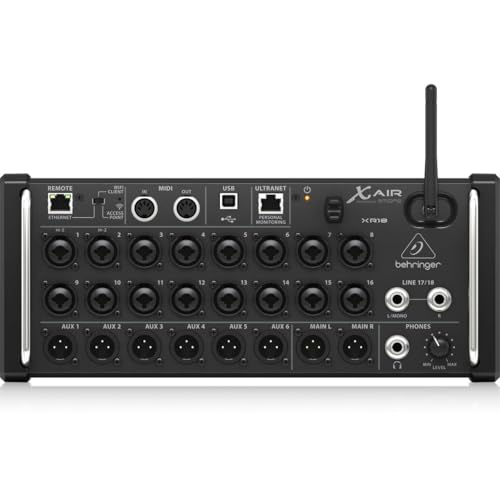
This 18-input digital mixer is controlled via iPad or Android tablets and includes 16 MIDAS-designed mic preamps for high-quality sound. It features a built-in Tri-mode Wi‑Fi router, enabling direct operation without extra hardware. Best for: live venues or studios needing extensive input routing and wireless control. Limitation: more complex setup may require initial learning for full automation.
Behringer FLOW 8 8-Input Digital Mixer

FLOW 8 offers ultra-low noise, Bluetooth remote control, and app-based operation. With 60 mm channel faders and a master control, it suits small gigs or streaming setups where wireless control from phones or tablets is advantageous. Best for: mobile or minimalist setups needing remote access. Caution: Bluetooth limits may affect latency-sensitive monitoring in some environments.
YAMAHA MG10XU 10-Input Stereo Mixer

MG10XU delivers 10 inputs with SPX digital effects and discrete class A preamps for a clean, musical sound. It includes simple routing, EQ, and high-pass filtering to reduce noise. Best for: home studios and small stages seeking reliable, user-friendly effects and good headroom. Limitation: fewer channels than larger digital models.
Yamnweo MD-14 14-Channel Mixer
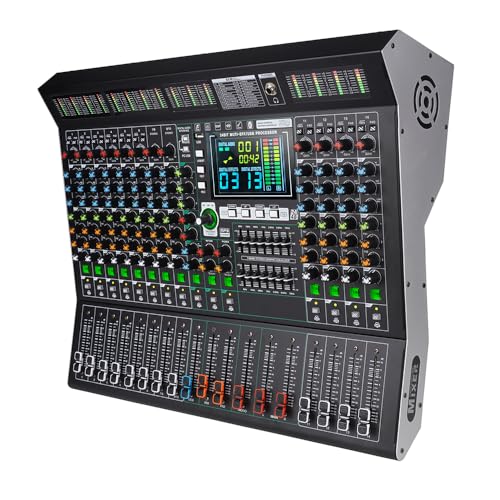
This 14-channel mixer includes 99 DSP effects and a Bluetooth USB interface for versatile playback and live processing. Large LED display supports real-time monitoring, making it suitable for stage and studio environments. Best for: performers and engineers needing a broad effect library and straightforward USB playback. Caution: feature set may be more than necessary for ultra-simple tasks.
Depusheng 5-Channel Professional Audio Mixer

Depusheng’s 5-channel mixer includes USB/flash reader compatibility and Bluetooth streaming, plus a 48V phantom power option for condenser mics. Suitable for mobile podcasts or small live streams. Choose this if you need a compact, budget-friendly option with versatile input methods, and be mindful of lower channel count for larger groups.
Buying Guide
What should you consider when choosing a professional digital mixer?
- Channel count and inputs: Match the number of mic and line inputs to your typical setup. More channels enable bigger live setups but may add complexity.
- Built-in effects and processing: DSP, reverb, EQ, and dynamics can reduce external gear and simplify on-site adjustments.
- Connectivity and control: Tablet or phone control, USB audio interface capability, and Bluetooth compatibility affect workflow and mobility.
- Preamps and headroom: Preamps determine clean gain and noise performance. Look for reputable designs (e.g., MIDAS or discrete analog paths) for higher quality.
- Routing flexibility: Consider how easily you can route inputs to buses, subgrouping, and main outputs for live or studio tasks.
- Size, portability, and power: For mobile use, weight and power options matter. Ensure the unit fits your stage or desk space.
- Reliability and firmware: Regular updates and stable drivers reduce mid-show issues. Consider devices with active support communities.
Practical comparison tips
- Best for wireless control: Behringer X AIR XR18 and FLOW 8 offer strong app-based control for remote mixing.
- Best for studio-grade preamps: XR18 with MIDAS preamps and MG10XU with SPX effects.
- Best for stage-focused DSP: Yamnweo MD-14 provides a wide effect library and clear LED feedback.
- Best on a budget or compact travel: Depusheng or Kaschun options provide essential features with small footprints.
FAQ
- What is a digital mixer good for?
- Do I need built-in Wi‑Fi to use a digital mixer?
- Are DSP effects worth it?
- How many channels should I start with?
- Is Bluetooth on a mixer a plus or a problem?
- What’s the difference between consumer and professional mixers?
Digital mixers consolidate routing, effects, and USB audio interfaces in one unit, reducing external gear and simplifying on-site setup.
No, but built-in Wi‑Fi or app control can simplify wireless operation and monitoring from tablets or phones.
Yes, DSP effects save space and money by integrating reverbs, delays, and EQ into the mixer itself, streamlining workflows.
Begin with 8–14 channels for most small venues or home studios; add channels as your needs grow.
Bluetooth is convenient for streaming music or backing tracks but can add latency for live monitoring. Use wired monitoring for critical cues.
Professional mixers emphasize higher headroom, better mic preamps, robust routing, and more reliable build quality suitable for live use.