
Best Professional Surround Sound System for Home Theaters
Answering the search for a professional surround sound system, this guide highlights five top choices suited for true home theater enthusiasts and serious listeners. Each option targets a different setup need—compact consoles with Atmos, multi-room virtual surround, or robust 5.1 and 7.1 configurations. The buyer profiles below help you pick the system that best fits room size, cabling tolerance, and desired ease of use.
The following table compares key traits of the featured products to aid quick decisions. Columns show system type, primary surround approach, number of channels, and notable strengths.
| Product | System Type | Channels | Best For |
|---|---|---|---|
| ULTIMEA 5.1CH Surround Sound Bar System with Dolby Atmos, Poseidon M60 | Bar with built-in drivers + subwoofer | 5.1 | Small to medium rooms seeking Dolby Atmos without rear speakers |
| ULTIMEA 7.1ch Sound Bar w/Subwoofer, Virtual Surround System for Smart TV | Soundbar with wireless rear speakers | 7.1 | Rooms where rear wiring is possible, benefit from virtual surround |
| ULTIMEA 7.1ch Surround Sound System for TV with Dolby Atmos, Aura A60 Pro | Bar with wireless rear speakers | 7.1 | Spacious rooms needing immersive Atmos with flexible layout |
| ULTIMEA 5.1.2ch Sound Bar with Dolby Atmos | Sound bar with up-firing Atmos drivers | 5.1.2 | Immersive ceiling-like height effects in mid-sized rooms |
| Saiyin Sound Bar with Subwoofer | Standalone sound bar + subwoofer | 2.1 | Budget-friendly, simple setup for movies and gaming |
ULTIMEA 5.1CH Surround Sound Bar System with Dolby Atmos

This 5.1-channel system integrates real Dolby Atmos and five built-in drivers, including side-firing units for wide dispersion without rear speakers. It is best for small to mid-sized living rooms where a sleek, single-unit setup is preferred. The 300W peak output and 45 Hz–18 kHz range deliver substantial bass and clarity, with a maximum SPL around 99 dB for dynamic scenes. VoiceMX enhances dialogue in real time, helping speech cut through effects during movies and broadcasts. It scores strongest for users who want Atmos immersion without running speaker wires around the room.
Best for: compact spaces, users who prioritize clear dialogue and simple setup.
Caution: The system uses built-in drivers; for larger rooms or true rear-channel separation, consider models with additional rear speakers.
ULTIMEA 7.1ch Sound Bar w/Subwoofer, Virtual Surround System

This system uses a 7.1-channel virtual surround approach with three front channels and four surrounds, delivering a broad soundstage. It relies on SurroundX technology and AI tuning to align speaker timing and spatial cues for immersive theater-like playback. Front surround cables connect the bar to two front surrounds while rear surrounds pair wirelessly. This option suits rooms where some rear wiring is feasible and you want clearer dialogue with a robust surround spread. It is better for users who want a larger cinematic footprint without full 7.1 wiring.
Best for: living rooms where rear wiring is possible, desire for precise motion and surround cues.
Caution: Wireless pairing can require precise setup; a dedicated remote and manual steps may be needed for initial connection.
ULTIMEA 7.1ch Surround Sound System for TV with Dolby Atmos

This Aura A60 Pro system emphasizes a 7.1-channel layout with four surrounds and wireless rear connectivity. Dolby Atmos adds height dimensions, delivering a three-dimensional soundscape in spaces sized 108–270 ft². The wired front and rear surrounds provide stable placement, while wireless pairing minimizes cable clutter. Best for users seeking a comprehensive Atmos experience with flexible room design, especially if you want a boosted cinematic feel without a full-blown multi-speaker array.
Best for: mid-to-large rooms, Atmos enthusiasts who want a dedicated 7.1 setup with flexible rear placement.
Caution: May require more space and careful speaker placement to maximize height and width effects.
ULTIMEA 5.1.2ch Sound Bar with Dolby Atmos

This 5.1.2-channel system adds up-firing Atmos drivers and dual rear surrounds to build a true 360-degree experience. The neodymium-based up-firing drivers and 18-core voice coils aim to lift height cues with precision, delivering a capable Atmos presentation in mid-sized rooms. The SurroundX approach with rear surrounds and up-firing elements helps create an enveloping soundstage. Note that it is not compatible with DTS in some configurations, which may matter for certain content libraries.
Best for: Atmos fans wanting height effects and a tall soundstage in moderate spaces.
Caution: Not compatible with DTS; verify content compatibility if you use DTS-encoded sources.
Saiyin Sound Bar with Subwoofer
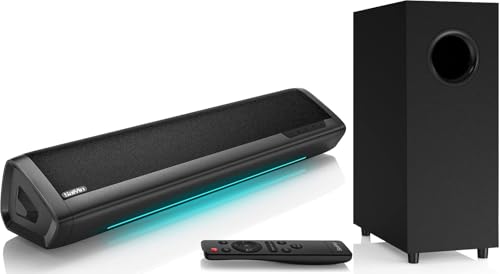
This budget-friendly option combines a sound bar with a dedicated subwoofer for deeper bass and a more immersive movie experience. The three-color LED indicators help identify connection modes, and there are three EQ modes to tailor sound to news, movies, or music. It provides a simple 2.1-channel footprint with practical cable management and a remote for basic control. Best for users seeking straightforward setup and reliable overall sound without complex wiring.
Best for: budget-conscious buyers who want simple, effective cinema-grade sound without multiple subwoofers or rear speakers.
Caution: Lacks true multi-channel surround; may not satisfy seekers of full immersive surround in larger rooms.
Buying Guide: Key Purchase Considerations
What room size and layout should guide your choice?
Smaller spaces benefit from compact systems with built-in Atmos or fewer external speakers. Medium to large rooms may justify 5.1 or 7.1 configurations with rear surrounds and wireless connections. Consider cable routing, available wall space, and whether your layout supports rear speakers or wireless options.
Do you prefer wired reliability or wireless flexibility?
Wired connections provide stable, consistent audio timing and fewer interference issues. Wireless rear speakers offer clutter-free setups but may require occasional syncing steps. Evaluate your tolerance for setup steps and potential pairing issues.
What about height and Atmos considerations?
Systems with up-firing Atmos drivers or dedicated height channels deliver vertical sound cues. Ensure room height and seating distance support height effects for a convincing Atmos experience.
How important is dialogue clarity?
Look for DSP features that isolate dialogue (such as VoiceMX or AI-based tuning). Clear dialogue is especially valuable in action films or streaming shows with dense sound effects.
Are there compatibility or format concerns?
Dolby Atmos, SurroundX, DTS compatibility, and up-firing channels affect performance with various content sources. Verify that your preferred streaming devices, TVs, and media players align with the system’s supported formats.
Setup and usability considerations
Some models emphasize ultra-fast setup (under one minute) while others require several steps to pair rear speakers or configure remote controls. Choose a system whose setup process matches your comfort level.
Maintenance and future-proofing
Consider firmware update options, input types (HDMI ARC/eARC, optical, AUX), and whether the system can adapt to future home theater upgrades.
FAQ
- What is the difference between 5.1 and 7.1 channels? 5.1 uses five full-range channels plus a subwoofer; 7.1 adds two rear surrounds for broader ambient sound and more precise motion cues.
- Is Atmos worth it for a living room setup? Atmos enhances height and width perception, especially in larger rooms or with compatible content; if you mostly watch TV shows, a strong 5.1 or 7.1 system may suffice.
- Do wireless rear speakers degrade audio quality? In modern systems, wireless rear modules are designed to minimize latency and noise, though occasional pairing or wireless interference can occur in crowded environments.
- Can I upgrade a soundbar later with additional speakers? Some systems support expandability via wireless rear units; check manufacturer compatibility before purchasing.
- What input should I use for best sound? HDMI ARC/eARC typically delivers the most reliable, high-fidelity path from TV to sound system.
- Are these systems cabled for easy wall mounting? Many options are designed for easy placement on a shelf or mount with clean wiring; verify mounting options in product specs.