
Best Quick Tune Guitar Tuners for Fast, Accurate on-the-Go Tuning
When speed and reliability matter, a quick tune guitar tuner helps you stay in key without slowing down your performance. This guide highlights top clip-on and pedal tuners designed for guitars and other strings, suited for stage shows, practice rooms, and studio work. If you’re a guitarist who plays live, a beginner seeking confidence in tuning, or a multi-instrument player, these picks deliver clear visual feedback, fast response, and practical versatility.
Below is a concise buying overview of five standout tuners. The table compares type, best use case, and standout feature to help you decide at a glance.
| Product | Type | Best For | Key Benefit |
|---|---|---|---|
| Fender FCT-2 | Clip-On | Live vocal/piano rooms and loud venues | Accurate vibration sensing with visual LCD feedback |
| Snark ST-2 | Clip-On | Travel players needing cordless convenience | Rechargeable with bright full-color display |
| Donner DT-1 Pedal | Pedal | Electric guitar and bass on stage | Wide range, two modes, low noise |
| D’Addario Nexxus 360 | Clip-On | Quick tunings with long battery life | Rechargeable with 24 hours of tuning |
| TC Electronic PolyTune Clip | Clip-On | Polyphonic and chromatic on stage | 108-LED matrix for fast polyphonic tuning |
Fender FCT-2 Professional Multi-Instrument Clip-On Tuner

The Fender FCT-2 uses vibration sensing to stay accurate in loud venues, quiet practice rooms, or anywhere in between. It supports Guitar, Bass, Ukulele, Violin, and Chromatic modes, so one unit covers a wide range of instruments. The color LCD needle display guides tuning quickly, reducing guesswork during performances.
Best for: players who need a single device across multiple instruments and who perform in variable environments. Why selected: its cross-instrument versatility and direct visual feedback help avoid over-tuning or tuning mistakes during quick changes.
Limitation: reliance on vibration sensors may be affected by extreme stage noise or mechanical vibrations, though the design mitigates this with dedicated instrument modes.
Snark ST-2 Chromatic Multi-Instrument Tuner

The Snark ST-2 offers a rechargeable design and a bright full-color display with 360° rotation, making it easy to view from any angle on stage or in the studio. It provides ultra-accurate tuning with a wide frequency range (adjustable pitch calibration from 415–466 Hz).
Best for: musicians who need flexible viewing angles and long battery life. Why selected: the rotating display and eco-friendly rechargeable power suit mobile players and frequent performers.
Caution: rapid environment changes can require quick rechecks; ensure the tuner is positioned to pick up vibration clearly on your instrument.
Donner DT-1 Tuner Pedal for Guitar and Bass
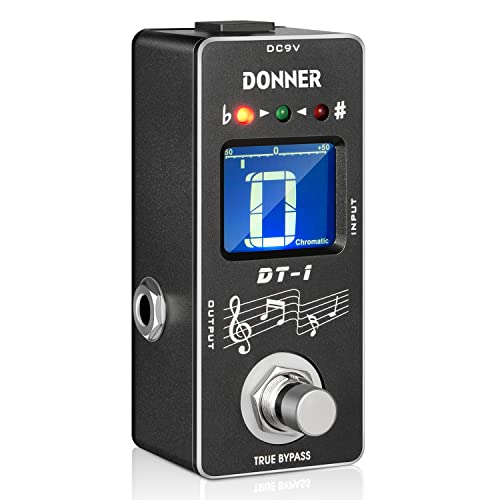
The Donner DT-1 provides a wide tuning range from A0 to C8 with a fast strobe mode offering +/- 1 cent accuracy. It includes two modes: tuning mode (with signal cut) and bypass mode (no detuning). The color LED display is bright and easy to read on large stages or outdoor venues.
Best for: electric guitarists and bass players who perform through amps and need a reliable pedal that integrates into effect chains. Why selected: its dual-mode operation reduces interruptions and keeps your tone intact during tuning.
Limitation: clip-on tuners can be more convenient in tight spaces; pedal form requires an effects loop or pedalboard space.
D’Addario Nexxus 360 Rechargeable Clip-On

The Nexxus 360 offers quick tuning with a large display and a 360-degree rotating clamp for flexible viewing angles. It’s rechargeable, delivering up to 24 hours of tuning per charge. The wide calibration range (415–465 Hz) ensures precise tuning across standard and alternate tunings.
Best for: players who want long battery life and easy angle adjustments during performances. Why selected: the rotating clamp and rechargeable battery make it ideal for gigging musicians who don’t want to replace batteries frequently.
Caution: some users may prefer non-rechargeable models for simplicity in fixed setups, though the Nexxus 360 eliminates battery maintenance.
TC Electronic PolyTune Clip
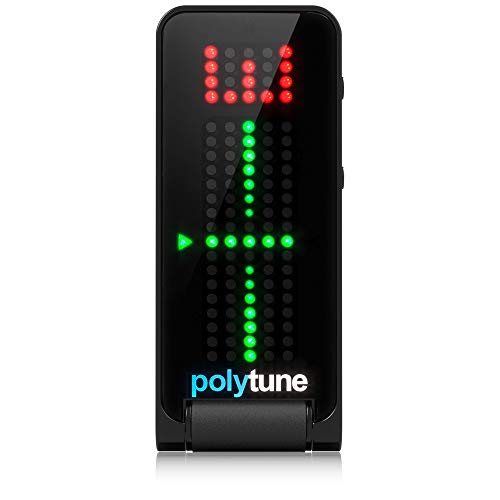
The TC Electronic PolyTune Clip combines polyphonic and chromatic modes with an adaptive LED matrix display for quick tuning. The clip-on design is easy to attach to most headstocks, and multiple tuning modes support fast on-stage adjustments. This model emphasizes speed and visibility in performance environments.
Best for: players who want rapid guitar tuning with quick polyphonic checks during setups. Why selected: its polyphonic capability improves efficiency when tuning multiple strings at once, beneficial for stage setups.
Limitation: polyphonic displays may be less intuitive for absolute beginners who prefer single-note tuning to start with.
Buying Guide: Quick-Tune Guitar Tuner Essentials
- Clip-on vs pedal: Clip-ons are compact and stage-friendly; pedals integrate into pedalboards but require space and power. Pick based on playing style and setup.
- Power and battery life: Rechargeable tuners reduce ongoing costs but ensure an available charging method. If you travel, consider models with long battery life.
- Display and readability: Look for bright, high-contrast displays with easy-to-read indicators in various lighting conditions. Rotating or swiveling displays are advantageous on stage.
- Tuning range and modes: Most players use standard tuning, but a wide range and chromatic or alternative tunings expand versatility. Polyphonic or strobe modes speed up tuning for busy performances.
- Instrument compatibility: Ensure the tuner supports all your instruments (guitar, bass, ukulele, violin, etc.). A single device with multiple modes can simplify gear.
- Accuracy and calibration: Cent-level accuracy matters for performance. Check calibration range (commonly 415–466 Hz) if you experiment with tunings.
- Durability and build quality: Stage environments demand sturdy housings and reliable clamps or clip mechanisms to prevent detaching during use.
FAQ
- What is the difference between a clip-on tuner and a pedal tuner?
Clip-on tuners attach to the headstock and detect vibration or sound; pedal tuners sit on a pedalboard and are activated by foot, often offering bypass options for performance continuity. - Which tuner is best for multi-instrument players?
A tuner with multiple instrument modes (Guitar, Bass, Ukulele, Violin) and a clear visual interface is ideal, such as clip-ons with dedicated instrument modes or polyphonic readiness. - Do rechargeable tuners require regular charging?
Yes. They save battery costs but require periodic charging, especially for frequent gigging or long studio sessions. - Is polyphonic tuning useful on stage?
Yes. It allows checking multiple strings quickly, accelerating setup and tuning between songs, but beginners may prefer single-note precision first. - What should I consider for lighting conditions?
Choose tuners with bright, high-contrast displays or rotating screens to maintain readability under bright stage lights or dim practice rooms. - Can I tune other instruments with these tuners?
Many support Chromatic mode and a broad frequency range, enabling tuning for instruments like violin and ukulele, depending on the model.