
Best Radios From the 1950s Era: Vintage Style Meets Modern Sound
Looking for authentic 1950s radio vibes with today’s convenience? This guide highlights five standout options that capture the era’s charm while delivering reliable performance. The top picks are best for retro enthusiasts, collectors, bedrooms with vintage décor, and gift buyers seeking a nostalgic centerpiece. Below is a quick summary and then detailed product sections to help you compare at a glance.
| Product | Best For | Why It Stands Out |
|---|---|---|
| Crosley CR1120A-SI Diner Jukebox Radio, Silver | Retro lovers who want Bluetooth streaming | Authentic diner-style design with Bluetooth and FM radio |
| QFX Retro Portable Transistor Pocket AM FM Radio, RETRO-1958, Wood | Minimalists who prefer pocket-size nostalgia | Completely analog feel with a tiny, portable footprint |
| Victrola Haley – Retro Bluetooth Record Player with CD Player – Red | Vinyl lovers who want modern convenience | Three-speed turntable plus Bluetooth and CD options |
| Victrola Haley – Retro Bluetooth Record Player with CD Player – Black | Bedroom or living room décor with bold contrast | Same features as red model, stylish black finish |
| 1950s Radio in Color: The Lost Photographs of Deejay Tommy Edwards | Collectors and readers interested in 1950s radio history | Kept for its historical photography and cultural context |
Crosley CR1120A-SI Diner Jukebox Radio, Silver
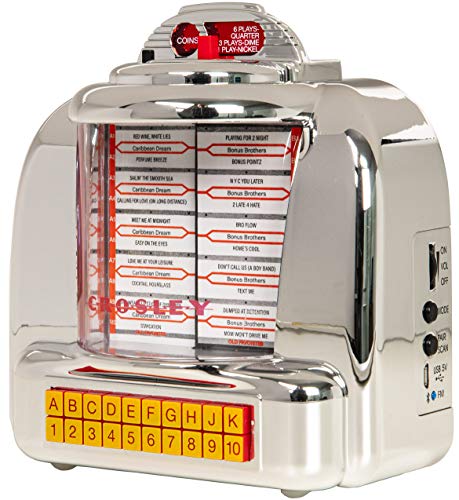
The Crosley CR1120A-SI blends retro diner aesthetics with modern streaming. It features a Bluetooth speaker for wireless audio, FM radio, and authentic retro flair with flip cards and faux song selectors. This model is best for those who want a nostalgic look without sacrificing on-device wireless listening. The built-in full-range speaker makes it easy to fill a small room with sound. A practical limitation is the absence of a built-in CD player or advanced smart features, which keeps the focus on simple listening and Bluetooth streaming.
Who it’s best for: Small apartments, kitchen counters, or offices where style and Bluetooth streaming matter.
QFX Retro Portable Transistor Pocket AM FM Radio, RETRO-1958, Wood

The RETRO-1958 from QFX recreates the 1950s transistor radio experience with an analog tuning dial, gold-accented grille, and a compact form factor. It offers AM/FM reception with a simple, hands-on experience that requires no apps or Bluetooth. It’s ideal for purists who want a truly vintage feel and a handheld radio that’s easy to carry. A potential limitation is its pocket size, which means sound output may be less robust in larger rooms.
Who it’s best for: Purists seeking an authentic analog dial and a pocket-friendly design.
Victrola Haley – Retro Bluetooth Record Player with CD Player – Red

The Victrola Haley Red combines a three-speed belt-driven turntable with Bluetooth output and a CD player, delivering a multi-format listening experience. It requires minimal setup and blends vintage aesthetics with modern convenience, making it well-suited for vinyl lovers who also want digital playback. A consideration is the need for occasional belt maintenance and the potential for more pronounced vibrations with heavier playback if the surface isn’t stable.
Who it’s best for: Vinyl enthusiasts who want a single, compact unit for records and CDs plus wireless streaming.
Victrola Haley – Retro Bluetooth Record Player with CD Player – Black

The Black version of the Haley keeps the same three-speed turntable, Bluetooth output, and CD player, but with a bold, contrasting finish that suits darker décor. This option is better for rooms that benefit from a striking focal piece. A limitation is that the size and weight of a combined record player can be more than a pure portable radio, so placement matters for optimal sound and aesthetics.
1950s Radio in Color: The Lost Photographs of Deejay Tommy Edwards

This book offers a historical perspective on 1950s radio culture through color photographs and curated narratives. It’s best for collectors and readers interested in the era’s visual history. It complements the tactile, decorative radio items by providing context about the period’s broadcasting culture. A drawback is that it is not a functional radio device and does not replace listening hardware.
Buying Guide
What should you consider when choosing a 1950s-inspired radio?
- Purpose: Do you want pure nostalgic look, portable listening, vinyl playback, or Bluetooth streaming?
- Display vs. function: Do you prefer a decorative piece or a multifunction entertainment hub?
- Audio quality: Consider speakers, amplification, and room size for the best listening experience.
- Controls: Analog dials offer a tactile feel; digital interfaces provide convenience but may reduce vintage authenticity.
- Power and portability: Battery-powered units are portable, while AC-powered units suit living spaces.
Key differences to compare across models include the presence of Bluetooth, a CD player, or vinyl capability, as well as the authenticity of the vintage design versus modern conveniences. For collectors, the historical context and craftsmanship may weigh more than feature breadth. For casual listeners, integrated Bluetooth or easy AM/FM access can be the deciding factor. Ensure you have a clear placement plan to maximize aesthetic impact while delivering solid sound.
Frequently Asked Questions
- What makes 1950s radios different from modern models?
1950s radios emphasize analog tuning and distinctive styling, often with wood finishes and chrome accents, versus contemporary digital interfaces and streaming capabilities.
- Are retro radios suitable for small apartments?
Yes. Compact models like the QFX Retro 1958 are designed for portability and limited spaces, while others can serve as a stylish focal point in a living area.
- Can I use Bluetooth with these retro-styled units?
Some models, like the Crosley and Victrola Haley, support Bluetooth streaming, enabling wireless playback from modern devices.
- Is a CD player essential on a 1950s radio replica?
Not essential for nostalgia, but it adds versatility for those who own CDs and want a combined listening setup.
- What should I watch for in terms of durability and maintenance?
Look for stable support surfaces, vibration control on turntables, and any belt-driven components that may require occasional servicing.