
Best Receivers for Bookshelf Speakers: Top Amplifier Picks for Clear, Balanced Sound
If you want to pair bookshelf speakers with a reliable receiver or amplifier, you’re in the right place. This guide highlights five solid options that work well with passive bookshelf speakers, catering to different spaces and budgets. Whether you’re setting up a compact living room, a home office, or a small studio, these picks aim to deliver clear highs, controlled bass, and easy setup for everyday listening. The buyer profiles below explain who each device best serves and why.
| Product | Best For | Key Benefit |
|---|---|---|
| Fosi Audio BT20A Bluetooth Stereo Amplifier | Small spaces, beginners | Simple, reliable two-channel power with Bluetooth |
| Daakro AK45 Stereo Audio Amplifier 300W | Versatile control fans | Volume, treble, bass knobs for fine tuning |
| WOOPKER AK45Pro Stereo Amplifier, 400W | Compact rooms, versatility | Multiple inputs including Bluetooth, mic, and USB |
| Polk Audio T15 100 Watt Bookshelf Speakers | Entry-level passive speakers | Clear, balanced sound with wall-mount flexibility |
| Saiyin 5″ Woofer Passive Speaker | Budget-friendly passive option | Clear vocals, compact footprint |
The following five selections are chosen for their compatibility with bookshelf speakers and their ability to serve a range of listening environments. Each entry includes practical notes on who it’s best for and a potential limitation to consider.
Fosi Audio BT20A Bluetooth Amplifier
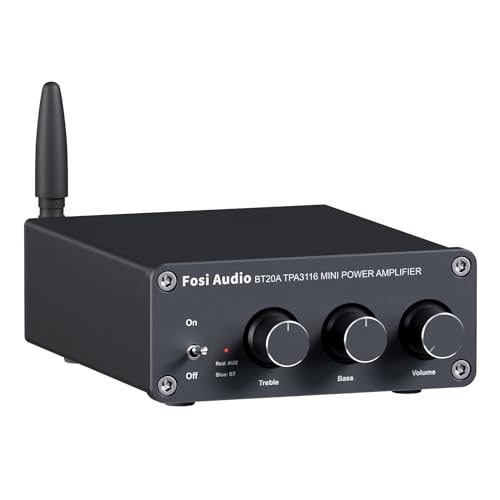
The BT20A offers 100W per channel into two channels, making it a solid entry-level option for powering passive bookshelf speakers. Best for: small living rooms, bedrooms, home offices, or patios where a compact, no-frills setup is preferred. The amplifier is easy to install with a straightforward power switch and built-in tone controls for bass and treble. Caution: ensure your passive speakers are compatible with 8-ohm or 4-ohm loads to avoid mismatched impedance.
Daakro AK45 Stereo Audio Amplifier 300W

The AK45 provides manual volume and tone controls (treble and bass) for precise sound shaping, plus remote control for convenient adjustments from across a room. Best for: users who want more granular control over their sound profile and a simple interface. Limitation: ensure proper isolation when removing shipping materials, as there can be a note about the remote’s setup. Use this when you value on-device and remote tweaking over automatic EQ.
WOOPKER AK45Pro Stereo Amplifier

The AK45Pro emphasizes versatility with multiple input modes, including Bluetooth, RCA, MIC, USB, and SD card compatibility. Best for: compact spaces that still require flexible source options, or a small home studio setup. It also has bass, treble, and master volume controls for fine-tuning. Caution: remote control requires AAA batteries, which are not included.
Polk Audio T15 Passive Bookshelf Speakers

The Polk T15 is a passive bookshelf speaker designed to pair with a separate amplifier or receiver. Best for: users starting a home theater or stereo setup who want clear vocals and a balanced overall sound. Use with a suitable amp to maximize bass and dynamics. Caution: ensure your amplifier can drive 8-ohm loads for optimum performance.
Saiyin 5″ Woofer Passive Speaker

The Saiyin 5″ is a budget-friendly passive option that delivers clear vocals and solid mid-bass. Best for: budget-conscious buyers assembling a small bookshelf system. Limitation: this is a passive speaker and requires an external amplifier or receiver with compatible impedance (4-ohm and similar specs) to perform optimally.
Buying Guide: Choosing the Right Receiver Or Amplifier For Bookshelf Speakers
- Compatibility: Verify that your bookshelf speakers are passive and compatible with the amplifier’s impedance (common values are 4 or 8 ohms). An inappropriate match can reduce volume and sound quality.
- Power needs: Match amplifier wattage to your speaker’s handling. For typical bookshelf speakers, aim for an amplifier that can deliver clean power without excessive distortion at moderate listening levels.
- Inputs and sources: If you want wireless streaming, prioritize models with Bluetooth or other streaming options. If you have a turntable or computer, check for AUX, RCA, or USB inputs.
- Tone controls: Bass and treble controls help tailor the sound to your room acoustics. Consider models with flexible EQ options for room correction.
- Size and placement: Compact amplifiers fit small desks, shelves, or cabinets. Consider a wall-mountable or freestanding form factor depending on your space.
- Remote and ease of use: If you plan to adjust sound from a couch or chair, prefer a model with a remote control and accessible controls on the unit.
- Future expansion: If you anticipate expanding to a larger system, choose an amplifier with enough headroom and multiple inputs to accommodate additional speakers or sources.
Frequently Asked Questions
- What is a bookshelf speaker amp best used for? It powers passive bookshelf speakers to produce audible sound from audio sources.
- Do I need a receiver or amplifier for bookshelf speakers? Yes, passive bookshelf speakers require an external amplifier or receiver to operate.
- Can I use Bluetooth amplifiers with passive speakers? Yes, Bluetooth-enabled amps can stream audio wirelessly to passive speakers, though you’ll still need proper speaker impedance compatibility.
- Which is better for beginners: a simple Bluetooth amp or a feature-rich amplifier? A simple Bluetooth amp is easier to set up; a feature-rich amplifier offers more control for customizing the sound in different rooms or genres.
- What should I look for in terms of power ratings? Look for an amplifier that delivers clean power at the speaker’s recommended impedance without clipping at typical listening levels.
- Are wall-mountable bookshelf speakers worth it? Wall mounting can save space and improve imaging in smaller rooms, but ensure the mounting hardware supports your speaker weight and your wall type.