Best Recording Interface for PC: Top USB Interfaces for Clear Studio-Quality Sound
Finding the right recording interface for PC depends on your needs: solo voice work, guitar tracking, streaming, or multi‑input music production. This guide highlights five solid picks that deliver clean, professional sound and reliable performance. Each option suits different users—from solo podcasters to small studios—so you can choose based on input count, preamp quality, and monitoring features. Below is a quick overview table of the featured products and who they’re best for.
| Product | Best For | Why It Stands Out |
|---|---|---|
| Focusrite Scarlett Solo 3rd Gen | Solo artists, podcasters | Excellent preamps, Air mode, simple setup |
| Focusrite Scarlett Solo 4th Gen | Voice/guitarists and producers | Large dynamic range, improved Air mode, versatile enough for small projects |
| M-AUDIO M-Track Duo | Streamers and dual-input recordings | Two inputs, easy monitoring, solid software bundle |
| Focusrite Scarlett 2i2 4th Gen | Dual-input recordings and small studios | High-fidelity conversion, Auto Gain, Clip Safe |
| PreSonus AudioBox 96 | Portable recording on the go | Two mic preamps, MIDI I/O, portable form factor |
Focusrite Scarlett Solo 3rd Gen USB Audio Interface

The Focusrite Scarlett Solo 3rd Gen offers high-headroom mic preamps and an Air mode that adds brightness to recordings. It is ideal for solo musicians, podcasters, and voiceover artists who want a straightforward setup with studio-quality results. Best for intimate vocal or instrument tracks where a compact interface is preferred. A potential limitation is that it records with two input channels—adequate for solo work but not ideal for heavier multi‑instrument projects.
Focusrite Scarlett Solo 4th Gen USB Audio Interface

The 4th Gen Solo builds on their proven design with an expanded dynamic range and an enhanced Air mode for vocals and guitars. This model suits singers, podcasters, and guitarist‑songwriters who want better clarity and presence in a compact, easy‑to‑use package. Best for those upgrading from earlier Solo models or seeking a studio‑quality signal with minimal setup. Limitation: still a single‑person workflow, not a multichannel solution.
M-AUDIO M-Track Duo USB Audio Interface
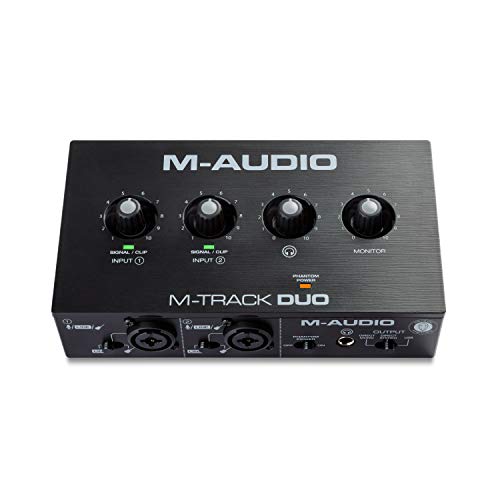
The M‑Track Duo presents a versatile two‑input solution suitable for podcasting, streaming, and basic music recording. It provides 48kHz resolution, two combo XLR/Line/Instrument inputs, and simple zero‑latency monitoring via USB/Direct switching. Best for creators who need reliable dual inputs with straightforward monitoring. Consideration: users seeking higher sample rates for pristine grand‑studio tracking may prefer higher‑end interfaces.
Focusrite Scarlett 2i2 4th Gen USB Audio Interface
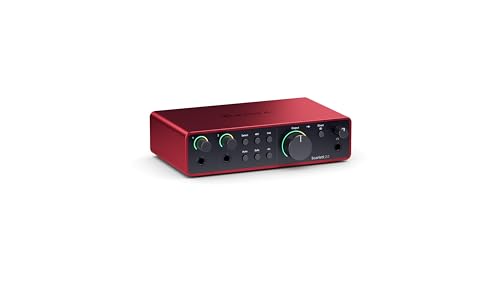
The 2i2 4th Gen is built for dual‑input recording with a large 120dB dynamic range and Clip Safe features to prevent distortion. It’s well suited for small studios, guitarists, and voice artists who need reliable performance with a little more flexibility than solo models. The Auto Gain feature helps set levels automatically, but users should monitor for optimal gain settings depending on their mic and instrument setups. Best for flexible two‑channel recording with solid monitoring options.
PreSonus AudioBox 96 USB Audio Interface

The PreSonus AudioBox 96 pairs two Class‑A mic preamps with high‑headroom instrument inputs and MIDI I/O in a compact package. It’s a practical choice for portable projects and small home studios that need reliable monitoring plus integration with external gear. Limitations include a less expansive software ecosystem compared to some competing brands, which may matter for users who rely heavily on bundled software.
Buying Guide
- Input count and routing: If you need two mics or one mic plus one instrument at once, a 2‑input model (like 2i2 or AudioBox 96) is ideal. For solo work, a 1‑input interface (like the Solo series) keeps things simple.
- Mic preamps and gain: Look for high‑headroom preamps and features like Clip Safe or Auto Gain to prevent distortion during loud takes. Air mode can add presence to vocals and acoustic guitars.
- Dynamic range and converters: A wide dynamic range (around 120 dB in modern interfaces) helps preserve detail in quiet and loud parts. Higher sample rates (24-bit/192kHz) are beneficial for critical tracking and mixing.
- Monitoring and latency: Zero‑latency monitoring and USB/Direct monitoring switches let you hear yourself without delay. Consider the monitoring options if you plan to stream or overdub.
- Portability and compatibility: If you record on the go, choose a compact, bus‑powered device. Ensure compatibility with your PC setup and your DAW of choice, along with any required drivers or plug‑ins.
- Software bundle: Some interfaces come with bundled software; weigh the value of included DAWs, virtual instruments, or plugins against your needs and existing tools.
Frequently Asked Questions
- Do I need a lot of inputs for PC recording? For solo voice or one‑instrument setups, a 1–2 input interface is usually enough. For multi‑instrument tracks or podcasts with multiple mics, a 4‑input model may be better.
- Is USB bus power enough for most interfaces? Yes for most consumer and prosumer interfaces. Some high‑end models may require external power for all features.
- What is “Air” or “Air mode”? Air mode emulates the brightness of an analog studio mic amp, adding presence to vocals and acoustic guitars without harshness.
- Should I prioritize dynamic range over sampling rate? Dynamic range affects headroom and noise; sampling rate affects fidelity. Both matter, but dynamic range often has a bigger impact on everyday use.
- Can I use these interfaces with Mac and iOS? Many of these models are class‑compliant or offer drivers for macOS. If you use iOS, verify compatibility and required adapters.
- What about latency when multi‑track recording? Latency depends on buffer settings and the interface’s drivers. Look for interfaces that offer low‑latency monitoring if you overdub frequently.