Best Recording Microphone for Singing: Clear Vocal Capture for Home Studios
Answering the question for singers and content creators: choose a versatile USB condenser microphone for high-quality vocal capture, ease of use, and value. The top picks here suit different buyers—beginners seeking plug-and-play simplicity, podcasters needing noise control, and musicians pursuing studio-like clarity. Each product highlights why it’s best for singing and voice work, with clear trade-offs to help you decide.
| Product | Best For | Key Strength |
|---|---|---|
| FIFINE T669 | Home studios, streamers, podcasters | All-in-one bundle with boom arm and pop filter |
| Dejasound DJM5 | Podcasters and vocalists who want built-in controls | Echo/monitoring features and 5V configuration |
| MAONO AU-A04 | Streaming and gaming with plug-and-play setup | 192kHz/24Bit chipset for fidelity |
| RØDE NT1 | Music production and vocal work in controlled spaces | Very low self-noise for pristine captures |
| ZealSound K66 | Creators across devices, on-the-go recording | Broad device compatibility and noise reduction modes |
FIFINE Studio Condenser USB Microphone Kit

The FIFINE T669 is a complete vocal recording package designed for quick setup and stable performance. It includes a desktop boom arm stand, a shock mount, a pop filter, and an 8.2-foot USB cable. The cardioid condenser capsule focuses on voice in front of the mic while reducing ambient noise. This makes it well-suited for singing, podcasts, voice-overs, and YouTube vocal work. The kit’s plug-and-play USB output means no extra hardware or drivers are required for most PCs and laptops.
Best for: Beginners and hobbyists who want an all-in-one, ready-to-record kit that minimizes setup time. It’s especially convenient for home studios, podcasters, and YouTubers who value an integrated boom arm and accessories in one purchase.
Caution: Not compatible with Xbox systems, so consider another microphone if console-only use is essential.
Dejasound Upgraded Studio Microphone DJM5

The Dejasound DJM5 condenser microphone emphasizes a ready-to-use recording studio experience. It offers USB output for direct connection to computers and mobile devices, plus a 16mm condenser capsule with a wide sampling range (192kHz/24Bit) and a cardioid pickup pattern. Useful features include an echo control, volume adjustments, a 3.5mm monitor jack, and a mute button. It’s ideal for podcasting, vocal recording, and streaming, delivering clean, broadcast-like sound with straightforward controls.
Best for: Podcasters and singers who want a compact, all-in-one USB mic with built-in monitoring and simple on-mic controls for on-the-fly adjustments.
Limitation: The feature set is strong, but users should verify compatibility with their chosen devices and ensure software expectations align with the USB-only workflow.
MAONO AU-A04 USB Microphone

The MAONO AU-A04 is a professional-sounding USB microphone with a 192kHz/24Bit chipset and a broad 30Hz-16kHz frequency response, designed for clean vocal captures. It emphasizes plug-and-play simplicity, with USB 2.0 connectivity that requires no extra drivers. An anti-interference USB cable helps minimize signal noise, making it suitable for podcasts, streaming, YouTube videos, gaming, and voice-overs. The 16mm condenser element contributes to a strong low-end presence, enhancing singing and spoken word clarity.
Best for: Singers and content creators who want a high-resolution USB mic with easy setup and dependable performance across Windows and Mac systems.
Limitation: Some users may prefer a separate shock mount or pop filter if they plan aggressive vocal processing or heavy plosives in recordings.
RØDE NT1 Signature Series
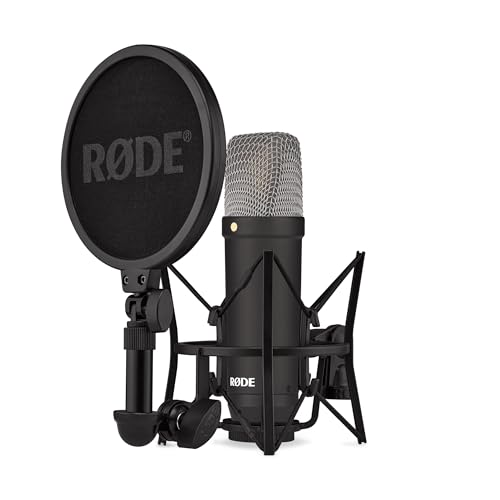
The RØDE NT1 Signature Series offers a large-diaphragm cardioid condenser design with a focus on exceptionally low noise. The microphone is known for its smooth frequency response and high sensitivity, which translates into clear vocal detail for music production, vocals, streaming, and podcasts. The package includes a shock mount, pop filter, and XLR cable, making it a strong choice for more controlled studio setups where an external audio interface is used.
Best for: Musicians and vocalists seeking studio-grade sonic fidelity in a controlled environment with flexible routing through an audio interface and mixer. Choose this if low self-noise and detailed highs are a priority.
Limitation: Requires an XLR audio interface or mixer, which adds cost and setup complexity compared with USB microphones.
ZealSound K66 USB Podcast Microphone

The ZealSound K66 emphasizes broad device compatibility and features an intelligent Noise Reduction Mode to reduce keyboard clicks, fan noise, and other ambient sounds. It supports Windows, Mac, PS4/PS5, and mobile devices with USB-C and Lightning adapters for iPhone and iPad compatibility. Its cardioid pattern helps focus on vocal signals while minimizing background noise, making it a flexible option for creators who record across multiple platforms, including YouTube, TikTok, and live streams.
Best for: Cross-platform creators who need a plug-and-play USB mic with built-in noise reduction and broad device compatibility for a variety of recording scenarios.
Limitation: Noise reduction modes should be chosen carefully to avoid affecting natural vocal warmth in quiet spaces.
Buying Guide
- Recording goal: If you primarily sing and stream from a home studio, a USB condenser with noise handling and a bundled arm tends to be simplest. If you plan to use an external preamp or mixer, consider an XLR option like the RØDE NT1 with an audio interface.
- Ease of use: USB mics offer plug-and-play setup and compatible drivers for most systems. This reduces setup time, especially for beginners or multi-device creators.
- Controls and monitoring: Built-in mute, gain, and headphone monitoring can improve workflow. Some models add echo or monitoring jacks for real-time listening.
- Noise handling: Cardioid patterns help reject room noise; additional pop filters or isolation shields further reduce plosives and room ambience. Noise-reduction modes can be helpful in draft environments but may color voice slightly.
- Device compatibility: If you work across PC, Mac, consoles, and mobile devices, look for USB-C adapters or cross-platform compatibility to avoid buying multiple mics.
- Budget and setup: Complete bundles save time for beginners, whereas investing in a higher-end condenser with an audio interface benefits users seeking studio-grade results and flexible routing.
FAQ
- Can these USB microphones connect to smartphones? Yes, models like ZealSound K66 provide or support USB-C and Lightning adapters for phones and tablets.
- Do I need an audio interface for any of these mics? USB mics are plug-and-play, but XLR mics like the NT1 require an audio interface or mixer.
- Is a pop filter necessary for singing? A pop filter helps reduce plosives during strong vocal attacks and is recommended for clearer vocal recordings, especially in close-mic scenarios.
- Which mic is best for beginners? Bundled kits like the FIFINE T669 offer everything you need to start recording right away, making them ideal for beginners.
- What should I consider when choosing for a multi-platform setup? Prioritize USB compatibility, ease of use, and devices you plan to connect (PC, Mac, consoles, or mobile) to avoid compatibility issues.
- Are there any mics to avoid for singing? Avoid overly sensitive mics without proper acoustic treatment in untreated rooms, as they may pick up substantial ambient noise and reverb.