Best Recording Studio Sound Panels for Clearer Audio
The right sound panels reduce echoes, flutter, and reverberation to deliver cleaner recordings. This guide highlights five top options for home studios, podcast booths, and small professional rooms. It helps buyers choose by room type, budget, and installation needs. Ideal for vocalists, podcasters, and producers seeking improved audio clarity without complex equipment.
Summary Table of Top Picks
| Product | Best For | Key Benefit | Notes |
|---|---|---|---|
| Focusound 52 Pack Acoustic Foam Panels | Multi-recording rooms; budget-conscious setups | High-density foam with adhesive kit for easy wall mounting | Includes 300 adhesive strips |
| Saiqiang Acoustic Foam Panels 12 Pack | Home studios and offices needing fire safety compliant panels | High-density, fire-resistant foam for improved balance | Fire safety standards met |
| Knightsacoustic 96 Pack Panels | Medium to large studios; modular setups | High-density foam designed to reduce reflections | Not adhesive; requires mounting method |
| TroyStudio Groove 36 Pack | Decorative + functional panels for stylish spaces | Grooved design with strong noise reduction | Good NRC and aesthetics |
| SD SODOCT 24 Pack Pyramid Panels | Modern studios needing diffusion and absorption | Pyramid design increases surface area for diffusion | Flame-retardant and durable material |
Focusound 52 Pack Acoustic Foam Panels

Best for versatile home studios and small offices needing a complete wall treatment. Focusound panels use a triangular groove structure to improve noise absorption, reducing echoes and flutter. The package includes 300 double-sided adhesive strips for quick, wall-friendly installation. A potential limitation is the adhesive method may require careful surface prep for long-term hold on certain finishes.
Saiqiang Acoustic Foam Panels 12 Pack
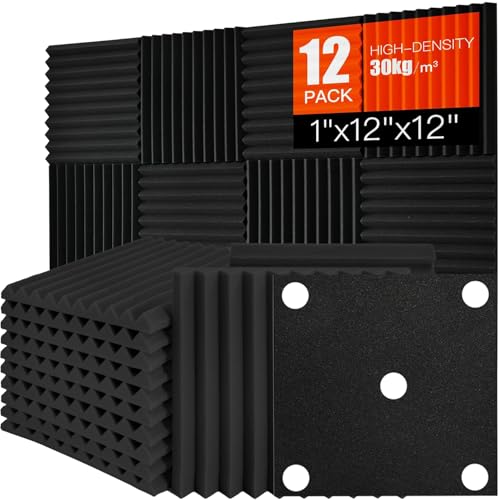
Best for studios and podcast spaces seeking controlled reflections with added fire resistance. These high-density panels help manage studio acoustics without heavy structural changes. They are described as fire-resistant and suitable for home theaters and media rooms. Choose this if you prioritize safety standards; avoid if you need adhesive-ready bundles, as mounting methods may vary.
Knightsacoustic 96 Pack Panels

Best for larger control rooms or multi-studio setups that need a dense, modular approach to sound absorption. These panels focus on reducing reverberation and standing waves, supporting professional-grade sound quality. They are not adhesive by default, so plan mounting accordingly. Use this if you want uniform wall treatment across bigger spaces; consider adhesive options if wall damage is a concern.
SD SODOCT Pyramid Acoustic Panels

Best for spaces seeking diffusion along with absorption. The pyramid design increases surface area for effective sound diffusion, contributing to a balanced acoustic environment. The panels are flame-retardant and non-toxic, which supports safe use in living spaces. A limitation is that the pyramid shape may require more careful arrangement to achieve uniform coverage.
TroyStudio Groove Acoustic Foam Panels

Best for studios needing a decorative yet functional option. The groove design helps dampen reverb while adding a modern look to walls and ceilings. Suitable for larger aesthetic-focused spaces or rooms where sound treatment doubles as wall art. Limitation: coverage per pack is moderate; larger rooms may require additional panels for full effect.
Buying Guide: Key Considerations And Comparisons
What room type and purpose influence your panel choice?
Home studios and bedrooms benefit from dense, adhesive-ready panels for quick setup. Professional sounding rooms or larger spaces may require higher panel counts or adhesive-safe mounting solutions to prevent wall damage. Consider whether you need absorption, diffusion, or a balance of both to achieve your target sound.
How to evaluate panel density, thickness, and NRC
Density and thickness impact absorption. Thicker panels generally absorb lower frequencies better. Look for panels with documented NRC values, which indicate overall absorption efficiency across frequencies. High-density polyurethane foam with proper groove or pyramid designs often provides strong performance in mid to high ranges, while treatment for low frequencies may require corner bass traps.
Adhesive vs. non-adhesive options
Adhesive-backed panels simplify installation and wall protection when using removable tapes or pre-applied adhesives. Non-adhesive panels require mounting hardware or spray adhesives. If you rent or anticipate reconfiguring layouts, choose products offering removable mounting solutions to avoid wall damage.
Safety, materials, and fire standards
Fire-retardant materials and non-toxic foams support safe use in living spaces. Verify that products meet local safety standards if this matters for your environment, especially in home theaters or shared living areas.
Maintenance and replacement considerations
Some foams recover shape after compression with simple water soaking. Check return-to-shape instructions for longevity. Also consider the ease of cleaning panels and potential color or texture changes over time with room humidity and temperature.
Installation flexibility and aesthetics
Groove and pyramid designs add visual interest while improving acoustics. Decide if you want uniform panels or decorative patterns that complement room design. The ability to mix and match designs can provide both function and style without sacrificing sound quality.
FAQ
- Do these panels work for home studios? Yes. They reduce echoes and reverberations to improve vocal clarity and instrumental recordings.
- Should I use adhesive panels only? Adhesive panels are convenient, but non-adhesive options work well with mounting hardware or clips, especially in rentals.
- Can panels reduce bass issues? Most panels target mid and high frequencies. Bass trapping typically requires dedicated bass traps in corners.
- Are all foams fire-retardant? Not all, but many listed options mention fire-safety features; verify certifications if required.
- How many panels do I need? It depends on room size, ceiling height, and desired absorption. Start with 1–2 panels per 4–6 square feet and adjust based on testing.
- Can I repaint or modify panels? Most foam panels are not paintable and should be left in their original finish to preserve acoustic properties.