
Best Reflection Filters for Mics for Cleaner Recordings
This guide helps buyers choose the right microphone isolation shield or reflection filter to reduce noise and improve vocal clarity. It highlights options for home studios, podcasters, and professional setups. The top picks below are best for different needs: compact travel-friendly units, higher isolation for vocal tracks, and versatile shields for multi-instrument use.
| Product | Brand | Best For |
|---|---|---|
| Microphone Wind Shield Pop Filter | penypeal | Condenser or USB mics, home studios |
| Aston Halo Portable Filter | Aston Microphones | High isolation, flexible setup |
| Aokeo Microphone Isolation Shield | Aokeo | Budget-friendly, versatile studio use |
| XTUGA MIS02 Isolation Shield | XTUGA | Adjustable panels, multi-environment recording |
| Frgyee Microphone Isolation Shield | Frgyee | Foldable design, portable setups |
Penypeal Five-Sided Isolation Shield

The penypeal wind shield is designed to fit most XLR or USB microphones with a removable jacket diameter of 50–75 mm. It includes a holder for different mic sizes and uses a five-sided foam design to reduce noise from multiple directions. A single-side, double-layered filter provides targeted attenuation for clearer recordings. This option is best for small studios or desk setups where portability and compatibility with a range of mics matter. A potential limitation is that ultra-wide mics or unusually shaped bodies may require an alternative mount.
Best for: Home studios and podcasters who need a budget-friendly, adaptable shield that reduces plosives and saliva spray without blocking the mic’s reach. Choose this if you use varied mics and want straightforward installation.
Caution: Some users may notice slightly less attenuation on low-frequency rattle or room rumble compared with larger, studio-grade shields.
Aston Halo Portable Microphone Reflection Filter
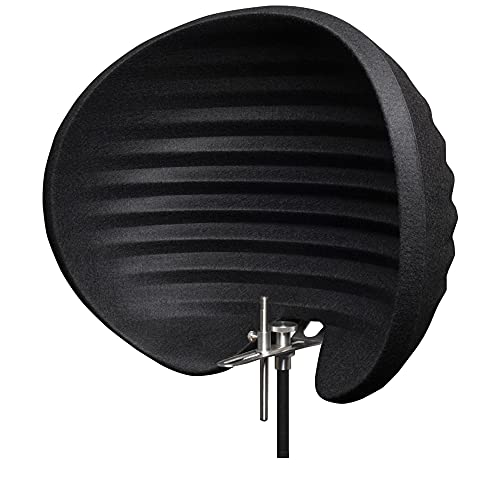
Aston Halo filters offer radically improved isolation with 360-degree filtering and a significantly larger surface area—roughly 40 percent bigger than main competitors. This design emphasizes comprehensive attenuation of reflections and ambient noise across vertical planes, making it well suited for vocal tracks and voiceover work in smaller studios. The broader surface helps reduce room reflections that can color recordings. A potential limitation is the need for adequate desk space to accommodate the Halo’s footprint.
Best for: Professionals seeking high isolation and full directional control in compact studios or home production environments. Choose this if you record vocals and voiceovers where a wide capture area benefits the mix.
Caution: Bigger footprint means more table space is required; ensure your setup has room for optimal placement.
Aokeo Microphone Isolation Shield

The Aokeo shield combines a sound-proof foam front with a ventilated metal back panel to minimize noise in recordings. It includes a desktop stand and offers a large shield footprint (23.2″ x 11″ x 2″). Its rugged metal frame and foam construction support versatile use, from studio vocals to instrument recordings. Best for budget-conscious buyers who still want solid isolation in home studios. A limitation is that some setups may require a larger stand or additional mounting for tall mics.
Best for: Budget-conscious studios that need a versatile, easy-to-move shield for vocals, guitars, or other instruments. Choose this if you want a balance between cost and portability.
Caution: May require extra space for optimal mic placement, especially with taller stands or tall microphones.
XTUGA MIS02 5-Panel Isolation Shield

The XTUGA MIS02 features a five-panel design with flexible options: use a 3-panel setup with two foldable end panels or expand to a five-panel layout with four foldable ends. The shield uses high-density insulated foam and a triangular reflector approach to reduce external noise, with adjustable angles for optimized acoustic treatment. It’s designed to maximize noise blockage in varied environments, including portable setups. A limitation is the complexity of assembly for first-time users.
Best for: Content creators who need adjustable isolation in rooms with variable acoustics or for on-the-go recording sessions. Choose this if you want customizable configuration to suit different recording environments.
Frgyee Microphone Isolation Shield

The Frgyee shield uses a high-density absorbing foam on the inner surface to reduce sound reflections, improving the clarity of voice and instrument recordings. The design is foldable and portable, with a compact footprint for small studios or mobile setups. It includes a pop filter to further minimize plosives and saliva spray. Note that it may not fit larger Blue Yeti microphones without adjusting the stand. It’s best for compact spaces where portability matters.
Best for: Portable studios and on-location recording where a lightweight, foldable shield is preferred. Choose this if you need easy transport and quick setup without sacrificing core isolation.
Buying Guide: Key Purchase Considerations
What level of isolation do you need? Higher isolation reduces room reflections but may require more space and careful placement. If you record in a small untreated room, prioritize larger surface area and multi-directional filtering.
What microphone and stand size will you use? Ensure the shield supports your mic diameter and comes with or fits your stand. Some shields use threads or mounts that require adapters.
Is portability important? For podcasters or mobile setups, foldable shields or compact designs offer easier transport and quick setups without compromising performance.
What is your budget? Budget options like the penypeal and Aokeo provide solid isolation for home studios, while larger brands offering 360-degree filtering suit more demanding vocal work.
What environment will you record in? If you frequently record in noisy spaces, look for shields with thicker foam and denser absorbers to better suppress external noise.
Frequently Asked Questions
- Do reflection filters improve vocal recordings? Yes, they reduce room reflections and plosives, resulting in a cleaner vocal capture when used with a suitable mic and stand.
- Will a bigger shield always sound better? Not necessarily. Bigger shields provide more surface area for absorption, but placement and room acoustics also influence results.
- Can I use these with a Blue Yeti? Many shields are compatible, but verify the mic diameter and stand compatibility for a secure fit.
- Are portable shields as effective as studio-grade filters? They can be highly effective for home studios and on-the-go work, though some high-end studio shields may offer marginally better isolation in controlled environments.
- Do I need both a shield and a pop filter? A shield reduces ambient reflections; a pop filter handles plosives. Using both can maximize vocal clarity.
- How should I position a shield for best results? Position the shield between the mic and the main reflections in the room, with the mic at an appropriate distance to avoid overly muffled sound.