Best RP-SMA WiFi Antenna Solutions for Stronger Signals and Wider Coverage
Looking for a reliable RP-SMA WiFi antenna to boost your home or office network? This guide highlights five top options that work with routers, PCIe adapters, and network cards. Each pick targets different needs—gaming, streaming, or reducing dead spots—so you can choose the best fit for your setup. The table below quickly compares core specs to help you decide.
| Product | Gain | ||
|---|---|---|---|
| BINGFU Dual Band WiFi 2.4/5GHz 3dBi MIMO (2-Pack) | 2.4 GHz & 5.8 GHz | 3 dBi | Simple upgrades for homes with multiple devices |
| Eightwood WiFi 6E Tri-Band Antenna | 2.4/5/6 GHz | Not specified | High-bandwidth networks; gaming and 4K/8K streaming |
| Eightwood Dual Band WiFi Antenna 2.4/5 GHz | 2.4/5 GHz | Not specified | Stable multi-device home networks |
| BINGFU Dual Band 4-Pack | 2.4/5.8 GHz | 3 dBi | Multi-device environments needing extended coverage |
| QUEENTI 8dBi Omni RP-SMA Antenna | 2.4/5.8 GHz | 8 dBi | Longer reach and stronger signal for larger spaces |
BINGFU Dual Band WiFi 2.4GHz 5GHz 3dBi MIMO RP-SMA Male Antenna (2-Pack)

Best For: Desktop PCs, wireless USB adapters, and home routers needing an easy, cost-effective range boost. The dual-band design covers both 2.4 GHz and 5 GHz networks with a 3 dBi gain, enabling better coverage in crowded wireless environments. The RP-SMA Male connector fits common outdoor and indoor antenna ports. This is a solid upgrade for users who want noticeable improvement without complex installation.
Why selected: The set provides two omnidirectional antennas, increasing the likelihood of improved coverage for typical home layouts. Clear compatibility with routers, wireless NICs, and access points helps minimize dead zones. A potential limitation is that the gain is modest compared with high-gain options, so extreme long-range needs may require higher-dBi antennas.
Eightwood WiFi 6E Antenna Tri-Band 6GHz 5GHz 2.4GHz RP-SMA

Best For: High-capacity networks, gaming, and homes with 6 GHz-capable devices. This tri-band antenna supports 2.4G, 5G, and 6G bands and is designed to maximize WiFi 6E benefits, offering enhanced bandwidth and lower latency in crowded environments. It’s ideal for users who want to take advantage of the newest spectrum and reduced interference.
Why selected: The tri-band design aligns with WiFi 6E ecosystems, potentially delivering faster speeds and more reliable connections for multiple devices. Caution: not all motherboards or routers support 6 GHz; compatibility should be confirmed before purchase.
Eightwood Dual Band WiFi Antenna 2.4GHz 5GHz with 6.5ft Extension Cable
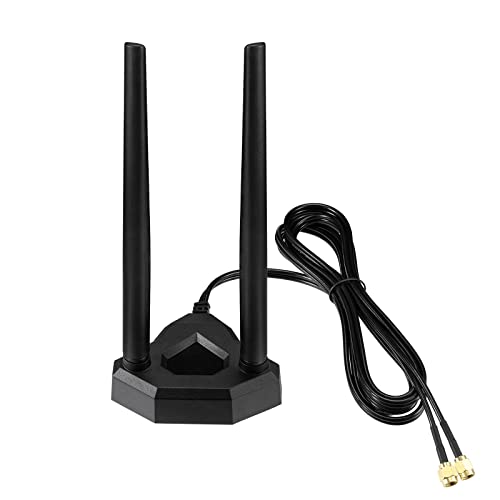
Best For: Setups requiring flexibility in antenna placement. The 2.4/5 GHz dual-band support helps improve coverage for routers, PCIe cards, and motherboards. The long extension cable enables strategic positioning to avoid obstructions and interference.
Why selected: This option emphasizes placement versatility, which can improve signal quality in rooms with walls and furniture that impede line-of-sight. Limitation: specific gain details aren’t stated, so expect a modest improvement compared with high-gain antennas in tight spaces.
BINGFU Dual Band WiFi 2.4GHz 5GHz 3dBi MIMO RP-SMA Male Antenna (4-Pack)
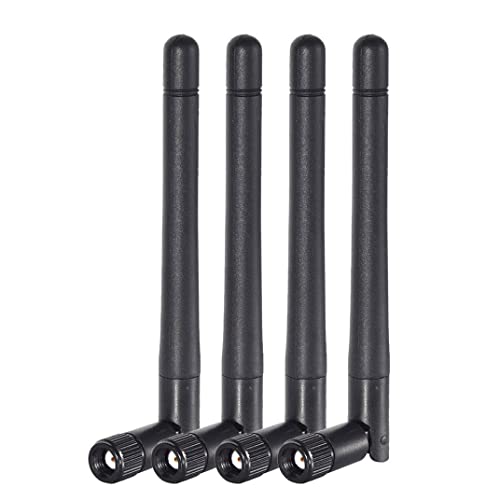
Best For: Expanding wireless coverage across multiple devices or rooms. The 4-pack provides ample antennas for distributed access points, routers, and cards, offering symmetrical upgrades across a larger area.
Why selected: The kit allows broad distribution of antennas to minimize dead zones. Caution: higher quantity means more components to manage; ensure compatible ports and mounting considerations are met in your setup.
QUEENTI 2 x 8dBi RP-SMA Omni Antennas
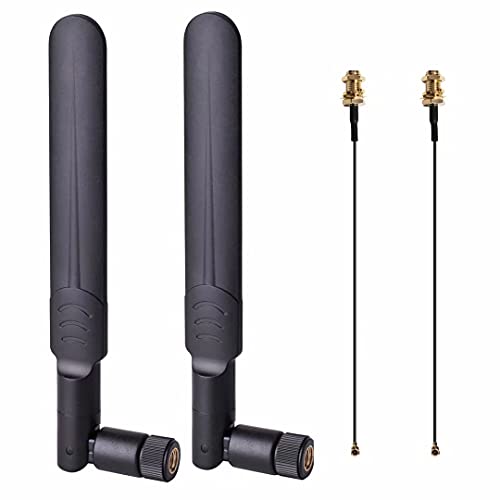
Best For: Users needing extended reach and stronger signal in larger homes or offices. The 8 dBi gain helps push signals farther and through obstacles when compared to lower-gain options. Omni-directional design provides 360-degree coverage.
Why selected: Higher gain can improve performance in spaces with challenging layouts. Limitation: higher-gain antennas may still be sensitive to placement and may not fully compensate for extreme interference or shielding structures.
Buying Guide
What should I consider when choosing an RP-SMA antenna?
- Band compatibility: If your devices operate on 2.4 GHz, 5 GHz, or 6 GHz, ensure the antenna supports those frequencies. Tri-band models are best for networks embracing WiFi 6E.
- Gain and direction: Higher dBi values increase range but can narrow coverage patterns. For multi-room homes, omni-directional antennas with moderate gain are typically preferable.
- Connector type and compatibility: RP-SMA Male connectors fit many routers, PCIe cards, and USB adapters. Check that your device accepts RP-SMA Male ports.
- Placement flexibility: Antennas with longer cables or magnet bases allow placement for optimal signal, especially in rooms with obstacles.
- Multiple units vs. single upgrade: 2-pack or 4-pack options help distribute antennas for better whole-home coverage; plan based on the number of devices and rooms.
How to position RP-SMA antennas for best results
Place antennas away from large metal objects and electronics that may cause interference. If possible, position antennas perpendicular to walls and aim for higher mounting points to reduce signal reflections.
Common limitations to note
Not all networks will benefit equally from higher-gain antennas; walls, furniture, and distance can still limit improvements. Some devices may not support 6 GHz, reducing the advantages of tri-band or 6E antennas. Always verify compatibility with your router, NIC, or motherboard before buying.
FAQ
- Q: Do higher dBi antennas always give better coverage?
A: Higher dBi increases potential range but can reduce signal breadth; omni-directional antennas with moderate gain often provide balanced improvements for most homes. - Q: Will a 6E antenna work if I don’t have a 6 GHz network?
A: It can still improve 2.4 and 5 GHz performance due to better design and filtering, but you won’t utilize the 6 GHz band if your router and devices don’t support it. - Q: Are tri-band or dual-band antennas better?
A: Tri-band antennas offer broader compatibility, useful for future-proofing, while dual-band models are sufficient for most current setups. - Q: Can I use these antennas with a USB WiFi adapter?
A: Yes, if the adapter uses an RP-SMA Male port or your setup includes an RP-SMA female receptacle. - Q: Do magnet bases weaken signal?
A: Magnets mainly affect placement; ensure secure mounting while keeping a clear line of sight to maximize coverage. - Q: Should I replace all antennas at once?
A: If you have multiple devices with external RP-SMA ports, upgrading selectively can yield noticeable improvements without unnecessary purchases.