Best Scanner Car Code Reader: Top OBD2 Tools for Quick Diagnostics
The best scanner car code reader helps you quickly identify engine and system faults without a trip to the shop. These five models cover a range from basic code readers to advanced, flexible tools for DIYers and professionals. They are best for different needs: simple diagnostics on older cars, comprehensive live data for enthusiasts, and professional-grade diagnostics for ongoing maintenance.
| Product | Best For | Key Benefit |
|---|---|---|
| ANCEL AD310 Classic Enhanced Universal OBD II Scanner | Everyday DIYers with basic needs | Fast read/clear of emission codes directly from OBDII |
| ANCEL AD410 Enhanced OBD2 Scanner | All OBDII vehicles, multilingual users | Wide compatibility and extensive code lookup |
| FOXWELL NT301 OBD2 Scanner | Casual to intermediate users needing live data | Live data, VIN retrieval, and user-friendly interface |
| VDIAGTOOL VD10 OBD2 Scanner | DIYers who want built-in code lookup | Large DTC database and straightforward operation |
| BlueDriver Pro Next Gen OBD2 Scanner | Advanced users seeking comprehensive reports | VIN-specific repair reports and extensive diagnostics |
ANCEL AD310 Classic Enhanced Universal OBD II Scanner

The ANCEL AD310 is a compact OBD II scanner designed for quick fault-code reading and clearing on 1996 and newer vehicles. It supports emission system codes, can read live data, view freeze frames, and check readiness monitors. It is powered directly through the vehicle’s OBDII port, so no extra batteries are required. Best for homeowners or hobbyists who want fast, straightforward diagnostics without extra features they won’t use.
Who it’s best for: casual DIYers and drivers who want a simple, reliable tool for checking engine lights and confirming repairs have cleared.
Limitations: It focuses on basic engine and emission data; it does not provide advanced ABS/SRS or bidirectional controls. This keeps it affordable but less capable for complex diagnostics.
ANCEL AD410 Enhanced OBD2 Scanner

The AD410 adds broader compatibility and more robust diagnostics. It supports 16PIN OBDII vehicles, including CAN, and offers a large built-in DTC library with multilingual support. It’s powered by the vehicle’s OBDII port, so no battery is needed. This model suits users who need more comprehensive code lookups and cross-region usability for diverse markets.
Who it’s best for: international users or multi-car households needing a versatile, ready-to-use scanner with broad code definitions.
Limitation: It is still primarily an engine/diagnostic tool and does not provide some advanced system-specific functions beyond OBDII data.
FOXWELL NT301 OBD2 Scanner

The FOXWELL NT301 focuses on essential OBD2 diagnostics with live data and a user-friendly interface. It can read DTCs, display live sensor data in graph form, and retrieve a VIN, which helps identify the exact vehicle. It’s best for home mechanics who want more than a basic code reader without stepping up to professional-level tools.
Who it’s best for: DIYers who want live data visualization and VIN retrieval without extra features like ABS/SRS. Choose this if you frequently need real-time data for troubleshooting.
Limitation: It does not support ABS, SRS, or other specialized systems, so it’s not a full-system diagnostic tool.
BlueDriver Pro Next Gen OBD2 Scanner
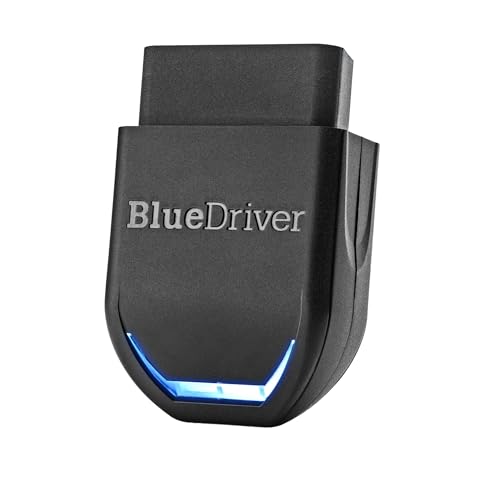
The BlueDriver Pro Next Gen turns a smartphone into a professional-grade diagnostic tool. It offers extensive coverage with 8000+ issues, VIN-linked repair reports, and live data. It supports ABS, SRS, TPMS, and transmission diagnostics where available, and provides technician-verified repair guidance. This is best for users who want deep insights, ongoing updates, and shareable repair reports without a subscription.
Who it’s best for: advanced users and families needing rich diagnostics, repair guidance, and cross-vehicle insights via a mobile app.
Limitation: Requires a compatible smartphone and relies on cloud-based reports, which may affect first-run speed or offline access in areas with limited connectivity.
Buying Guide
What should you look for in a scanner car code reader?
Compatibility: Ensure the device supports your vehicle’s year, make, and model, especially if you own a European or Asian car. Look for broad OBDII support and any region-specific notes.
What features matter most for your use case?
- Basic code reading/clearing: AD310-style tools are fast and simple.
- Live data and VIN retrieval: NT301 offers graphing and real-time information.
- Comprehensive diagnostics: BlueDriver Pro provides repair reports and broader system checks.
- Multilingual and offline code lookups: AD410 adds language support and a large DTC library.
Is a battery-free OBDII scanner enough for you?
Yes for most basic tasks, since power comes from the car’s OBDII port. If you need more capabilities like advanced live data or ABS/SRS diagnostics, consider tools designed for those systems or a multi-function model.
How important is data accessibility?
Consider whether you prefer a standalone handheld unit (AD310/AD410/NT301) or a smartphone-connected tool (BlueDriver Pro). The latter offers easier updates and shareable reports but requires your phone and potentially internet access.
What are practical limitations to expect?
Most models have limits on advanced system access. For example, some units cannot reset certain codes until the underlying issue is fixed, and not all support ABS/SRS or EVAP testing. Always check feature notes for your vehicle and the intended functions.
FAQ
- Do these scanners require a battery?
- Can I clear emission codes with these tools?
- Will these work on 1996+ vehicles?
- Do I need to connect to the internet?
- Is VIN retrieval available on all models?
- Which scanner is best for beginners?
Most rely on power from the vehicle’s OBDII port; batteries are not needed for operation.
Yes, most listed models can read and clear emission-related codes after addressing the root cause.
All selected models target 1996+ OBDII-compatible vehicles.
Some tools (like BlueDriver) use cloud services for repair reports, while others operate offline with built-in definitions.
VIN retrieval is available on several models (e.g., NT301 and BlueDriver) but not guaranteed on every vehicle or firmware version.
AD310 or NT301 are typically the easiest for beginners due to straightforward interfaces and essential features.