
Best SD Card Reader Solutions for Car USB and on-the-Go Use
If you need reliable, plug-and-play SD card access in your car or while traveling, these readers deliver fast transfers and broad compatibility. They’re ideal for dash cams, car cameras, in-car entertainment systems, and mobile devices. This guide highlights five top options, explains who they’re best for, and clarifies how to choose based on port type, transfer speeds, and card compatibility.
Summary at a glance:
| Product | Best For | Key Benefit |
|---|---|---|
| Memory Card Reader, BENFEI 4in1 | People who need simultaneous four-card access | 4 cards read/write at once with USB-C/USB-A |
| uni SD Card Reader | Dual-card workflows | Two cards read/write at once with USB-C and USB 3.0 |
| Anker SD Card Reader USB C | Compact, everyday use | One standard SD slot and one microSD slot |
| HICOBER USB C SD Card Reader | 3-in-1 versatility | SD, microSD, and USB 2.0 in a single compact adapter |
| UGREEN SD Card Reader | All-in-one reliability | Reads four cards simultaneously with USB 3.0 |
BENFEI 4in1 USB-C/USB 3.0 Card Reader

The BENFEI 4in1 reader combines USB-C and USB 3.0 interfaces to support SD, Micro SD, MS, and CF cards. This is a solid choice for in-car setups that require rapid transfers from multiple card types to a phone, tablet, or car computer. Best for: drivers who need a single, universal reader that supports several card formats at once in a USB-C or USB-A port. Why chosen: its 4-card simultaneous reading capability reduces repeated plugging and unplugging during trips. Limitation: real-world speeds depend on the card type and USB slot, so don’t expect maximum theoretical throughput in every scenario.
- Best for multi-card users who want one device in the glove box or center console.
- Better for drivers who frequently swap between camera cards and phones.
uni SD Card Reader: USB C to Micro SD

The uni reader offers USB 3.0 plus USB-C compatibility with dual slots for SD and Micro SD cards. It supports a broad range of card types and allows simultaneous read/write on two cards, which is helpful when you’re archiving footage from a car dash camera and transferring to a laptop or phone. Best for: in-car setups that require quick dual-card transfers with minimal adapter swapping. Limitation: it does not connect directly to Lightning devices, so use with USB-C or USB-A ports only.
- Best for dual-card workflows in vehicles with USB-C or USB-A ports.
- Choose this if you frequently copy files from two cards at once.
Anker SD Card Reader USB C
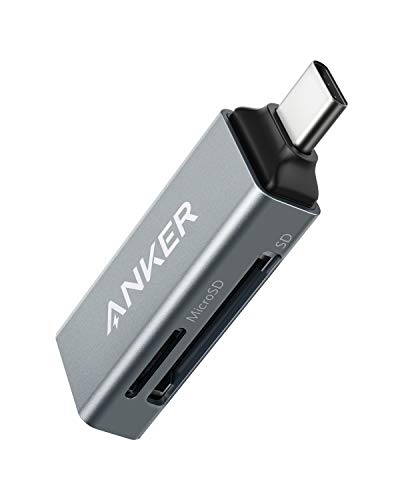
The Anker reader is ultra-compact and designed to fit in tight spaces, making it ideal for cars with limited USB ports. It offers one standard SD slot and one microSD slot, and it’s noted for broad compatibility with USB-C devices. Best for: drivers who want a small, reliable reader that can live in the car’s USB hub or be tucked into a console. Limitation: case compatibility can affect fit—removing a phone case may be needed for some devices.
- Best for portability and everyday car use.
- Choose this if you value a slim profile and simple two-slot design.
HICOBER USB C SD Card Reader

The HICOBER 3-in-1 reader covers SD, microSD (TF), and USB 2.0. Its USB-C plug-and-play design makes it convenient for modern cars and devices, including iPhone 15 series and laptops. Best for: users who need a lightweight, 3-in-1 solution that supports photography workflows on the go. Limitation: it includes USB 2.0, which is slower than USB 3.0/3.1 in other models, so large transfers may take longer.
- Best for compact 3-in-1 versatility in a single portable adapter.
- Choose this if you only need standard-speed USB 2.0 alongside SD and microSD.
UGREEN SD Card Reader USB 3.0
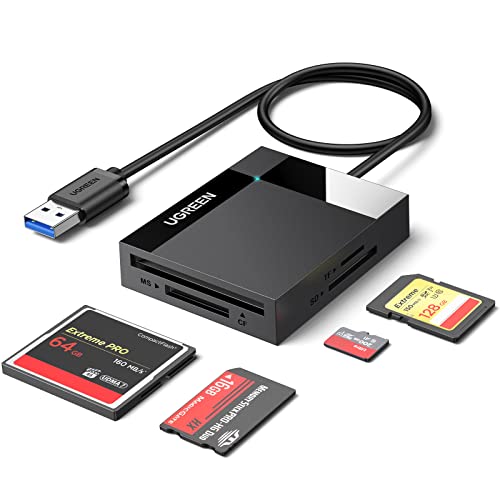
The UGREEN reader is an all-in-one device designed to work with SD, Micro SD, CF, and MS cards, supporting up to 4 cards simultaneously. Its USB 3.0 interface delivers up to 5 Gbps, making it well-suited for quick transfers in cars and mobile workstations. Best for: users who want a robust, all-in-one in-vehicle reader that handles multiple formats at once. Limitation: the microSD and SD slots are separate; ensure your card sizes fit your device’s spacing in your vehicle’s console or USB hub.
- Best for all-in-one reliability in-car use.
- Choose this if you switch between several card types frequently.
Buying Guide: In-Car SD Card Reader Essentials
Choosing the right reader for a car environment involves port availability, card compatibility, and transfer speed. Consider the following questions to tailor your pick to your vehicle setup and workflows:
- What ports does your car’s infotainment system or USB hub provide? USB-C? USB-A? Some readers double as both, which is convenient for modern cars.
- Do you need to read multiple cards at once, or is single-card transfer sufficient? If you work with dash cams or multiple cameras, multi-card support is helpful.
- What card formats are in your gear? SD, microSD, CF, and MS are common in cameras and dash cams; ensure the reader supports your cards.
- Is speed a priority? USB 3.0/3.1 Gen 1 or USB-C with compatible devices yields faster transfers, especially for large video files.
- Will you use the reader with phones or tablets in the car? USB-C compatibility and plug-and-play setup simplify in-vehicle use.
- How portable should it be? A compact, low-profile reader fits easily in a glove box or center console.
Usage Scenarios and Recommendations
Dash cams and in-car cameras benefit from readers that support simultaneous card access and fast transfers. In a vehicle with limited space, a compact USB-C reader is ideal, while a multi-slot device works best if you regularly swap between different cards or require backup copies in the car. For photographers traveling with laptops, a dual-slot reader that supports SD and microSD is convenient for offloading gear on the go.
Comparison Snapshot
| Feature | BENFEI 4in1 | uni SD Reader | Anker USB-C | HICOBER 3-in-1 | UGREEN 4-slot |
|---|---|---|---|---|---|
| Card slots | SD, Micro SD, MS, CF | SD, Micro SD | SD, Micro SD | SD, Micro SD, USB 2.0 | SD, Micro SD, CF, MS |
| Interfaces | USB-C and USB 3.0 | USB-C and USB 3.0 | USB-C | USB-C | USB 3.0 |
| Max speed reference | Up to 160MB/s (depending on card) | Up to 5 Gbps | Noted USB-C speed, general fast transfer | USB 2.0 speed | Up to 5 Gbps |
Practical Tips for Car Use
- Store the reader in a safe pocket or glove box to avoid spills or heat exposure.
- Test compatibility with your car’s USB ports before long trips to prevent mid-journey file transfers.
- Use readers with robust housing if the device will be used in varying environments and climates.
FAQ
- Can these readers work with iPhone or iPad in a car? Some devices support USB-C connections and can pair with iPhone or iPad for file transfers; check device compatibility with Apple devices.
- Will all readers support 4K video files in a dash cam? Most readers support high-capacity SD/microSD cards, but actual speeds depend on the card and system.
- Do I need drivers for in-car use? No drivers are typically required; these readers are designed for plug-and-play use.
- Is USB-C faster than USB-A for in-car transfers? USB-C with a compatible port often provides faster access, but actual speeds depend on the card, port, and device.
- Can I use multiple cards at once in a car setup? Many readers advertise simultaneous reads; ensure your vehicle’s interface supports that configuration.
- What if the reader fits poorly in my car’s USB hub? Consider a smaller, slim design or a reader with a short cable to reduce crowding in the console area.
These five readers provide a spectrum of options for in-vehicle card access, from compact single-slot designs to all-in-one multi-slot readers. By aligning port compatibility, card types, and transfer speeds with your car setup, you can select the best reader for in-car photography, dash cam backups, and mobile editing on the go.