
Best Side-Address Dynamic Microphones for Podcasts and Vocals
Direct answer: if you need reliable side-address dynamics for podcasts, voice-overs, or live vocals, these five models offer strong isolation, durable build, and clear, loud outputs. They’re well suited for home studios, small venues, and broadcast-style setups. The list prioritizes low self-noise, good off-axis rejection, and ease of use for solo creators or small production teams. The top picks below cover a range from broadcast-quality dynamics to versatile performers, helping you pick the right balance of warmth, gain, and durability for your voice and setup.
Buyer’s quick comparison table
| Product | Best For | Key Benefit | Notable Limitation |
|---|---|---|---|
| Zoom ZDM-1 | Broadcast-style podcasts | Large diaphragm, smooth sound | Limited color choices |
| CAD Audio A77USB | Home studios needing USB | USB-Compatible for easy setup | USB only, not XLR |
| CADLive D80 | Live stages | Tight supercardioid with hot output | May color to stage noise |
| MXL BCD-1 | Broadcast/podcasts | High output, low noise | Less classic branding |
| CAD Audio A77BK | Black aesthetic for stages | TrueFlex diaphragm, detailed output | Same family features as A77 may feel familiar |
Zoom ZDM-1 Dynamic Microphone

The Zoom ZDM-1 uses a large-diaphragm dynamic design to deliver smooth, broadcast-quality sound. Its super cardioid polar pattern helps isolate the voice from surrounding noise, making it well suited for podcasting and voice-overs in less-than-ideal room acoustics. With high SPL handling, it maintains clear recordings even when source levels are strong. This mic is best for podcasters and voice-over artists who want a straightforward, durable option with a warm tone and strong off-axis rejection.
Who it’s best for: solo podcasters, voice actors, and home-studio setups that require robust noise rejection and a simple USB/analog workflow when paired appropriately. A caution: ensure your interface provides adequate gain to avoid noise floor concerns in quieter rooms, and be mindful of proximity effect for ultra-close vocal work.
Designed to stay steady in busy environments, the ZDM-1 emphasizes a controlled, focused pickup. Choose this if you value a classic broadcast voice with dependable isolation and a durable body for daily use.
CAD Audio A77USB USB Cardioid Microphone

The CAD Audio A77USB blends classic A77 styling with modern USB connectivity. Its cardioid pattern focuses on the source while reducing rear noise, ideal for desktop recording and quick setup without an audio interface. The package includes a USB-A to USB-A cable and a tripod stand, offering an accessible entry point for beginner-to-midlevel producers who want a simple, all-in-one solution.
Best for: small home studios and content creators who want easy plug-and-play USB recording. Better for: those who prefer a traditional dynamic sound with a familiar A77 lineage. Avoid if you need XLR connectivity or a broadcast-grade warm dynamic on analog paths.
Limitation: USB-only operation means you won’t have an analog routing option if your workflow relies on traditional mixers or preamps.
CAD Live D80 Large Diaphragm Dynamic

The CADLive D80 is a large-diaphragm dynamic with a tight super-cardioid pickup and a hot output. It’s designed to deliver strong vocal presence on loud stages while keeping off-axis noise under control. The mic’s dynamic design helps resist plosive-heavy singing and speech, making it a solid choice for live streaming and stage performances where feedback is a concern.
Best for: live performers and broadcast setups where stage noise must be minimized. Better for: those who want a robust, stage-ready dynamic with clear, assertive vocal presence. Limitation: may be too forward-sounding in very quiet studio environments where subtle nuance is desired.
MXL BCD-1 Dynamic Broadcast / Podcast Microphone
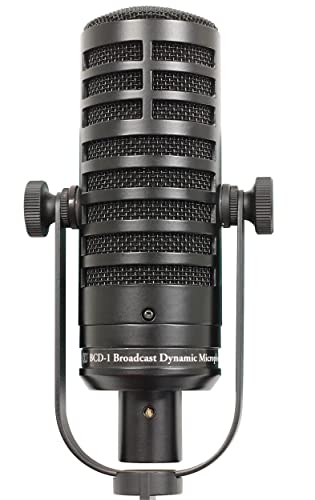
The MXL BCD-1 is designed for broadcast and podcast applications with a dynamic design that emphasizes high output and low noise. Its internal shock mount and pop-filter help reduce plosives, while a tuned grill minimizes internal reflections. This setup supports clear, upfront vocal delivery with reduced sibilance and pop sounds.
Best for: podcasting and radio-style narration where minimal processing is preferred. Better for: users seeking a ready-to-use mic with built-in pop suppression. Caution: may not deliver the widest off-axis rejection compared with multi-pattern or larger-diaphragm models.
CAD Audio A77BK Supercardioid Side‑Address Microphone

The A77BK uses a TrueFlex Equitek diaphragm and a PowerGap high-gauss neodymium magnet to produce a detailed, articulate sound. The supercardioid pattern helps reject off-axis noise, which is valuable in rooms with ambient chatter or instrument bleed. This mic is a strong option for focused vocal capture in dynamic environments.
Best for: performers and broadcasters who need precise articulation and strong rejection of surrounding noise. Better for: those who want a more controlled, intimate vocal presence. Limitation: its performance is highly dependent on proper placement and distance from the sound source.
CAD Live D84 Large Diaphragm Condenser

The CAD Live D84 is a large-diaphragm condenser with a broad frequency response, designed to capture a natural, true-to-life vocal tone. While it’s a condenser rather than a dynamic, it’s included here for context in mixed-monorooms where dynamics are paired with condensers. It provides a rich, expansive sound at the cost of greater sensitivity to ambient noise.
Best for: studios seeking a natural vocal reproduction when paired with good acoustic treatment. Better for: voice-over work in treated rooms or controlled environments. Limitation: more sensitive to room noise and reflections, which can require reflection control or de-essing in some setups.
CAD GXL2000 Side-Address Studio Condenser

The CAD GXL2000 is a versatile side-address studio condenser intended for vocals, acoustic instruments, and drum overheads. It features a natural, detailed sound with a cardioid pattern that isolates the source while reducing bleed. Its wide dynamic range and robust SPL handling make it suitable for varied recording tasks in moderate environments.
Best for: versatile home studios needing a reliable all-round mic for vocals and instruments. Better for: situations where you want a single mic that can cover multiple sources. Limitation: condenser mics are more sensitive to room acoustics than dynamics, so placement and treatment matter more here.
Buying Guide
What should I consider when choosing a side-address dynamic microphone?
- Directivity and pattern: Supercardioid and cardioid patterns help reject ambient noise; choose based on your space and how many sound sources are present.
- Diaphragm size: Large-diaphragm dynamics tend to deliver a fuller, warmer voice; smaller diaphragms can be crisper and more focused.
- Proximity effect: Dynamics amplify when very close; plan mic placement to control bass boost for voices.
- Durability and build: Metal bodies and robust grills are beneficial for daily use in desks, stages, or travel.
- Connectivity: USB mics are easy for beginners; XLR mics offer more flexibility with interfaces and mixers.
- Room and environment: Higher sensitivity condensers require acoustic treatment; dynamics are often more forgiving in untreated rooms.
- Intended use: Podcasts, voice-overs, streaming, or live performance have different emphasis on gain, isolation, and warmth.
How to pick between USB and XLR mics?
- USB mics are plug-and-play and ideal for quick setups and simple workflows. They’re best for beginners and direct computer connections.
- XLR mics require an audio interface or mixer but offer better preamps, more control, and future expandability for multi-mic setups.
What’s the role of proximity and room treatment?
Close-miking with dynamics reduces room reflections and noise; combine with a treated space for the clearest vocal capture. If space is untreated, dynamics with a focused pattern (supercardioid) generally perform better than condensers.
Is a pop filter necessary?
Yes for most vocal work. It helps prevent plosives and sibilance from distorting the signal, especially with close-miked vocals or broadcasts.
How do I assess noise and headroom?
Check SPL handling and preamp gain in your setup. A mic with a higher original output can deliver clean levels without pushing the preamp into excessive noise. Avoid mics that require heavy EQ to sound natural in your voice range.
Which mic is best for beginners?
For simple desk setups, USB mics like the A77USB provide easy access and minimal gear. For growing studios, dynamic XLR mics paired with a basic interface can be more adaptable as needs evolve.
Conclusion not required
Selecting the right side-address dynamic microphone depends on your environment, workflow, and performance goals. The models above offer reliable options across USB and XLR paths with varying degrees of pattern control, durability, and vocal character. Use the Buying Guide to compare directivity, proximity, and connectivity to align with your recording ambitions.
FAQ
- What is a side-address microphone? A mic designed to be mounted on a stand with the diaphragm facing sideways from the body, typically used for studio and stage work.
- Do I need a pop filter with a dynamic mic? A pop filter is recommended for reducing plosives in close vocal work, though some dynamics manage plosives well on their own.
- Can dynamic mics pick up clear vocals in a quiet room? Yes, especially with proper placement and a treated room; dynamics are less sensitive to room reflections than condensers.
- Which is better for podcasts, USB or XLR? USB is easier to set up; XLR offers more flexibility and future expansion for multi-mic studios.
- Do all these mics require phantom power? Dynamic microphones typically do not require phantom power, unlike many condensers.
- Are these mics good for live performances? Several listed models are designed for live use with strong off-axis rejection and robust builds.