
Best Singing Recording Studio Mics for Home Studios and Podcasters
If you’re building or upgrading a home recording setup, choose a USB or XLR condenser mic that delivers clear vocal detail with minimal background noise. This guide highlights five popular options suited for beginners, hobbyists, and semi-professional creators. Each pick is explained with who it’s best for, why it stands out, and a practical limitation to consider. A quick buying table follows to help you compare core specs at a glance.
| Product | Best For | Connection | Notes |
|---|---|---|---|
| Dejasound Upgraded Studio Recording Microphone | Podcasters and singers needing integrated monitoring | USB | Includes isolation shield and pop filter |
| FIFINE T669 Studio Condenser USB Microphone | Beginners who want a ready-to-record bundle | USB | Desk arm, long USB cable, dual pop filter |
| RØDE NT1 Signature Series | Voices requiring exceptionally low self-noise | XLR | Includes shock mount, pop filter, and cable |
| ZealSound K66 USB Podcast Microphone | Content creators across platforms | USB | Noise reduction mode and universal compatibility |
| MAONO PM320S Condenser Mic | Studio-quality tracking with simple setup | XLR | Phantom power and bundle features |
Dejasound Upgraded Studio Recording Microphone

The Dejasound microphone provides a plug-and-play USB connection for PC, smartphone, or laptop. It targets podcasters and vocalists who want a ready-to-use setup without extra hardware. The cardioid condenser microphone supports 192kHz/24-bit recording and a 30 Hz to 16 kHz range, delivering clear vocal presence while reducing room ambience. A built-in mute control and 3.5 mm headphone jack support real-time monitoring, which is useful for singers who want immediate feedback.
Best for: podcasters and home studio singers who prefer an all-in-one USB solution with monitoring. It’s a strong choice for those who value convenience and an integrated shield and pop filter for cleaner takes. Limitation: USB mics can be less versatile for professional studios that rely on external interfaces.
FIFINE T669 Studio Condenser USB Microphone

The FIFINE T669 bundle emphasizes ease of setup with USB connectivity and a complete desktop mic arm and 8.2-foot USB cable. It’s optimized for vocals, podcasts, and computer-based recordings, with a cardioid capsule that focuses on the front while minimizing background noise. The included dual pop filter reduces plosives, and the rugged build supports consistent performance in home studios. Best for: beginners who want a turnkey kit that’s ready to record right away. Caution: not ideal for Xbox compatibility.
RØDE NT1 Signature Series
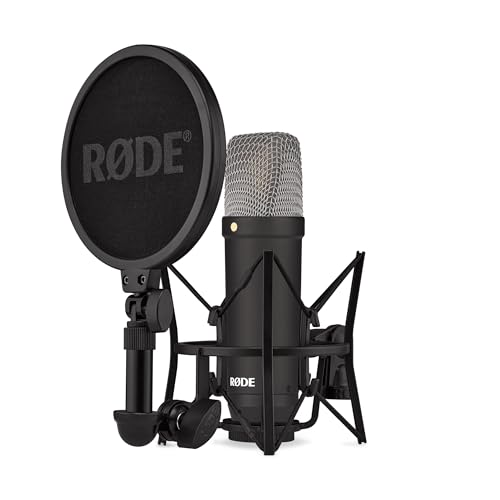
The NT1 Signature Series is a long-standing choice for studio vocal work due to very low self-noise and a large-diaphragm design. The set includes a shock mount, pop filter, and XLR cable, enabling a classic studio chain with an audio interface. It’s best for vocal tracks requiring quiet operation and clean transient handling. Choose this if you’re setting up a dedicated vocal booth and already own or plan to buy an audio interface. Limitation: requires phantom-powered XLR interface.
ZealSound K66 USB Podcast Microphone

The ZealSound K66 offers intelligent Noise Reduction Mode to clean up background noise during recording. Its wide frequency response and high sampling rate support natural-sounding vocals for podcasts, online classes, streaming, and voice work. The plug-and-play USB connection and compatibility with multiple devices ease cross-platform use. Best for: content creators who need cleaner voice tracks in imperfect environments. Caution: may require manual mode switching to optimize noise reduction in quiet rooms.
MAONO PM320S Condenser Mic

The MAONO PM320S uses an external 48V phantom power supply with an XLR interface for studio-grade sound. The large 16mm condenser capsule provides extended frequency response and robust transient detail, suitable for singing and voice work. The kit includes a pop filter and foam windscreen for cleaner vocal tracks and easier handling in untreated rooms. Best for: users who want broadcast-quality sound with a straightforward XLR setup. Limitation: requires phantom power from an interface or mixer.
Buying Guide: Key Considerations For Singing Recording Mics
- Connection Type: USB mics are simplest and ideal for beginners; XLR mics offer greater flexibility and future upgrade paths with an audio interface.
- Polar Pattern: Cardioid mics focus on the voice and reduce side noise; consider considering multi-pattern mics only if you need more versatility.
- Self-Noise and Frequency Response: Lower self-noise and a smooth vocal response help ensure clean takes, especially in treated rooms.
- Accessories: Pop filters, shock mounts, and isolation shields minimize pops and vibrations. Check bundled accessories versus added cost.
- Power and Compatibility: USB mics draw power from the computer; XLR mics require phantom power and an interface. Ensure device compatibility with your PC, Mac, or mobile setup.
- Use Case: For solo vocal tracking, a simple USB mic suffices. For multi-track studio work, an XLR mic with an interface is often better.
FAQ
- Q: Should I choose USB or XLR for singing at home? A: USB mics are easier for beginners; XLR mics offer flexibility and higher professional potential when paired with an interface.
- Q: Do I need any extra gear with a USB mic? A: Often a stand, a pop filter, and a headphone for monitoring are enough for basic setups.
- Q: What is a good starting mic for vocal clarity? A: Varying by budget, the NT1 Signature Series stands out for low self-noise and clear vocal capture.
- Q: Can I record with a dynamic mic at home? A: Yes, but most home vocal projects benefit from a condenser mic for detail, unless you need motion-resistant dynamics.
- Q: Is phantom power necessary? A: Yes for most XLR condensers; USB mics do not require phantom power.
- Q: How important is a pop filter? A: It helps reduce plosives and saliva noise for cleaner vocal tracks, especially at close range.