Best Single 12-Inch Ported Subwoofer Boxes for Car Audio
If you’re chasing deeper, louder bass from a single 12-inch subwoofer, a vented (ported) enclosure is typically the better choice for maximizing low-end output. This guide highlights five proven single 12-inch ported boxes suited for most cars, trucks, and SUVs. Each option targets different needs—compact installs, high SPL, or durability—so you can pick the best match for your vehicle and listening preferences. Ideal buyers include: a) budget-conscious installers seeking solid bass, b) enthusiasts chasing high output for party setups, and c) weekend-warrior drivers aiming for easy installation and reliable performance.
| Product | Best For | Notes |
|---|---|---|
| Q Power QBOMB12VL | Deep bass in compact spaces | Single vented chamber; sturdy MDF |
| Skar Audio SK1X12V | Universal fit, high performance | Kerf port for deep, precise bass |
| QPower 12-Inch Vented Box (1.65 Cu Ft) | Great all-around bass | Vented design with 1.65 cu ft air space |
| QPower HD112VL | High-impact, loud setups | 3.7 cu ft air space; easy wiring |
| Skar AR1X12V SPL | Maximum SPL and deep lows | Armor-coated, tuned for loud output |
Q Power QBOMB12VL Single 12″ Vented Box

The QBOMB12VL uses a single vented chamber to maximize air flow and deepen bass for a tight footprint. It’s built with 0.75-inch MDF, offering sturdiness and consistent low-end performance across a range of 12-inch subwoofers. A high-quality spring-loaded terminal ensures secure wiring for quick setup. Best for buyers who want robust bass without excessive enclosure size, particularly in compact cars or extended cabs where space is at a premium. Caution: precise fit depends on your speaker’s mounting depth and terminal layout, so verify compatibility with your sub and trunk space before purchase.
Skar Audio SK1X12V Universal Fit Ported Box
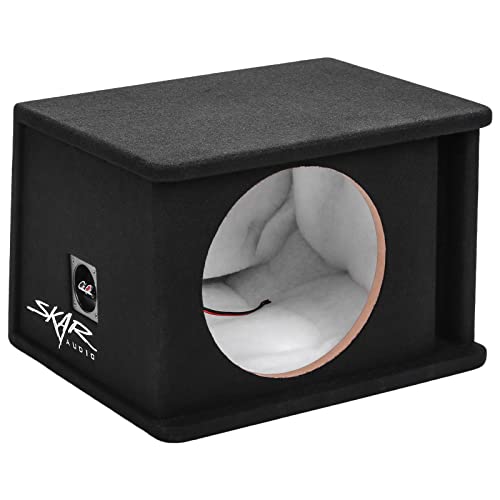
The SK1X12V is a universal-fit, single-chamber ported enclosure designed to deliver deep, accurate bass with a kerf-rounded port for enhanced airflow. Its universal fit makes it a flexible choice for many 12-inch subwoofers, especially when aiming for a strong balance between loudness and clarity. Best for installers seeking a straightforward, high-performance option that’s easy to adapt to different vehicle trunks. Limitation: universal designs may require minor adjustments for exact fitment in unusual cargo areas.
QPower Single Car Audio Subwoofer Box (1.65 Cu Ft)

This enclosure houses one 12-inch subwoofer and offers 1.65 cubic feet of air space for solid bass performance. The sturdy MDF construction includes a tabletop mounting feature for portable use, and its vented design supports efficient heat management to sustain strong bass output. Best for drivers prioritizing a reliable, easy-to-wire box with clear bass response. Caution: the listed air space is a factor in bass depth; mismatched subwoofers may not achieve optimal performance.
QPower HD112VL Single 12-Inch SPL Box

The HD112VL is designed for high-impact bass with a 3.7 cubic feet air-space configuration. It includes a gold-tipped spring-loaded terminal for solid connections and straightforward wiring to car amplifiers. Best for bass-focused setups where volume and depth are prioritized. Limitation: larger internal volume means it requires more trunk space; confirm clearance before installation.
Skar AR1X12V SPL Armor Coated Ported Box

The AR1X12V SPL Armor Coated Ported Box is engineered for maximum SPL with a 1.75 ft³ gross internal air space and a 2-inch-wide kerf port. Tuned at 41 Hz, it’s built for loud, deep bass that stays impactful at high listening levels. Best for competition-grade setups or drivers who value maximum bass output and rugged construction. Caution: armored finish adds protection but may weigh more and be less ideal for ultra-compact installs.
Buying Guide
What size and air space do I need?
For most 12-inch subwoofers, 1.25–2.0 cubic feet of air space offers a good balance of depth and efficiency. Larger boxes deliver deeper bass but require more trunk space. If you plan to crank the system, consider boxes with about 1.5–3.0 cubic feet of air space to maintain performance without overloading the enclosure.
Ported vs. sealed: which is right?
Ported enclosures typically maximize low-end output and efficiency at a given power level, producing louder bass with less amplifier demand. Sealed boxes provide tighter, more accurate transient response and can be more forgiving in small or awkward spaces. Choose ported for loud, stadium-like bass; choose sealed for tight, musical bass in compact rooms.
Material quality and construction
Look for high-density MDF (often 0.75 inch or 5/8 inch). A rigid enclosure reduces vibration, improves sound clarity, and prolongs subwoofer life. Features like dovetail joints, airtight seams, and secure terminals contribute to long-term reliability in car environments.
Ease of installation
Consider enclosures with simple wiring terminals (spring-loaded terminals help with fast connections) and mounting features that align with your vehicle’s trunk or cargo area. Some enclosures include tabletop mounting for portability in installations or swaps between vehicles.
Compatibility and fit
Verify the enclosure’s depth, width, and mounting hole pattern against your subwoofer model and vehicle. Even a popular “universal fit” design may require minor trimming or adjustments to fit behind seats or in tight spaces.
Durability and finish
Enclosures with carpet finishes or bed-liner coatings resist wear and moisture, helping to preserve performance in varied automotive environments. If you frequently transport gear or face rough road conditions, durability matters more than aesthetics.
FAQ
- Are 12-inch ported boxes better for bass than sealed boxes? Ported boxes generally deliver louder bass with deeper extension at a given power level, while sealed boxes offer tighter bass and better transient response.
- How much air space do I need for a 12-inch sub? Most 12-inch subs perform well in 1.25–2.0 cubic feet, though some designs benefit from more space for louder output.
- Do I need special wiring for a ported box? Most enclosures use standard spring-loaded terminals. Confirm your amplifier’s channel efficiency and wire gauge compatibility for secure connections.
- Will a larger enclosure always sound better? Not necessarily. Excessively large enclosures can reduce perceived punch and cause inefficiencies if the sub and amp aren’t matched.
- Is a universal-fit enclosure a good choice? Universal designs are versatile but may require fit adjustments for exact vehicle dimensions and sub mounting depth.
- What maintenance helps keep bass consistent? Ensure proper sealing of joints, secure terminals, and avoid moisture exposure to protect MDF and interior components.