Best Small Class D Amplifiers for Car Audio and Home Use
If you’re shopping for a compact, efficient amplifier that still delivers solid power, a small class D amplifier is a strong fit. These models excel in tight spaces like small cars, desktops, or portable setups while keeping heat and energy use in check. This guide highlights five compact options, who they’re best for, and practical buying considerations to help you choose confidently. Below is a quick summary table of the featured products.
| Product | Best For | Key Power Figure | Notes |
|---|---|---|---|
| Taramps TS 400×4 | Multichannel car setups | 400W RMS total | 4-channel, bridgeable |
| Skar Audio RP-1200.1D | Heavy subwoofer power | 1200W RMS @1Ω | Monoblock, remote level |
| Fosi BT20A | Small spaces, home audio | 100W x 2 | Bluetooth included |
| AIYIMA A07 | Hi‑fi desktop setups | Up to 600W total | High fidelity focus |
| Fosi BT10A | Budget two-channel | 50W x 2 | Compact, easy setup |
Taramp’s TS 400×4 4-Channel Car Amplifier
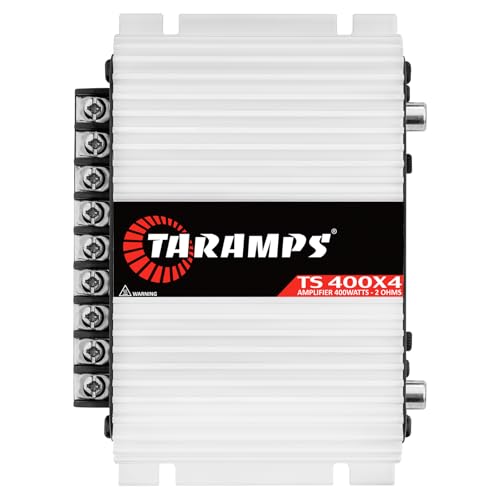
The Taramps TS 400×4 is a four-channel class D amplifier rated for 400 Watts RMS total (100W per channel) at 2 ohms. It supports bridging for flexible speaker configurations and includes LED indicators and short-circuit protection. This makes it suitable for mid-sized car audio systems seeking efficient power without excessive heat. Best for multichannel installs with modest space constraints.
Best for: drivers building a compact four‑way or two‑sub + two‑mid setup in a small car. Choose this if: you need four channels with solid, budget‑friendly power and protection features. Caution: keep within rated impedance to avoid clipping or overcurrent.
Skar Audio RP-1200.1D Monoblock Amplifier
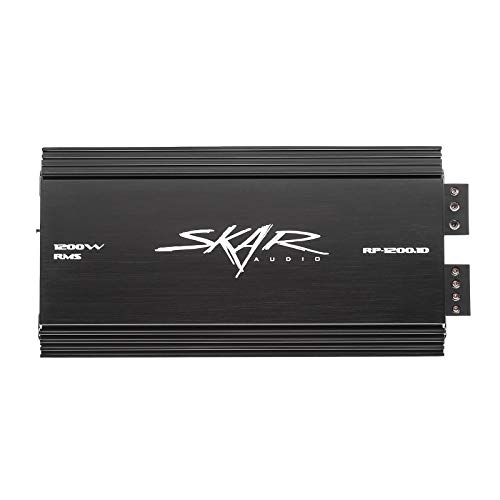
This is a dedicated monoblock class D amplifier designed for subwoofers. It delivers up to 1,200 Watts RMS at 1 ohm (1,600W peak) and features a built‑in bass boost with a switch for +6 or +12 dB at 45 Hz. It’s best for those who need strong, stable subwoofer performance in a compact footprint. Best for single-sub installs or tight trunk spaces where high bass output is the goal.
Best for: power-hungry subwoofers in tight spaces. Choose this if: you require high RMS power for a single sub and flexible bass shaping. Caution: ensure your sub’s impedance matches 1 ohm for optimal results, and monitor heat with long sessions.
Fosi BT20A Bluetooth Stereo Amplifier
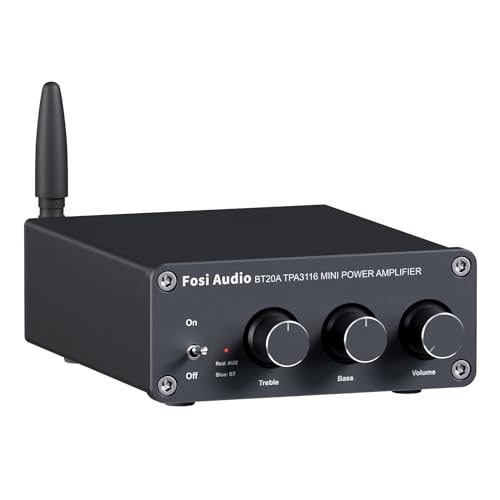
The BT20A is a compact two‑channel amplifier with Bluetooth streaming and 100W per channel into two speakers. It’s designed for indoor or light outdoor use with a straightforward setup. The unit is a practical option for small home systems, bookcase speakers, or a compact desktop stereo. Best for: small rooms or offices where wireless streaming matters.
Best for: simple, space‑conscious home or office setups. Choose this if: you want Bluetooth input and easy, low‑effort installation. Caution: output power is modest; it isn’t ideal for demanding loudspeakers or large spaces.
AIYIMA A07 Premium 2‑Channel Amplifier

The AIYIMA A07 uses the TI TPA3255 Class D chip and delivers up to 600W total power suitable for 2–8 ohm speakers. It emphasizes high‑fidelity audio with low noise and reliable heat management. It includes a pre‑out for connecting to additional power amplification or subwoofers and supports a compact desktop or bookshelf arrangement. Best for: hi‑fi enthusiasts seeking cleaner sound in a small footprint.
Best for: desktop or bookshelf stereo with emphasis on sound quality. Choose this if: you value high‑fidelity performance in a compact amplifier. Caution: verify the input and speaker impedance compatibility for your specific setup.
Fosi BT10A Bluetooth 5.0 Amp

The BT10A is a tiny two‑channel amplifier powered by the TPA3116 chip. It provides up to 50W x 2 and includes Bluetooth 5.0 for wireless streaming. Its ultra‑compact design makes it ideal for small rooms, portable setups, or a basic amp upgrade to passive speakers. Best for: budget builds where space and simplicity trump large power output.
Best for: small, low‑cost audio upgrades. Choose this if: you need a straightforward Bluetooth stereo amp. Caution: don’t expect high SPL in larger rooms or with power‑hungry speakers.
Buying Guide: What To Consider With Small Class D Amplifiers
Power requirements should match speaker impedance and room size. For car audio, check if the amp is bridgeable and how many channels you need. For home use, consider space, Bluetooth or wired input options, and whether you need pre‑outs for subwoofers or additional amps.
Key questions to answer:
- How many channels do I need to drive my speakers or subs?
- What impedance do my speakers have, and is the amp stable at that load?
- Is there a brightness or warmth preference in sound, and can the amp’s tone controls or EQ help?
- Do I require Bluetooth or streaming, or will wired inputs suffice?
- What space constraints exist in my install, and is heat management a concern?
Pros of class D include high efficiency, cooler operation, and smaller form factors, making them ideal for compact spaces or vehicles. Potential considerations are thermal limits under heavy continuous use and the need to match the amp’s sensitivity and gains to your head unit or source to prevent distortion.
FAQ
Q: Are small class D amplifiers suitable for car audio? A: Yes, many compact models are designed for cars, offering efficient power with less heat in small spaces.
Q: Can I use Bluetooth amplifiers with passive speakers? A: Yes, several models include Bluetooth input to stream audio to passive speakers or to pass signal to a separate receiver/subwoofer as needed.
Q: What does RMS power mean in these specs? A: RMS reflects continuous power output under typical listening conditions, giving a more reliable sense of sustained performance than peak power.
Q: How important is impedance matching for these amps? A: Very important. Mismatched impedance can reduce power, increase distortion, or harm the amp. Always verify speaker impedance and amp stability.
Q: Do these amps require specialized installation? A: Basic units are straightforward, but car installations may require mounting, wiring kits, fuses, and proper grounding for safety and performance.