
Best Small MIDI Sound Modules for Portable Music Making
Answering a common buyer question: the best small MIDI sound modules deliver portable, battery-friendly or USB-powered sound engines that you can attach to keyboards, microcontrollers, or standalone rigs. The top picks here suit different needs—from ultra-portable USB MIDI hubs to compact multi-voice synths with built-in sounds. Ideal buyers include traveling performers, classroom setups, hobbyists building compact rigs, and hobbyist developers integrating sound into DIY projects. Below, five compact options are evaluated with why they stand out, who they suit, and any notable limitations. A quick comparative table helps you see key differences at a glance.
- Product overview table is listed below the introduction to help quick comparisons.
| Product | Best For | Key Strength |
|---|---|---|
| PianoBox Mini General MIDI Sound Module | On-the-go players needing USB keyboard compatibility | USB MIDI direct connection to keyboards without a computer |
| NULLLAB MIDI Sound Module | Most versatile GM 2.0 with multi-channel polyphony | 256+ tones, 16 channels, 32-voice polyphony |
| MIDIPLUS PianoEngine USB Host MIDI Sound Module | Compact studio or classroom setups needing easy MIDI routing | 128 GM sounds, 64 complex tones, USB Host with MIDI IN/OUT |
| IS Icstation Light Sensor Sound Module | DIY greeting cards and light-activated sound projects | Light-triggered playback with 8M memory |
| Synido Wireless 32 Key MIDI Keyboard Controller | Wireless flexibility for on-the-go composing | 32 keys, built-in sounds, BLE MIDI, 6-hour battery |
PianoBox Mini General MIDI Sound Module

The PianoBox Mini provides a portable General MIDI (GM) sound engine with built-in battery power. Best for keyboard players who want immediate playback from USB MIDI keyboards without turning on a computer. It also supports a standard MIDI input for devices with a MIDI out. This module is most suitable for performers or students needing a compact, battery-powered GM sound source with straightforward USB connectivity.
Who it’s best for: players seeking a simple, portable GM experience and direct USB keyboard compatibility. Why selected: the built-in battery and direct USB MIDI connection remove the need for a computer, reducing latency and setup time. Limitation: lacks extensive custom effects or multi-channel routing compared to larger modules.
NULLLAB MIDI Sound Module
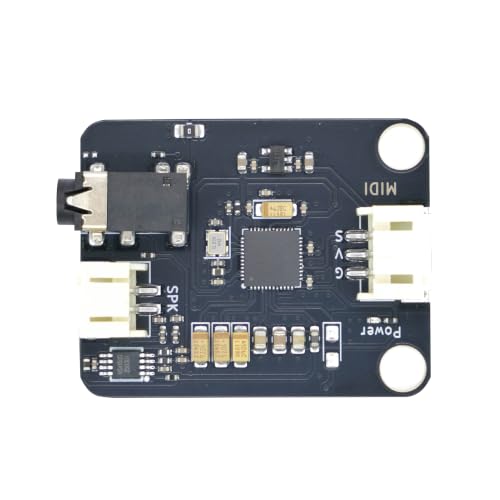
The NULLLAB MIDI Sound Module emphasizes a large built-in sound library (256+ tones and percussion) and GM 2.0 compatibility. It supports 16 independent MIDI channels and up to 32-voice polyphony with effects, making it a strong choice for more complex arrangements. Best for: users who need a robust GM 2.0 experience with multi-channel playback and built-in effects.
Why selected: its extensive tone library and multi-channel architecture enable richer parts than basic GM modules. Limitation: more complex to configure than ultra-portable options; may require a dedicated controller or interface for advanced setups.
MIDIPLUS PianoEngine USB Host MIDI Sound Module

The MIDIPLUS PianoEngine provides standard GM sounds with improvements in piano and drum tones, plus 64 complex tones and 24-bit/48kHz audio I/O. It supports MIDI IN/OUT and USB Host simultaneously, enabling a true duet setup where one piano plays accompaniment while another handles melody. Best for: compact studios or classrooms needing flexible MIDI routing in a single box.
Why selected: USB Host capability and dual-function MIDI routing enable versatile, space-saving workflows. Limitation: while compact, it may not include as many advanced synthesis features as larger modules.
Synido Wireless 32 Key MIDI Keyboard Controller

The Synido K32 is a compact 32-key wireless MIDI controller with built-in sounds and speakers. It supports BLE MIDI and offers up to six hours of battery life, enabling wireless creativity away from a computer. Best for: musicians who want instant playability in a portable, self-contained device without dragging a laptop to rehearsal or a classroom. Limitation: built-in speakers may not match external monitors or PA systems in a performance setting, and the keyboard is smaller than standard keys for some players.
PartyKeys PartyStudio 70W Wireless MIDI Synth Speaker

PartyStudio blends a 70W speaker system with built-in 128 sounds and 50+ drum rhythms. It operates as a standalone MIDI sound engine with no laptop required, plus Bluetooth 5.0 and USB-C. Best for: small venues or practice spaces where a ready-to-use, all-in-one MIDI sound player is desirable. Limitation: while powerful for a standalone unit, it may be bulkier than other compact modules and less suited for ultra-portable setups.
Buying Guide
What should I look for in a small MIDI sound module?
Consider sound library size, polyphony, and GM/GM2 compatibility. A larger preset library and higher polyphony support more complex parts. Look for USB host/in/out options if you plan to route MIDI from multiple instruments or keyboards.
Portable vs. desktop-focused features
Battery-powered units are ideal for travel and street performances, while USB-connected modules suit home studios and classrooms. Wireless (BLE) MIDI enables setup away from outlets but may affect latency or battery life.
Input/output and compatibility considerations
Check whether the module supports USB MIDI, traditional MIDI DIN, or both. USB Host capability can simplify integration with keyboards that lack MIDI outputs. Some modules also combine audio outputs, mic inputs, or built-in speakers for standalone use.
Best for different use cases
Best for on-the-go musicians: battery-powered or USB-only units. Best for classrooms or studios: modules offering multiple channels, robust effects, and easy USB/host routing. Best for DIY projects: modules with simple memory expansion, light sensors, or microcontroller compatibility.
FAQ
What is a GM sound module?
A GM sound module provides a General MIDI-capable set of instrument sounds that can be triggered via MIDI input, allowing you to play standardized instrument timbres without a computer.
Do these modules require a computer?
Some are designed to work without a computer (battery-powered or standalone units), while others are optimized for use with a computer or a host device through USB or MIDI connections.
Is polyphony important in a small module?
Yes. Polyphony determines how many notes can sound simultaneously. Higher polyphony supports more complex parts without notes dropping out, especially in multi-instrument arrangements.
Can I use these with non-MIDI keyboards?
Many support USB MIDI or direct MIDI connections, enabling compatibility with keyboards that lack traditional MIDI outputs through USB, though always verify the specific model’s input options.
Are built-in speakers useful for performance?
Built-in speakers are convenient for practice or quick ideas but may not suffice for gigs. Consider external monitors or PA compatibility for live performances.