
Best Small Portable Audio Recorder Picks for Clear On‑the‑Go Recording
Looking for a compact, easy‑to‑use device that captures clear audio wherever you are? This guide highlights five reliable small portable audio recorders ideal for students, journalists, professionals, and casual note‑takers. Each entry covers who benefits most, why it stands out, and a practical caveat. A quick summary table follows to help you compare key specs at a glance.
| Product | Memory | Best For | Notable Point |
|---|---|---|---|
| Tonfarb 136GB Digital Voice Recorder | 136GB total (8GB built‑in + 128GB TF) | Long lectures, interviews | Very long recording capacity; requires fast transfer via USB‑C |
| Tonfarb 64GB Digital Voice Recorder | 64GB | Interviews, field work | Slim, quick one‑button recording |
| EVISTR 64GB Digital Voice Recorder | 64GB | Students, business meetings | Balanced size with strong noise reduction |
| Cappsu 32GB Digital Voice Recorder | 32GB | Meetings, notes | Built‑in memory; straightforward operation |
| EVIDA 128GB Digital Voice Recorder | 128GB | Lectures, conferences | High capacity with playback and password option |
Tonfarb 136GB Digital Voice Recorder with Playback

The Tonfarb 136GB model targets users who need extensive recording storage and reliable playback. It uses dual noise‑reduction microphones and records in PCM at up to 1536 kbps for clear sound. This device supports one‑click recording and quick USB‑C transfer, making it suitable for long lectures, journalism, or archival projects. Best for serious note‑takers who value long sessions without swapping memory cards. Caution: larger storage may tempt keeping many files, so organize folders to stay efficient.
Digital Voice Recorder 16GB with Playback
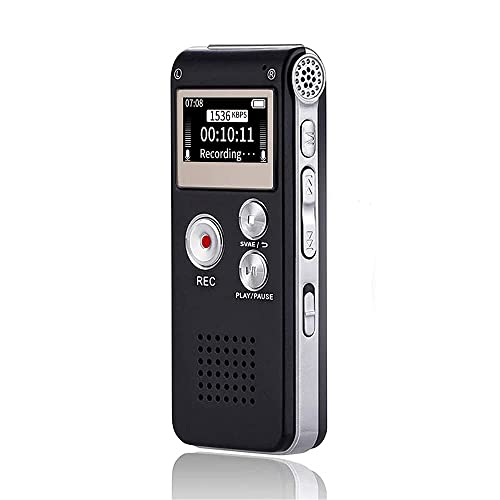
This Sunlan recorder emphasizes simple operation with one‑button recording, immediate playback, and easy navigation. It offers clear voice capture with noise reduction and a built‑in speaker for quick reviews. Best for students and professionals who want a compact device for quick notes or short interviews. Limitation: 16GB memory may require frequent transfers for long sessions.
Tonfarb 64GB Digital Voice Recorder with Playback

This Tonfarb model balances memory and portability with a 64GB capacity and a long‑lasting battery. It offers one‑click recording and a straightforward interface, making it a strong choice for journalists, students, and professionals who need a reliable handheld recorder for meetings, lectures, or field work. Better for users who want a mid‑size device without sacrificing ease of use. Caution: the battery life is device‑dependent and may vary with high‑bitrate recording.
Cappsu Digital Voice Recorder with Playback

The Cappsu device provides 1536 kbps PCM recording with a built‑in 32GB storage chip. It is designed for meetings, lectures, and interviews where reliable operation and ease of use matter. Best for readers who want a no‑TF‑card option and stable performance with a simple user experience. Limitation: lower memory may require more frequent file management during long sessions.
128GB Digital Voice Recorder for Lectures Meetings
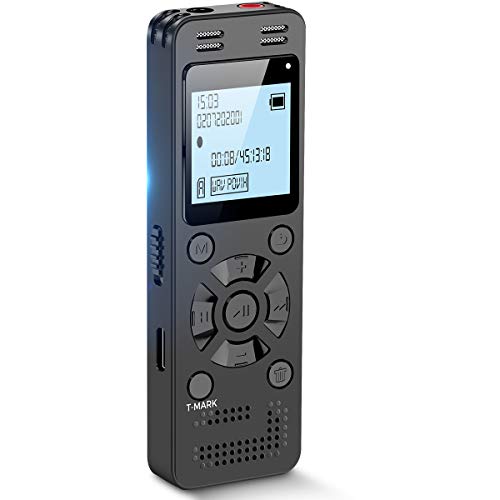
The EVIDA 128GB model offers expansive storage and playback with password protection. It supports high‑quality PCM recording at up to 1536 kbps and provides an option to pre‑set formats like mp3 or wav. Best for professionals and students who require long archive cycles and added privacy. Caution: password features may require initial setup, which could slow first use.
Buying Guide: Key Factors for Small Portable Recorders
- Memory vs. battery life: More storage helps with long sessions; consider battery capacity if you record for hours at a stretch.
- Recording format and quality: PCM at 1536 kbps gives the best clarity; WAV and MP3 options offer different compatibility and file sizes.
- Noise reduction and microphone design: Dual or directional mics improve speech clarity in noisy environments; look for devices with automatic voice activation to save space.
- One‑button operations and playback: Simple controls reduce setup time during meetings or lectures.
- File transfer and compatibility: USB‑C or built‑in USB drives simplify transfer to computers or other devices.
- Security and privacy: Password protection can help keep sensitive recordings safe on some models.
FAQ
- What is PCM, and why does it matter for recorders? PCM is a raw audio format that preserves higher fidelity, useful when clarity is essential in interviews or lectures.
- Is built‑in memory enough for long sessions? For long meetings, models with larger storage or expandable memory are advisable.
- Should I prioritize noise reduction or user‑friendly controls? It depends on your use case; noisy environments benefit from strong noise reduction, while quick capture favors simple controls.
- Can these recorders double as USB drives? Some models include USB‑C connections or built‑in USB storage, enabling easy file transfer and backup.
- Are password protections common on portable recorders? Some models offer password options for added privacy, but not all; verify before purchasing if security is a priority.
- What’s the best choice for students? A compact device with reliable playback, clear speech capture, and moderate memory often works best for lectures and note‑taking.