
Small soundbars with HDMI ARC boost TV audio and simplify connections using a single cable. Below is a concise comparison of the selected compact soundbars that support HDMI ARC/eARC and are suited for small living rooms, bedrooms, gaming stations, or desktop setups.
| Product | Key Features |
|---|---|
| Bose TV Speaker | HDMI-ARC, Dialogue Enhancement, Wide Natural Sound |
| Hisense HS205G 2.0Ch | HDMI ARC, DTS Virtual:X, Dolby Audio, Bluetooth |
| Bestisan 16″ Small Soundbar | HDMI ARC/CEC, DSP, 3 EQ Modes, 2+2 Drivers |
| Assistrust Detachable Sound Bar | HDMI ARC, Bluetooth, 3 EQ Modes, Auto Volume Boost |
| GEOYEAO 2.0 CH Dolby Digital Sound Bar | HDMI ARC/eARC, Dolby Digital, Bluetooth 5.3, Compact 16″ |
Bose TV Speaker – Soundbar for TV with Bluetooth and HDMI-ARC Connectivity

The Bose TV Speaker is a compact soundbar focused on clarifying dialogue and improving overall TV audio. It includes HDMI-ARC for a single-cable connection and Bluetooth for wireless streaming. Two angled full-range drivers aim to create a wider, more natural soundstage than typical mini soundbars. The unit ships with a remote and is designed for simple setup and use.
- Use Case: Small living rooms and bedrooms where speech clarity is a priority.
- Strengths: Dialogue emphasis, compact footprint, easy HDMI-ARC setup.
- Considerations: Lacks integrated subwoofer—bass depth depends on room and placement.
Hisense HS205G 2.0Ch Sound Bar With HDMI/ARC

The Hisense HS205G supports HDMI ARC and includes DTS Virtual:X and Dolby Audio support to simulate multichannel sound from a 2.0ch chassis. With Bluetooth streaming and single-remote control compatibility, this model aims to deliver immersive audio without needing extra speakers. The manufacturer highlights 120W output and compatibility with Roku TV setups.
- Use Case: Users wanting virtual surround effects from a compact bar.
- Strengths: DTS Virtual:X and Dolby support, multiple inputs including HDMI ARC and optical.
- Considerations: Virtual surround varies by content and room acoustics; no dedicated subwoofer port listed.
Bestisan 16″ Small Soundbar With HDMI ARC/CEC
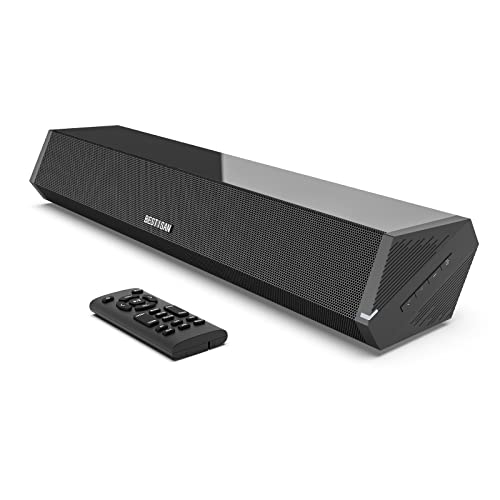
Bestisan’s compact 16″ soundbar uses a 2+2 driver arrangement and U-style tubes to widen frequency reproduction. It offers HDMI ARC/CEC, DSP processing, and three EQ presets (Movie, Music, News) for quick tonal adjustments. The design focuses on delivering more bass and clarity than typical ultra-compact bars.
- Use Case: Compact rooms where an affordable, flexible small soundbar is needed.
- Strengths: Multiple EQ modes, driver arrangement for fuller mid/bass response.
- Considerations: Peak wattage claims should be weighed against measured performance; placement affects soundstage.
Assistrust Sound Bar For Smart TV With HDMI/ARC

The Assistrust soundbar features HDMI ARC, Bluetooth, optical and AUX inputs, and a detachable design allowing horizontal or vertical placement. It advertises automatic volume boost and three EQ modes for tailored listening. Four drivers are used to produce a claimed 80W output and more immersive sound for small rooms or modular setups.
- Use Case: Flexible installations where vertical or wall-mounted placement is preferred.
- Strengths: Detachable form factor, multiple placement options, auto volume boost for dynamic scenes.
- Considerations: Detachable design may affect stereo imaging; verify mounting hardware compatibility.
GEOYEAO 2.0 CH Dolby Digital Sound Bar With HDMI ARC/eARC

This compact 16-inch soundbar supports HDMI ARC/eARC, Dolby Digital decoding, and Bluetooth 5.3. It emphasizes a Dolby Digital surround presentation and lists optical, coaxial, and AUX for broader compatibility. The ultra-slim profile is intended for small to medium rooms, gaming rigs, or desktop setups.
- Use Case: Users who want Dolby Digital decoding over ARC/eARC on a compact bar.
- Strengths: eARC compatibility for higher-bitrate audio, multiple wired/wireless inputs.
- Considerations: True multichannel immersion depends on source material and TV eARC/ARC support.
Buying Guide: Choosing A Small Soundbar With HDMI ARC
When selecting a compact soundbar that supports HDMI ARC or eARC, consider the following factors to match your room, TV, and usage:
- ARC vs eARC: ARC passes compressed audio and basic formats; eARC supports higher-bitrate formats like Dolby Atmos and lossless codecs. Choose eARC if your TV and source devices support it and you want advanced audio formats.
- Room Size And Placement: Small bars are ideal for bedrooms, apartments, and desktops. For larger rooms, consider a soundbar with an external subwoofer or separate rear speakers for more immersion.
- Dialogue Clarity: Look for models advertising dialogue enhancement or center-voiced drivers if you prioritize clear speech for news and dialogue-heavy shows.
- Virtual Surround vs True Surround: Virtual surround processing (DTS Virtual:X, Dolby virtualization) widens the soundstage without extra speakers. It can be effective but won’t replace a true 5.1 setup.
- EQ Modes And DSP: Built-in EQ presets or DSP modes help optimize audio for movies, music, and speech without complex tuning.
- Connectivity: Confirm the soundbar has the inputs you need: HDMI ARC/eARC, optical, Bluetooth, and AUX. HDMI ARC simplifies setup and remote control syncing via CEC.
- Power And Drivers: Wattage gives a rough idea of output but consider driver count and cabinet design for realistic expectations about bass and clarity.
- Subwoofer Options: If deep bass matters, check whether the soundbar includes a subwoofer, supports an external sub, or provides enhanced low-frequency drivers.
- TV Compatibility And Settings: Ensure your TV has an HDMI port labeled ARC or eARC and enable ARC/eARC in both TV and soundbar audio settings. For eARC, firmware updates on TV or soundbar may be required.
- Cable Quality: Use a certified HDMI 2.1 cable for eARC/high-bitrate formats. Non-certified cables can limit features like Dolby Atmos or high-resolution codecs.
- Placement Flexibility: Consider wall-mount compatibility or detachable designs if placement options matter in your space.
- Remote And CEC: HDMI-CEC support allows TV remotes to control basic soundbar functions—confirm compatibility across brands if seamless control is important.
Comparison Perspectives
- Speech-Focused: Look at models that explicitly emphasize dialogue/dedicated voice processing (examples in this list include the Bose TV Speaker).
- Virtual Surround: If immersive sound without extra speakers is desired, prioritize DTS Virtual:X or Dolby virtualization features (Hisense HS205G listed).
- Flexible Installation: For wall-mounting or unique placement, consider detachable or vertically mountable options (Assistrust design notes).
- Advanced Audio Formats: For highest-fidelity formats and future-proofing, choose eARC-capable bars and pair with an HDMI 2.1 certified cable.