Best Microphone Sound Box for Clear Studio Recordings and Noise Reduction
Find the right sound box for your microphone to reduce reflections, control room noise, and improve vocal clarity. This guide focuses on compact, portable isolation booths and shield boxes ideal for home studios, podcasters, and voiceover artists. The top picks emphasize portability, build quality, and effectiveness for different setups. Best for creators who record in small spaces, travel often, or need quick, ready-to-record solutions.
| Product | Best For | Why It Stands Out |
|---|---|---|
| TroyStudio Portable Vocal Booth (Large Foldable) | Travel-friendly studios | 2-inch dense foam, foldable design, strong structure |
| TONOR Microphone Isolation Shield | Standing or seated vocal work | Adjustable height, sturdy tripod, five-panel foam |
| TroyStudio Portable Vocal Booth (Another Size) | Desk or stand use | Still portable, 2-inch foam, integrated cabling access |
| GDPONRM Microphone Wind Shield | Compact, budget-friendly setups | Five-sided seal, high-density foam, dual pop filter |
| Frgyee Mic Shield with Stand | Condenser mics on the go | Foldable, high-density absorbent foam, adjustable pop filter |
TroyStudio Large Foldable Vocal Booth

Best for compact studios that need an all-in-one, foldable solution. Inside size after setup is 8” (L) x 10” (W) x 12” (H), exterior 12” x 12” x 16”, folded 12” x 12” x 6”, and weighs about 2 lbs. The 2-inch dense egg-crate foam reduces room reverb by a reported 92.7%, delivering a dry, clear vocal track. The design includes cable and mic stand access, making it suitable for desk or stand use. Caution: smaller interior may limit larger mic setups or wider-angle vocal takes.
Who this is best for: Home-recording artists, voiceover talents, and podcasters who want a portable, space-efficient solution without sacrificing substantial acoustic treatment. Reason for selection: strong foam density and a compact footprint with practical access features.
Limitations: Not ideal for very large mics or expansive drum-room setups; folded form reduces interior space.
TONOR Microphone Isolation Shield
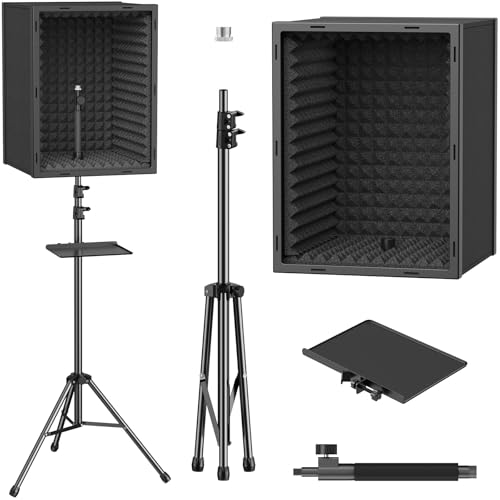
Best for users who need height-adjustable isolation in a compact form with a sturdy stand. The shield uses five high-density foam panels to reduce echoes and indoor reverb by up to 96%, enabling crisper recordings. Front and back plastic frames reinforce stability, with a heavy-duty tripod included. Height adjusts from 51.2” to 74.8”, ideal for both seated and standing recording.
Who this is best for: Solo creators and small studios needing a reliable, adaptable setup that can grow with their recording height. Reason for selection: strong stability and broad height range.
Limitations: Standing height and footprint may require more room; assembly takes a few minutes to fit the tripod and shield securely.
TroyStudio Portable Vocal Booth (Desk & Stand Use)

Best for desk-bound setups requiring solid isolation without a full room booth. Inside size after setup is 12” x 14” x 16”; exterior 16” x 16” x 20”; folded 16” x 16” x 6”; weight around 4 lbs. It uses 2-inch dense foam and a reinforced backing panel for improved stability. The elastic bands help secure the foam for tighter packing when traveling. It suits voiceover and podcasting in compact spaces.
Who this is best for: Creators who work at a desk and want a robust, portable recording shield that travels well. Reason for selection: larger internal volume than some compact boxes with strong acoustic treatment.
Limitations: Slightly heavier and larger footprint than ultra-portable boxes; may be less convenient for very small desks.
GDPONRM Microphone Wind Shield

Best value option for basic acoustic treatment with a compact form factor. Features a five-sided seal with high-density foam and a built-in dual-layer pop filter. Designed to reduce noise and reflections while filtering explosive consonants. The foam is durable for repeated use and transport. It offers a straightforward setup for small studios and beginners.
Who this is best for: Beginners and budget-conscious creators needing effective noise reduction without complex assembly. Reason for selection: economical yet functional design with dual pop filter support.
Frgyee Isolation Shield with Stand

Best for versatile, on-the-go condenser mic setups. The shield, when used with a compatible mic stand, reduces reflections with high-density foam. The folding panel design allows angle adjustments, and the dual-layer pop filter helps minimize plosives and wind interference. Caution: not all Blue Yeti models fit perfectly; verify mic compatibility before purchase.
Who this is best for: Journalists, podcasters, and voice actors who need a portable shield with flexible positioning. Reason for selection: practical foldability and adjustable pop filter for varied mic placements.
Buying Guide: Key Considerations For Choosing A Sound Box
- Intended use: Desktop, standing, or travel-friendly setups affect size, weight, and accessibility of ports and stands.
- Acoustic performance: Look for high-density foam (2 inches or more) and box or shield designs that minimize room reverb and reflect unwanted sound.
- Adjustability: Height and angle flexibility are crucial for standing versus seated recording and for different microphone models.
- Portability: Foldable or compact designs are essential for on-the-go recording or limited studio space.
- Compatibility: Check mic diameter compatibility, stand mounting options, and wind/pop filter integration.
- Durability: Rigid frames and reinforced panels improve stability and long-term use, especially with frequent transport.
Frequently Asked Questions
- What is the primary purpose of a microphone isolation shield?
To reduce room reflections, minimize ambient noise, and improve vocal clarity. - Are foldable sound boxes as effective as fixed studio booths?
They provide substantial acoustic treatment but may have more limited interior space compared to full studios. - Which setup works best for small desks?
A desk-friendly shield with an adjustable height and compact footprint is ideal. - Do I need a pop filter with an isolation shield?
Many models include a built-in dual-layer pop filter to reduce sibilance and plosives; use it if available. - Can I use these shields with USB microphones?
Yes, most shields accommodate USB and condenser mics, but check compatibility with the attachment diameter. - What should I consider when traveling with a sound box?
Look for foldable designs, lightweight materials, and a secure carrying case.