
Upgrade Your TV Audio — This guide reviews five popular 5.1 surround soundbar systems that pair a main bar with rear speakers and a subwoofer to create immersive home-theater audio. Below is a quick comparison table of the selected products to help you scan features before detailed reviews.
| Product | Channels / Tech | Key Strength | Connectivity |
|---|---|---|---|
| VIZIO 5.1 Soundbar SE | 5.1 / Dolby Atmos & DTS:X | Wireless sub + app control | Bluetooth, app |
| RAINEVERRY 5.1 CH Surround Sound Bar | 5.1 / Dolby Digital Plus | 400W system power, DSP | HDMI, Optical, Bluetooth 5.3 |
| Amazon Fire TV Soundbar Plus | 5.1 / Dolby Atmos, DTS:X | Dedicated center channel for dialogue | Fire TV integration, Bluetooth |
| ULTIMEA Poseidon D50 (320W) | 5.1 / Virtual surround | Adjustable surround speakers, app control | Bluetooth, APP |
| ULTIMEA Poseidon M60 (300W) | 5.1 / Dolby Atmos | VoiceMX dialogue enhancement, quick setup | HDMI eARC, BT 5.4 |
VIZIO 5.1 Soundbar SE, Wireless Subwoofer

This VIZIO model provides a classic 5.1 layout with three full-range drivers in the soundbar, two surround speakers, and a wireless compact subwoofer. The configuration advertises up to 96dB output suitable for medium to large rooms. VIZIO supports mobile app control for firmware updates and fine-tuning of advanced settings, though the soundbar remote is sold separately. The system supports immersive codecs listed (Dolby Atmos & DTS:X) and emphasizes ease of setup and wireless sub placement. Ideal if you want a branded solution with mobile app management and detachable surround elements.
5.1 CH Surround Sound Bar With Dolby Audio (RAINEVERRY)
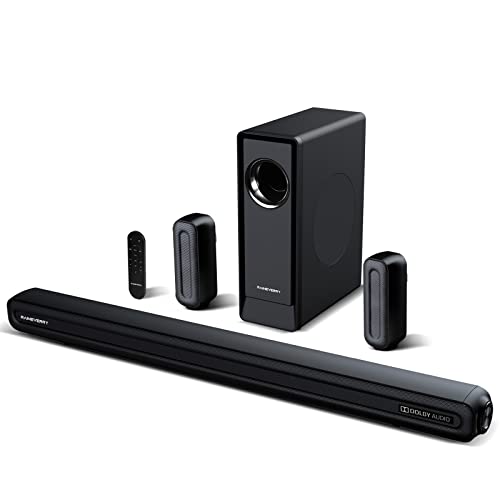
This RAINEVERRY system highlights a 5.1-channel engine with Dolby Digital Plus, DSP technology, and 400W total power. It includes wireless rear speakers and a large 16-inch wireless subwoofer for deep bass down to around 50 Hz. The product emphasizes multiple EQ modes (Music, Movie, News, 3D) and a smart remote that adjusts treble and bass and switches modes. Connectivity covers HDMI and optical inputs plus Bluetooth 5.3. The system is positioned for listeners who want powerful bass and configurable EQ options in a budget-friendly surround package.
Amazon Fire TV Soundbar Plus With Subwoofer And Surround

Designed for tight integration with Amazon’s ecosystem, this Fire TV Soundbar Plus delivers a full 5.1 surround experience with Dolby Atmos and DTS:X. A dedicated center dialogue channel improves speech clarity. It ships with a subwoofer and two surround speakers to approximate cinema audio at home. The strength here is interoperability with Fire TV features and prioritizing clear dialogue while supporting immersive object-based formats. Connectivity and setup are oriented toward streaming-first home theaters and users who prefer an integrated Fire TV experience.
ULTIMEA 5.1 Sound Bar Poseidon D50 (320W)

The ULTIMEA Poseidon D50 emphasizes SurroundX virtualization (converting 2.0 to 5.1), two wired rear speakers, and a wireless subwoofer. With a 320W peak power spec and app control, it targets users seeking flexible placement and app-based EQ. The features list mentions aerospace-grade magnets and BassMX technology for stronger low-end impact, positioned for gaming and movie use. This model suits rooms where wired rear speaker routing is acceptable and where app customization is a priority.
ULTIMEA 5.1CH Poseidon M60 With Dolby Atmos

The Poseidon M60 from ULTIMEA advertises real Dolby Atmos support, VoiceMX dialogue enhancement, and a 300W 6-driver system. It includes five built-in drivers and a wired wooden subwoofer and claims <0.5 ms latency via precision DSP for synchronized audio with video. The system lists quick under-1-minute setup and multiple listening modes. This model is relevant for buyers who want true Atmos decoding in a compact integrated package with voice clarity features for TV dialogue-heavy content.
Buying Guide: How To Choose The Right 5.1 Soundbar System
Selecting a 5.1 soundbar depends on room size, source material, and installation preferences. Below are the key considerations to compare across models.
Channels And Decoding
True 5.1 vs Virtualized 5.1: True 5.1 includes separate rear speakers and a dedicated subwoofer for discrete surround channels. Virtualized systems use processing to simulate surround from the bar alone. Choose true 5.1 for more accurate surround imaging.
Support For Object-Based Audio
Dolby Atmos & DTS:X: These formats provide height cues and object positioning. If you watch Atmos-encoded content, pick a system that lists Dolby Atmos or DTS:X decoding to preserve spatial effects.
Dialogue Clarity
Center Channel / Voice Enhancement: A dedicated center channel or voice-enhancement tech (e.g., VoiceMX) improves speech intelligibility for dialogue-heavy programming and is useful for sports and news.
Subwoofer Performance
Wireless vs Wired Sub: Wireless subs offer flexible placement, while wired subs may provide lower latency and consistent power delivery. Check subwoofer size and frequency response for deep bass impact if you value explosions and music low end.
Power And Room Suitability
Wattage and SPL: Higher total system power often results in louder output, but room acoustics matter. Medium to large rooms benefit from higher output and a robust subwoofer.
Connectivity And Compatibility
HDMI eARC, Optical, Bluetooth: HDMI eARC supports high-bandwidth multichannel audio from TVs. Optical handles compressed multichannel. Bluetooth is convenient for streaming but not ideal for multichannel home theater signals.
Rear Speaker Wiring And Placement
Wired vs Wireless Rear Speakers: Wireless rear speakers reduce cable clutter but may still require a power connection. Wired rear speakers give predictable latency and reliability. Consider cable routing and placement flexibility.
Setup And Controls
App Control, Remotes, And Auto-Calibration: App control allows firmware updates and EQ tweaks. Auto-calibration features (room correction) help tune the system; verify whether the remote is included or sold separately.
EQ Modes And Customization
Presets And Manual EQ: Look for systems with multiple EQ modes (Movie, Music, News) and manual bass/treble adjustments for tailoring the sound to content and room acoustics.
Brand Integration And Ecosystem
Platform Features: If you use a specific streaming platform or smart TV platform (e.g., Amazon Fire TV), choosing a model that integrates with that ecosystem may simplify setup and remote control.
Latency And Gaming
Low-Latency Modes: For gaming, check for low latency and game modes to keep audio and video synchronized. Systems that specify sub-1 ms DSP latency are beneficial for competitive gaming.
Compare these factors across the reviewed models to match your priorities: immersive Atmos support, deep subwoofer performance, dialogue clarity, ease of setup, and connectivity that matches your TV. Each of the products above emphasizes different strengths, so weigh room size, content type, and wiring preferences when deciding.