
Compare Top A/B Speaker Switches — Quick reference to the most relevant models for routing one amp to two speaker pairs or switching between two amps and one speaker pair.
| Product | Key Feature |
|---|---|
| A/B A+B Switch 1 in – 2 Out | 1 In – 2 Out, Metal Construction |
| TENEALAY 2-Way Audio Speaker Selector | Multi-zone, 80W per channel, 8–16Ω |
| Pyle In-Wall Speaker Selector PVCS2 | In-wall, push-button, 120W handling |
| SOLUPEAK P2 2-in-1(2)-Out Switcher | Reversible 2-in-1-out or 1-in-2-out, banana jacks |
| OSD In Wall Speaker Selector AB12 | Single-gang mount, 100W rating |
A/B A+B Switch 1 in – 2 Out 2 Way Stereo Receiver Speaker Set Selector
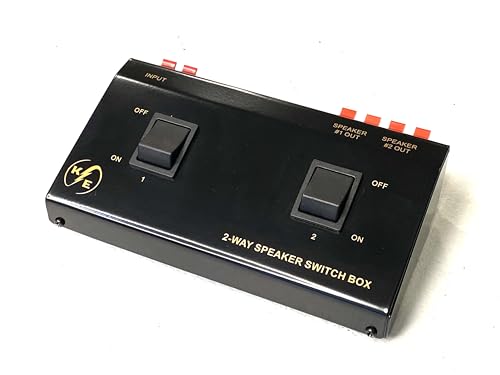
This Kurrent Electric switch is a 2-way stereo speaker switch panel that selects set A, B, or A+B with a 1 in – 2 out configuration. The unit features sturdy metal construction, providing a durable desktop or rack-mounted option for basic switching needs. It’s designed for straightforward use where you need to route one amplifier to two speaker zones or combine channels. The physical controls are simple and the metal housing helps with durability in everyday setups.
TENEALAY 2-Way Audio Stereo Speaker Selector Switcher Box

The TENEALAY P21 functions as a multi-zone A/B speaker selector supporting up to two pairs of speakers and a stereo amplifier. Rated for 80W max power per channel and suited to 8–16Ω impedance, it includes two parallel switches to individually control each speaker set. Use cases include routing audio to different rooms or adding simple zone control to a home theater. The unit is positioned for consumers wanting passive control without amplification electronics.
Pyle In-Wall Speaker Selector Switch PVCS2

Pyle’s PVCS2 is an in-wall A/B selector rated at 120W power handling. It installs in a standard junction box like a light switch and uses push-button operation to choose A, B, or A+B configurations. This model emphasizes easy installation and a clean, wall-mounted appearance for permanent room-to-room audio control. It’s compatible with typical A/V systems and offers a user-friendly interface for non-technical setups.
SOLUPEAK P2 2-In-1(2)-Out Amp Speaker Switcher Selector
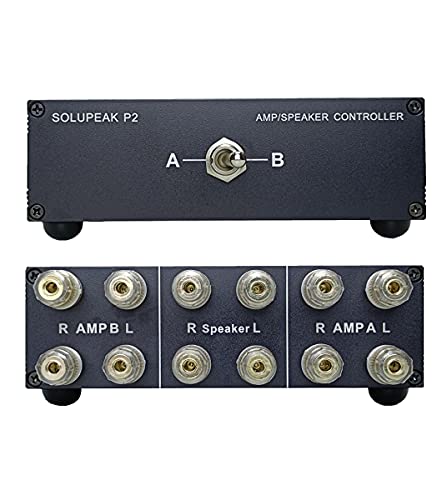
The SOLUPEAK P2 is a passive amp/speaker switcher that supports either 2-in-1-out (two amps to one pair) or 1-in-2-out (one amp to two pairs) depending on direction. It’s a tool for quick comparisons between amplifiers or speakers and features gold-plated banana jacks that accept up to 12-gauge wire. The device is plug-and-play, with a one-press A/B toggle, suitable for testing, comparisons, or swapping audio sources without rewiring.
OSD In Wall Speaker Selector A/B Switch AB12

The OSD AB12 is an in-wall selector rated at 100W with minimal bass roll-off when switching. It supports switching between two amplifiers and one speaker pair or between two speaker pairs with one amplifier. The push-button control and single-gang form factor are designed to fit standard junction boxes, making it a discreet, flush-mounted option for homeowners seeking internal wiring that blends with decor.
Buying Guide: How To Choose An A/B Speaker Switch
Selecting the right A/B speaker switch depends on installation style, power handling, impedance compatibility, and switching functionality. Below are key considerations to evaluate before purchasing.
Switch Type And Function
- 1-In/2-Out vs 2-In/1-Out: Decide whether you need to route one amp to two pairs of speakers (1-in/2-out) or compare/connect two amps to one speaker pair (2-in/1-out). Some units offer reversible or combined functions.
- A, B, A+B Options: A+B capability allows both speaker sets simultaneously. Note some passive selectors may reduce power or change impedance when both are active.
Power Handling And Impedance
- Watt Rating: Match the switch’s power rating to your amplifier’s continuous output to avoid overheating or damage.
- Impedance (Ω): Ensure the selector supports your speaker impedance (commonly 8Ω or 4Ω). Incorrect impedance can overload an amplifier.
Installation Style
- In-Wall vs Desktop/Box: In-wall units (Pyle, OSD) provide a clean permanent solution but require wiring and junction box space. Desktop or rack-mount boxes (Kurrent, SOLUPEAK) are easier to add to existing setups.
- Mounting Size: Verify single-gang or multi-gang dimensions for in-wall models to ensure proper fit.
Connection Types
- Terminal Blocks vs Banana Jacks: Terminal blocks suit bare wire or spade connections; banana jacks offer quick plug-in convenience and often better contact quality.
- Wire Gauge Support: Check maximum wire gauge support (e.g., 12 AWG) for thicker speaker cables.
Durability And Construction
- Material: Metal housings provide better durability and shielding than basic plastic enclosures.
- Button/Switch Quality: Look for tactile, reliable switches if you plan frequent switching.
Performance Considerations
- Passive vs Active: Most consumer A/B switches are passive (no power) and do not amplify signal; they simply route it. Passive devices may slightly alter tonal balance or effective impedance.
- Impedance Protection: For connecting multiple speakers simultaneously, ensure the selector includes impedance protection or buffers to prevent amplifier stress.
Use-Case Perspectives
- Home Multi-Room Audio: Opt for in-wall selectors for a tidy fixed installation and easy room switching.
- Testing/Audio Comparison: Use reversible desktop switchers with banana jacks for rapid amp or speaker A/B testing.
- Mobile/RV Applications: Low-profile control panels are suitable for interior/exterior speaker switching in vehicles or RVs.
Consider these factors to match a selector’s features with your system’s power, wiring, and intended use. Choosing a selector that aligns with impedance and wattage ratings while offering the desired mounting style will yield the most reliable results.