
Quick Summary: This guide compares reliable speaker cables suited for PA systems, covering common lengths, gauge, connector types, and construction. Below is a compact comparison table of the five selected options to help you scan features quickly.
| Product | Type | Gauge / Length | Key Feature |
|---|---|---|---|
| Yuyaokk 2Pack 25 ft Speaker Cables | 1/4″ TS to 1/4″ TS | 12 AWG / 25 ft | Industrial-grade, twist-lock style latching |
| HeyTones 25 ft 12 Gauge 1/4″ to 1/4″ | 1/4″ TS to 1/4″ TS | 12 AWG / 25 ft | Oxygen-Free Copper (OFC) conductors |
| Yoico 2Pcs 50 Feet 12 Gauge | 1/4″ TS to 1/4″ TS | 12 AWG / 50 ft (pair) | Pro series construction, durable jacket |
| Yoico Pro 100 Feet 12AWG Single | 1/4″ TS to 1/4″ TS (single) | 12 AWG / 100 ft | Long run option with heavy-duty build |
| GEARit Professional 15 ft 12AWG | 1/4″ TS to 1/4″ TS | 12 AWG / 15 ft | Oxygen-free copper, nickel-plated connectors |
Yuyaokk 2Pack 25 ft Speaker Cables, True 12AWG Patch Cords

This 2-pack of 25 ft speaker cables uses 12 AWG full copper wire and a PVC-85P jacket for durability. The listing highlights an industrial-grade build intended to minimize noise, static, or buzzing. Connectors are described as having color-coded ends and a spring-loaded twist-lock style latch for secure connections during live performances. The 25-foot length is suited to stage setups and subwoofer routing where mobility is needed.
HeyTones Professional 25 Feet 12 Gauge 1/4″ to 1/4″

HeyTones supplies 12 AWG speaker cords with an inner core of oxygen-free copper (OFC), which is commonly promoted for lower signal loss and improved clarity. The cable uses a heavy-duty PVC-85P rubber jacket for flexibility and protection. This option targets both professional and casual users needing reliable 25-foot runs between amplifiers and cabinets.
Yoico 2Pcs 50 Feet Professional Speaker Cables, Pair 50 ft 12 Gauge

This listing includes two 50-foot 12 AWG cables with a premium PVC jacket and full copper conductors. The product page emphasizes industrial-grade construction to prevent interruptions, static, or loss of quality during live gigs. Fifty-foot runs are useful for large stages or when routing around obstacles, and the pair format helps match left/right speaker runs or amplifier-to-splitter setups.
Yoico Pro 100 Feet 12AWG 1/4″ to 1/4″ Speaker Cable – Single
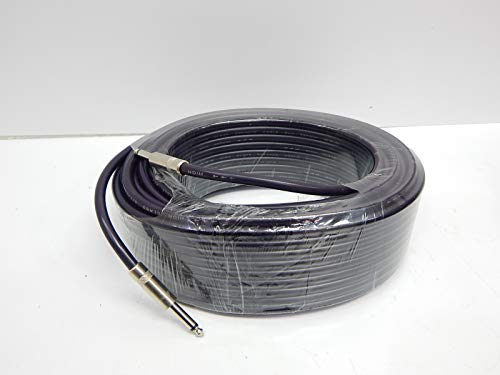
Designed as a long-run option, this single 100-foot 12 AWG cable uses full copper conductors and a PVC-85P jacket. The product highlights a twist-lock style connector and industrial-grade build suitable for powerful loudspeaker setups like subwoofers and stage monitors. Longer lengths increase resistance and potential signal loss, but the heavier 12 AWG gauge helps maintain performance over distance.
GEARit Professional Speaker Cable (15ft) 12AWG Pure Copper

GEARit offers a 15-foot 12 AWG cable built from oxygen-free copper for lower capacitance and enhancement of sound integrity. Nickel-plated connectors are specified for corrosion resistance and stable contact. The heavy-duty flexible rubber jacket suits frequent stage use and transport. Shorter lengths like 15 ft are preferable for connecting nearby amp/speaker pairs with minimal signal loss.
Buying Guide: How To Choose Speaker Cable For A PA System
Choosing the right cable for a PA system depends on run length, power, connector type, and mechanical durability. Below are focused considerations and how they affect performance.
Gauge (AWG) And Signal Loss
Lower AWG (thicker wire) like 12 AWG reduces resistance and helps preserve low-frequency power for long runs and high-current speakers. For short runs under 20 feet, 14–16 AWG may be acceptable on low-power systems, but pro PA setups benefit from 12 AWG.
Run Length And Power Handling
Longer runs increase resistance and voltage drop. For runs over 30–50 feet, choose 12 AWG or heavier. If you need runs of 100 feet or more, confirm amplifier headroom and use heavier gauge to avoid power loss at low frequencies.
Connector Type And Compatibility
Verify the connector pair your gear requires: common types include 1/4″ TS (speaker patch), Speakon, and XLR for line-level signals. Use speaker cables with the correct connector—speakers often prefer Speakon for secure locking and safety; instrument or amp patching uses 1/4″ TS.
Conductor Material
Oxygen-free copper (OFC) or full copper conductors minimize resistance and oxidation. Pure copper is standard for professional cables; plated or lower-quality alloys may increase long-term resistance and degrade tone.
Shielding And Noise
Speaker-level cables typically carry high-power, low-impedance signals and don’t require the same shielding as mic-level cables. For line-level or long mic runs, shielding and spiral copper braid reduce interference. Ensure proper cable type for the signal path.
Jacket Material And Durability
Look for flexible, abrasion-resistant jackets like PVC-85P or heavy-duty rubber for road use. A flexible jacket reduces stress at connectors and improves handling during setup and teardown.
Connector Quality And Locking
Durable metal housings, corrosion-resistant plating (nickel or gold), and locking mechanisms (Speakon or twist-lock) help maintain contact during gigs. Secure connectors reduce accidental disconnects on stage.
Single vs Pair Packaging
Some listings provide single long runs, others offer matched pairs. For stereo setups or matched speaker pairs, a matched pair avoids reordering and helps with consistent routing.
Comparison Perspectives
- Performance Perspective: Use thicker gauge and pure copper for long runs and high-power speakers to limit power loss and preserve low-end response.
- Durability Perspective: Choose heavy-duty jackets and plated connectors if you transport cables frequently or set up outdoors.
- Compatibility Perspective: Match connector types to your speaker and amplifier inputs—Speakon is preferred for professional PA safety and locking; 1/4″ TS is common on legacy gear.
- Cost-Effectiveness Perspective: For short, static installs, a slightly lighter gauge may be adequate; for touring or critical low-frequency performance, invest in 12 AWG or thicker.
Use these criteria to match cable length, gauge, connectors, and build quality to your PA system requirements. Selecting the appropriate speaker cable helps maintain system reliability and audio fidelity during live events.