
Best Computer Speakers for Clear, Loud Desktop Audio and Easy Setup
Looking for a reliable speaker for a computer that boosts desktop audio without clutter? This guide highlights five solid options suitable for different needs, from compact USB-powered setups to bigger, more powerful soundbars. The top picks help you decide who benefits most—whether you want ultra-portable plug-and-play, USB-C compatibility, or enhanced bass for movies and games.
Buyer-friendly overview: the table below summarizes the five chosen products, including the brand, compatibility notes, and the standout benefit for quick decision-making.
| Product | Brand | Best For | Why Choose |
|---|---|---|---|
| Computer Speakers for Desktop PC Monitor | XKX | Compact desks and USB-C ready setups | USB and USB-C compatibility with strong bass; easy monitor clipping |
| [Upgraded] USB Plug-n-Play Desktop Speakers | LIELONGREN | Plug-and-play simplicity for Windows and Mac | Broad OS compatibility; straightforward USB setup |
| Amazon Basics USB-Powered Computer Speakers | Amazon Basics | Compact, headphone-friendly and budget-friendly | USB-powered with front headphone jack and simple controls |
| Amazon Basics AC-Powered Computer Speakers | Amazon Basics | Permanent desk setup needing reliable power | AC-powered with front control and headphone jack |
| Creative Pebble USB-Powered System | Creative | Stylish, space-saving desktop audio | USB power with 3.5 mm AUX-in and enhanced bass design |
XKX Computer Speakers With USB-C Adaptation

Best for compact, USB-connected setups. The XKX speakers support USB devices and USB-C via a built-in adapter, making them versatile for PCs, laptops, and desktops. They deliver high-quality stereo with rich bass thanks to dual drivers and passive radiators. Best for users seeking a simple plug-and-play option without external power adapters. A potential limitation is that they are not designed for HDMI or TV use, and they’re optimized for desk space rather than wall mounting.
LIELONGREN Upgraded USB Plug-n-Play Speakers

Best for Windows or Mac users who want straightforward USB sound. This upgraded LIELONGREN model emphasizes plug-and-play ease, working with Windows PCs and many Mac/Linux/Chrome OS laptops once the correct driver is in place. It’s a good fit for users prioritizing quick setup and broad compatibility. Caution: driver considerations may affect automatic recognition on some Linux setups, requiring manual tweaks.
Amazon Basics USB-Powered Computer Speakers

Best for compact setups and budget-conscious buyers. These USB-powered speakers connect directly to the computer, offering simple, driver-free use with a front-facing volume control and a 3.5 mm headphone jack for private listening. Choose this if you want minimal hardware and portable convenience; avoid if you need robust, room-filling sound from a larger speaker system.
Amazon Basics AC-Powered Desktop Speakers

Best for fixed desk setups requiring consistent power and louder output. These AC-powered speakers provide higher power and a front control panel, plus a headphone jack for private listening. They’re a good fit for home offices or workstations with a constant power source. Limitation: they require a wall outlet, reducing portability compared with USB-powered options.
Creative Pebble 2.0 System
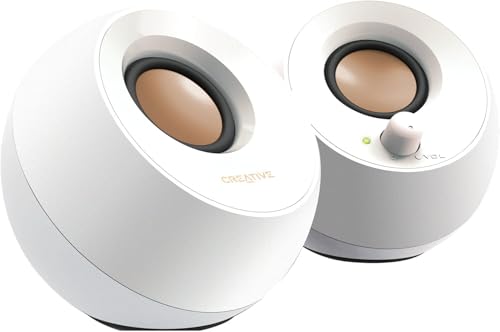
Best for stylish, space-efficient desktops with easy USB power. The Creative Pebble uses USB power and AUX-in for flexible audio input, offering far-field drivers and rear passive radiators for enhanced bass and a wider soundstage. Choose this if you want a modern, minimal desk setup with robust mid-range performance. Limitation: not the strongest option for very loud or deep bass-heavy listening in large rooms.
LENRUE A39PRO USB-Powered Sound Bar
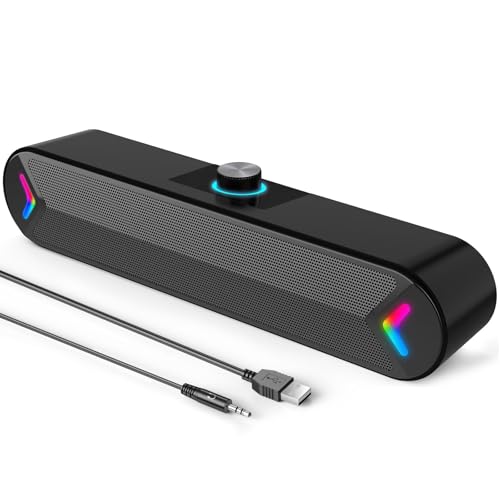
Best for under-monitor or desk-edge placement with USB power and 3.5 mm audio. LENRUE A39PRO provides a compact sound-bar design with 10W stereo and a color-changing light, adding a visual element to the listening experience. It is ideal for narrow desks or single-monitor setups; might be less suitable for rooms requiring deep, roaring bass.
Buying Guide
- Power source: USB-powered speakers are portable and clutter-free; AC-powered units usually offer higher maximum volume and stability for long sessions.
- Connectivity: USB is common for PCs; USB-C adapters help with newer laptops. 3.5 mm AUX inputs ensure compatibility with a wide range of devices.
- Sound quality: Look for drivers and passive radiators for better bass and clearer mids. Consider a 2.0 vs. soundbar design based on desk space and usage (games, music, or movies).
- Size and placement: Compact speakers fit tightly on small desks; soundbars are better under monitors but require horizontal space.
- Controls: Front-facing volume controls are convenient for quick adjustments; consider models with dedicated headphone jacks if private listening is needed.
- Use case: For gaming or movie watching, prioritize bass response and stereo separation; for general productivity, clarity and noise-free performance are key.
Frequently Asked Questions
- Q: Do I need an external power supply for USB speakers? A: USB-powered models draw power from the computer, while some larger sets may use AC power for higher output.
- Q: Will USB-C adapters work with all laptops? A: USB-C adapters help with devices that lack USB-A or have only USB-C; compatibility depends on device support for audio over USB.
- Q: Is it necessary to install drivers for USB speakers? A: Most USB speakers are driver-free, but some models on certain operating systems may benefit from driver updates for optimal performance.
- Q: Are soundbars better than compact desktop speakers? A: Soundbars can offer more directional sound and compact under-monitor design, but for desktop space and ease of use, 2.0 speakers are often sufficient.
- Q: Can I use these speakers with a monitor that has built-in audio? A: Yes, you can, but you may still prefer external speakers for better sound quality or volume.
- Q: What should I consider when choosing for a small desk? A: Prioritize compact size, USB power, and minimal cables to reduce clutter while preserving sound clarity.