Best Speaker for Bass Guitar: Top Picks for Tight Low-End and Clear Notes
Choosing the right bass guitar speaker can dramatically affect your tone, volume, and how your rig translates in live settings or studio sessions. This guide highlights five top-value options that deliver solid low-end response, clarity, and reliability. Each pick is aimed at different needs—from compact practice amps to high-widelity 15″ options—so you can match your genre, venue size, and budget.
| Product | Brand | Speaker Size | Power (W) | Notes |
|---|---|---|---|---|
| Fender Rumble 15 V3 | Fender | 8″ | 15 | Compact bass amp with overdrive and contour switch |
| Celestion Pulse 12 | Celestion | 12″ | 200 | High-power bass guitar speaker |
| Celestion Pulse 15 | Celestion | 15″ | 400 | Larger format with strong low end |
| Celestion Pulse Bass 10 | Celestion | 10″ | 8 Ohm | Kevlar loaded cone, compact size |
| Fender Rumble 100 V3 | Fender | 12″ | 100 | Versatile headroom for gigs and rehearsal |
Fender Rumble 15 V3 Bass Amplifier

The Fender Rumble 15 V3 delivers 15 watts of bass tone through an 8-inch Fender Special Design speaker. Its compact format makes it ideal for practice rooms and small stages, yet it produces a show-ready sound with clear lows and defined highs. The top-mount control panel features ivory soft-touch knobs for easy dialing, including gain, tone, and a contour control that sweeps the mids for a punchier mix. This model also offers an overdrive circuit for light crunch without losing bass presence, suitable for genres ranging from funk to rock.
Celestion Pulse 12 Bass Guitar Speaker
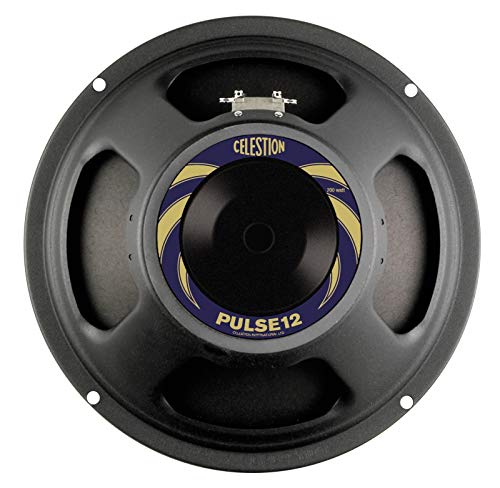
The Celestion Pulse 12 is a robust 12″ bass guitar speaker built to handle demanding gigs. With an impressive 200 watts and an 8-ohm impedance, it provides strong headroom and a tight, articulate low end that meshes well with modern bass tones. This speaker is a solid choice for cabinet builds or replacement in bass rigs where reliability and clean, dynamic response are priorities. It pairs well with both active and passive bass setups, preserving string definition even at higher volumes.
Celestion Pulse 15 Bass Guitar Speaker

The Celestion Pulse 15 offers a larger 15″ footprint for deeper bass extension and higher wattage handling. With 400 watts at 8 ohms, it’s designed to reproduce low-end fundamentals with authority, making it ideal for bass cabinets that require more power to fill larger rooms or venues. Its frequency response supports tight lows and clear mids, making it a versatile choice for rock, metal, and funk players who want robust projection without flabbiness at volume.
Celestion Pulse Bass Guitar Speaker, 10″
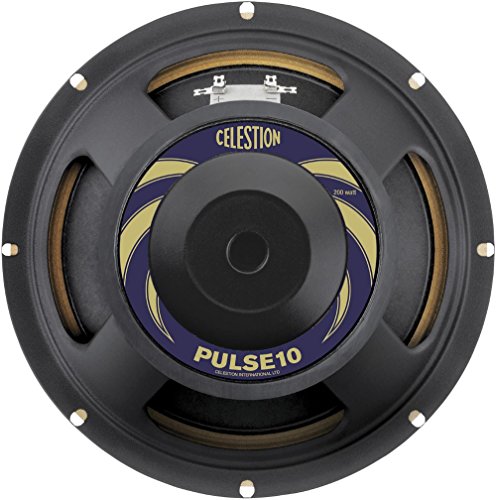
The 10″ Celestion Pulse Bass speaker emphasizes compact construction while delivering strong midbass presence. Kevlar loaded cone enhances rigidity and reduces cone breakup at higher output. With 8 ohms impedance, this driver is suitable for smaller cabinets or as a road-friendly replacement in existing rigs. It offers a balanced response across the bass range, helping bassists maintain clarity in complex mixes and stage environments where crowd noise and monitor spill are factors.
Fender Rumble 100 V3 Bass Amp

The Fender Rumble 100 V3 is a more capable 100-watt bass amplifier with a 12″ Eminence speaker. Its larger footprint yields higher output for rehearsals and small to mid-size venues. It includes overdrive and contour controls to sculpt tone, along with front-panel access to tone-shaping options. This model suits players who need more authority and headroom than a compact practice amp, while still delivering the characteristic Fender low-end punch and musical midrange clarity.
Buying Guide: Key Considerations for Choosing a Bass Speaker
- Speaker size and power: Larger speakers (12″–15″) generally offer deeper low end and greater headroom, but require bigger enclosures. Match power handling to your playing style and venue size to avoid clipping.
- Speaker type and construction: Kevlar or other reinforced cones improve durability and reduce breakup under heavy driving. Consider cabinets with rigid frames for gigging reliability.
- Impedance: Common values are 8 ohms or 4 ohms. Lower impedance delivers more current and louder output but requires compatible amplifiers and cab designs.
- Application: For practice or small gigs, compact 8″ or 10″ cabinets with 15–25W may suffice. For live venues, look at 12″–15″ speakers with 100W+ and robust drivers.
- Tone shaping: Overdrive, contour switches, and EQ controls on amplifiers help sculpt the desired character, from tight punch to warm growl. Consider your genre and stage volume when selecting features.
- Durability and warranty: Road-ready builds and warranties offer confidence for frequent transport and frequent use. Check for handle quality, corner protectors, and cabinet finish.
- Compatibility: Ensure the speaker impedance and the cabinet’s design align with your current amp head or combo. Some drivers excel as both standalone cabinets and replacements.
- Budget and value: Compare price-to-performance across models. A higher upfront cost can be offset by better durability, higher headroom, and longer service life in gig schedules.