
Quick Overview: This guide compares popular impedance matching and speaker selector products so you can safely connect multiple speaker pairs to one amplifier or manage in-wall zones. The table below summarizes the selected models covered in detail.
| Product | Type | Key Feature |
|---|---|---|
| Monoprice SSVC-4.1 Single Input 4-Channel Speaker Selector | Stationary Selector | Automatic Impedance Protection, Individual Zone Volume |
| Monoprice 100W Rotary Impedance Matching Volume Control | In-Wall Volume Control | Impedance Matching For Multiple Speaker Pairs |
| OSD Audio ISS4 4 Zone Speaker Selector | Stationary Selector | Selectable Impedance Matching Protection |
| STUDIOFINIX 100W In Wall Volume Control | In-Wall Volume Control | Passive Design, Up To 8 Speaker Pairs |
| Beale Street Impedance Matching In-Wall Rotary Volume Control | In-Wall Volume Control | Compact Rotary Design For Home Theater |
Monoprice SSVC-4.1 Single Input 4-Channel Speaker Selector With Volume Control
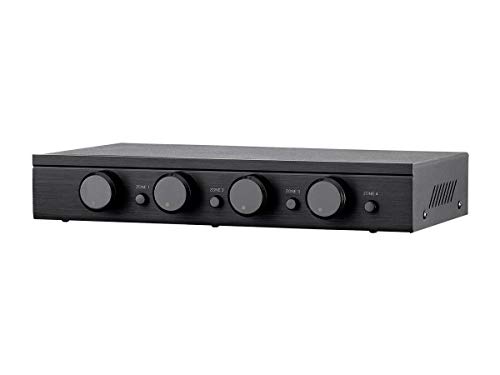
Features: Connect and safely control multiple speaker pairs with a single amplifier. Automatic impedance protection circuitry. 100 watts/channel continuous power handling capacity, 200 watts/channel peak. 5-ohm minimum amplifier impedance with four 4-ohm speakers selected, 6-ohm minimum with 8-ohm speakers. Individual zone on/off buttons and volume controls.
This unit is a dedicated multi-zone speaker selector with built-in impedance protection. It offers per-zone on/off and level control, and the protection circuitry reduces the risk of overloading the amplifier when multiple speaker pairs are used. The continuous and peak power specs indicate suitability for moderate home audio setups. Terminals accommodate common wire gauges and the front controls make zone management straightforward.
Monoprice 100W Rotary Impedance Matching Speaker Volume Control

Features: Allows you to connect multiple speaker pairs to a single power amplifier or receiver. It increases (or decreases) the impedance of the connected speaker pair to ensure that the overall impedance level presented to the amplifier is high enough to prevent damage to the amplifier. It can support amplifiers with up to 100 watts of output power.
This in-wall rotary controller provides impedance matching for one speaker pair while offering a user-friendly volume knob. It’s useful when adding a zone where the amplifier may otherwise see too low an impedance. As a passive device, it requires no power and is compatible with many home receivers up to the listed wattage. Wiring and mounting follow common in-wall installation practices.
OSD Audio 4 Zone Speaker Selector Switch Impedance Protection ISS4

Features: Constructed of 16-gauge steel with durable powder coat. Selectable impedance matching protection circuitry allowing a single amplifier to power multiple pairs of speakers and up to 70W per channel with engaged protection. Removable phoenix connectors and screw-down terminals for reliable wiring.
The ISS4 is a robust metal chassis speaker selector with a user-selectable impedance protection mode. It is tailored to distribute audio across four zones while preventing amplifier overload. The removable connectors simplify installation and maintenance. With protection engaged, it presents safer loads to the amplifier when multiple speakers are active.
STUDIOFINIX 100W In Wall Volume Control Knob Matching Impedance

Features: Easy to install in-wall volume control with impedance matching. Capable of connecting up to 8 pairs of speakers. 100W power handling capacity. High-power passive design with no external power needed.
This product is positioned as a high-capacity in-wall controller capable of working with multiple speaker pairs in distributed systems. The passive design and stated compatibility make it suitable for indoor and covered outdoor zones. Use it where wall-mounted access and a clean aesthetic are desired while ensuring the amplifier’s load stays within safe limits when configured per manufacturer instructions.
Beale Street Volume Control Speakers Impedance Matching In-Wall Rotary

Features: Sound balance control for surround systems, simple installation with manual, compact and lightweight rotary volume control design.
This in-wall rotary device offers a compact form factor for volume control with impedance matching characteristics. It’s intended for home theater or distributed audio where space and ease of use matter. The product focuses on simple installation and an uncluttered look while delivering the impedance management benefits associated with rotary matching controls.
Buying Guide: How To Choose The Right Impedance Matching Device
When selecting an impedance matching device or speaker selector, consider these key factors to ensure compatibility, safety, and the performance you need.
Amplifier Compatibility
- Amplifier Output Power: Match device continuous power handling to your amplifier’s RMS output per channel. Avoid devices rated below the amplifier’s continuous rating.
- Minimum Impedance Requirements: Check your amplifier’s minimum stable impedance and the speaker selector’s impact when multiple zones are active.
Speaker Load And Zone Count
- Number Of Speaker Pairs: Choose a selector or matching device rated for the number of zones you plan to use simultaneously.
- Speaker Impedance: Consider whether speakers are 4Ω or 8Ω and how adding pairs alters the net load on the amplifier.
Protection And Controls
- Impedance Protection Circuitry: Devices with automatic or selectable protection prevent amplifier strain when multiple speakers are connected.
- Per-Zone Volume And On/Off: Individual volume controls and on/off switches provide flexibility in distributed systems.
Installation And Physical Considerations
- In-Wall Vs. Rack-Mount: In-wall controllers are preferred for discreet zones; rack-mounted or shelf units suit equipment racks and central locations.
- Connector Types: Look for solid screw terminals or removable phoenix blocks for secure wiring and easier installation.
Performance Trade-Offs
- Passive Vs. Active: Passive impedance matching requires no power but may introduce insertion loss. Active systems (not covered here) may offer more control at cost and complexity.
- Power Handling Limits: Higher rated devices give headroom; ensure continuous ratings are the reference rather than peak values.
Comparison Perspectives
- Best For Multiple Zones: Stationary selectors with per-zone controls are ideal when many rooms need independent on/off and levels.
- Best For Discreet Aesthetics: In-wall rotary impedance controllers provide clean integration and user-friendly volume control at each zone.
- Best For Robust Wiring: Metal chassis selectors with screw-down or phoenix terminals ease installation and long-term reliability.
Use these considerations to match device specifications to your amplifier and speaker configuration. Proper planning of speaker impedance, zone usage, and power handling ensures stable operation and extends component life.