
Best Speaker Selector With Impedance Protection for Multi-Room Audio
Answer: If you want safe, wireless-free distribution of audio to multiple rooms, a speaker selector with impedance protection is essential. The right model protects your amplifier while letting you switch between multiple speaker pairs. This guide highlights five solid options and explains who each is best for—home theaters, small businesses, or multi-room music setups.
Summary of selected products
| Product | Best For | Key Benefit |
|---|---|---|
| Monoprice SS-4 Premium | Small home theater setups | Four zones with automatic impedance protection |
| Monoprice SSVC-4.1 | Low-profile, single-source multiroom | Volume control and impedance protection |
| Monoprice 108230 8-Channel | Wider distributed audio | Eight zones with impedance matching |
| Monoprice SS-6 Premium | Six-zone multi-room | Impedance protection for multiple speakers |
| OSD Audio ISS4 | Four-zone multi-room systems | Built-in protection with durable construction |
Monoprice SS-4 Premium 4 Channel Speaker Selector

Best for compact home theaters or small multi-room setups. This model provides four independent zones with automatic impedance protection, preventing the amplifier from overloading when multiple speakers are active. It supports 12-16 AWG speaker wire and offers individual zone on/off buttons for simple, quick control.
Who it’s best for: home theater enthusiasts who need safe, straightforward expansion to a few rooms. Why chosen: compact, reliable impedance protection, and easy zone control. Caution: with four zones, it may not cover larger homes without additional amplification.
Monoprice SSVC-4.1 Single Input 4-Channel Selector
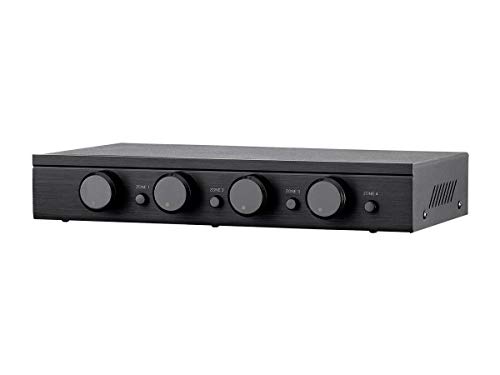
Best for setups that require volume control and impedance protection in a four-zone layout. This selector supports 100 watts per channel continuous handling and provides separate zone on/off plus volume controls. Its impedance protection helps maintain safe operation when multiple speakers are active.
Who it’s best for: rooms with varying music levels or where precise volume management matters. Why chosen: integrated volume control adds flexibility beyond basic on/off switching. Caution: higher wattage handling is per channel; ensure your source matches your speaker impedance profile.
Monoprice 108230 8-Channel Speaker Selector

Best for larger homes or small businesses needing eight speaker zones. The built-in impedance-matching circuitry keeps amplifier impedance from dropping below safe levels regardless of how many zones are active. It supports multiple zones with consistent protection, making it a robust multi-room option.
Who it’s best for: distributed audio across several spaces with strong protection needs. Why chosen: high number of zones and reliable impedance matching. Caution: eight zones may require careful wire routing to avoid clutter in some installations.
Monoprice SS-6 Premium 6 Channel Speaker Selector
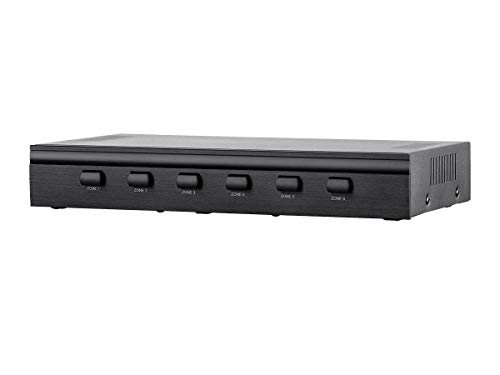
Best for flexible mid-sized multi-room installs. This six-channel selector combines automatic impedance protection with individual zone on/off controls. It’s designed for operation with 12-16 AWG wire and maintains safe impedance under varied speaker loads.
Who it’s best for: households needing more than four zones but not a full eight-zone system. Why chosen: balanced channel count with solid protection and wire compatibility. Caution: ensure amplifier power aligns with 6-channel use to avoid overload at peak demand.
OSD Audio ISS4 4-Zone Speaker Selector
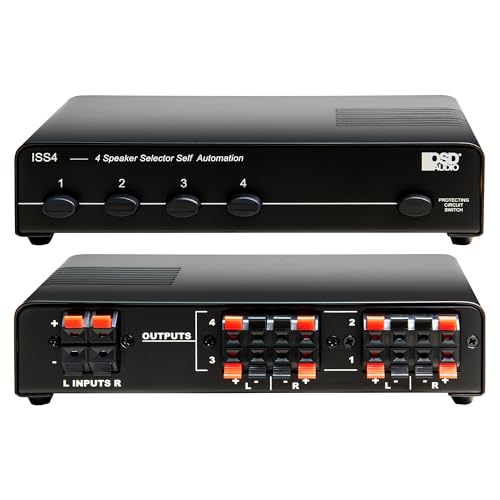
Best for multi-room home audio that prioritizes solid construction and impedance protection. The ISS4 distributes audio to four zones and includes selectable impedance matching protection circuitry to keep a single amplifier safe while powering multiple speaker pairs. The design emphasizes durable mounting and reliable terminations with screw-down terminals.
Who it’s best for: installations requiring sturdy hardware and predictable impedance protection. Why chosen: built-in protection with practical, simple wiring. Caution: four zones may limit future expansion without replacing or adding an amplifier.
Buying Guide
What to consider when choosing a speaker selector with impedance protection:
- Channel count: Determine how many zones you need now and in the near future. Common options are 4, 6, or 8 zones.
- Impedance protection: Look for built-in circuitry that prevents impedance drops that could harm the amplifier when multiple speakers are active.
- Power handling: Match the selector’s per-channel wattage with your amplifier and speakers to avoid overloads.
- Wire compatibility: Most products support 12-16 AWG wire. Confirm compatibility with your home wiring before purchasing.
- Controls: Consider whether you need individual on/off switches only, or additional volume controls per zone.
- Construction and wiring: Durable build and easy terminal connections help with long-term reliability, especially in multi-room setups.
FAQ
- What is impedance protection, and why do I need it?
– Impedance protection prevents the amplifier from seeing a too-low impedance load when several speakers are active, reducing the risk of overheating or damage. - Can I expand a 4-zone selector later?
– Yes, many systems support adding more zones by upgrading to a higher-channel unit or using multiple selectors, depending on the setup. - Is a separate volume control necessary?
– Not always, but it’s beneficial when you want different room levels without adjusting the main amp or source. - Do these selectors work with any amplifier?
– They work with amplifiers that match their per-channel wattage and impedance specifications; check your amp’s impedance rating and power. - What wires should I use?
– Use 12-16 AWG speaker wire as supported by the selector and your speakers for best results and reliable connections. - Are these good for commercial use?
– Some models are suitable for small business environments, but verify wattage and zoning needs to ensure reliability in commercial applications.