
Compare Top Speaker Splitters
| Product | Channels | Key Feature |
|---|---|---|
| Monoprice SSVC-4.1 | 4 | Automatic Impedance Protection, Individual Volume |
| Pyle PSLSW4 | 4 | Independent Volume, Compact Design |
| Pyle PLSHVC612 | 6 | High Power 6-Channel With Heat Sink |
| Pyle PSLSW6 | 6 | Multi-Zone Control With Screw Terminals |
| OSD SVC100 In-Wall Volume Control | Single Pair (wall) | Impedance Matching For In-Wall Install |
Managing multiple speaker pairs from a single amp requires a reliable speaker splitter with volume control to protect your amplifier and tailor zone volumes. The products below balance channel count, protection, and installation style for home and small commercial audio setups.
Monoprice SSVC-4.1 Single Input 4-Channel Speaker Selector
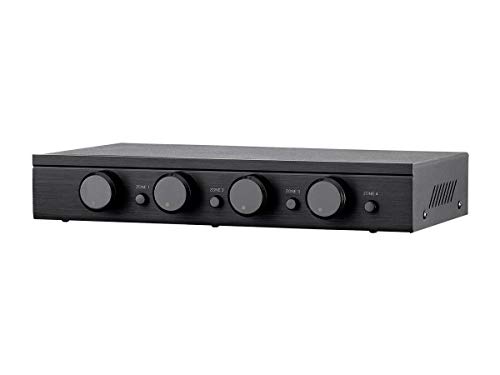
This Monoprice model supports a single amplifier feeding up to four speaker pairs with per-zone volume controls and on/off buttons. It features automatic impedance protection circuitry to help prevent amplifier overload when multiple speakers are selected. Power handling is listed at 100 watts/channel continuous and 200 watts/channel peak, with minimum amplifier impedance considerations depending on connected speaker loads. Individual zone on/off switches provide fast control without accessing the receiver.
Pyle 4 Channel Speaker Selector Switch PSLSW4
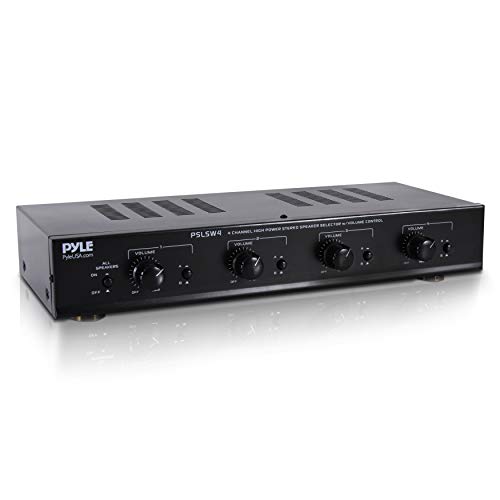
The Pyle PSLSW4 offers a compact tabletop design that manages up to four speaker pairs with individual volume controls and push-button zone activation. It accepts up to 14AWG speaker wire via screw-type terminals and is intended for use with 8-ohm speakers at a stated 100W max per channel. This unit is oriented toward simple installations where per-zone level control and easy wiring are priorities.
Pyle 6 Channel High Power Stereo Selector PLSHVC612

This Pyle 6-channel unit is built for higher channel counts with a rugged housing and cabinet heat sink designed for continuous use. It supports up to six speaker pairs with individual volume controls, accepts up to 14 AWG wire, and is specified for use with 8-ohm speakers at 100W max per channel. The design emphasizes robust installation and thermal management for multi-zone audio distribution.
Pyle 6 Channel Speaker Selector Switch PSLSW6

The PSLSW6 is a six-zone distribution controller with independent audio source channel volume controls and push-button activation per pair. It supports screw-terminal wiring for up to 14AWG speaker wire and is designed for compatibility with standard stereo receivers using 8-ohm speakers. This model focuses on flexible multi-zone control in a slim tabletop form factor.
OSD 100W In-Wall Volume Control SVC100
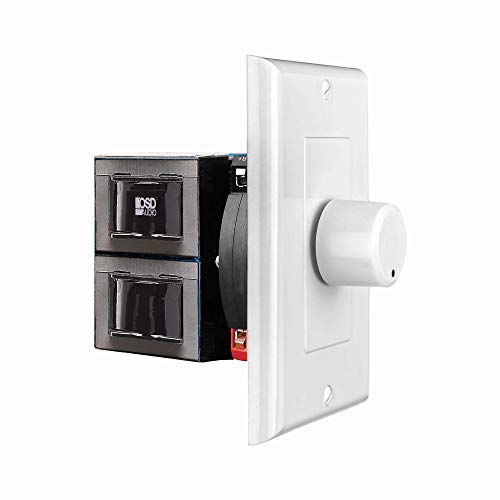
The OSD SVC100 is an in-wall rotary volume control with impedance matching designed for pairing with distributed speaker systems. Rated at 100W per channel, it offers front-mounted adjustable jumpers to add multiple 8-ohm speaker pairs and helps stabilize the overall load seen by the amplifier. This option is ideal when you want in-wall local volume control and impedance protection for ceiling or in-wall speakers.
Buying Guide: How To Choose A Speaker Splitter With Volume Control
Selecting the right speaker splitter depends on installation style, amplifier compatibility, and how many zones you need to manage. Below are key considerations and comparison perspectives.
Channel Count And Zone Needs
- Decide how many speaker pairs you need to control now and in the near future. Typical options include 4-channel and 6-channel units.
- Choose higher channel counts if you plan to add outdoor or additional indoor zones.
Impedance Protection And Amplifier Safety
- Impedance protection prevents amplifier overload when multiple speakers are paralleled. Look for automatic protection or impedance-matching features for safe operation.
- Check the minimum amplifier impedance tolerances and how the selector handles multiple 4-ohm or 8-ohm loads.
Power Handling And Speaker Compatibility
- Match the selector’s power handling to your amplifier and speakers. Manufacturers often state max wattage per channel—ensure continuous and peak handling meets your setup needs.
- Verify recommended speaker impedance (commonly 8 ohm) and whether the unit supports lower impedance speakers safely.
Volume Control Type And User Access
- Front-panel rotary knobs, sliders, or push-button with integrated level pots offer different user experiences. For wall-mounted zones, in-wall rotary controls provide convenient local adjustment.
- Consider whether per-zone mute or on/off buttons are required for quick control.
Wiring And Installation
- Screw terminals that accept 14 AWG are common and simplify wiring for longer runs. Confirm terminal type and gauge compatibility for your speaker wiring.
- In-wall models need box depth and mounting compatibility checks; tabletop units require ventilation if they include heat sinks.
Thermal Management And Build Quality
- Higher channel counts and continuous use can generate heat. Look for models with heat sinks or robust housings for long-term reliability.
- Rugged construction reduces wear if the unit is in a utility or high-traffic area.
Use Case Comparisons
- Small Apartment Or Single Room: 4-channel tabletop selector with per-zone volume control is often sufficient.
- Whole-House Multiroom Setup: 6-channel selectors or a mix of in-wall impedance-matching controls are better for distributed ceiling/wall speakers.
- Commercial Or High-Use Environments: Units with heat sinks and robust screw terminals are preferable for reliability.
Compatibility With Existing Equipment
- Confirm the selector’s minimum amplifier impedance requirement and speaker impedance to avoid mismatch.
- For headphone or line-level splitting, dedicated headphone amplifiers or powered distribution boxes are more appropriate than speaker-level selectors.
Use these factors to compare models based on channel count, impedance protection, power handling, and installation method. Proper matching of speaker selector features to your amplifier and speaker specs ensures safe operation and reliable multiroom audio control.