
Find stable, adjustable, and compatible speaker stands to lift your bookshelf speakers to ear level and reduce vibrations for improved sound. Below is a quick comparison of the selected stands to help you choose the right fit for your setup.
| Product | Top Plate | Height | Weight Capacity |
|---|---|---|---|
| Perlegear Universal Speaker Stands (PGSS6) | 7.79″ square | 27.5″ | 22 lbs |
| PERLESMITH 26″ Glass Top Stands | 7.8″ glass, 45° swivel | 26″ | 22 lbs |
| PERLESMITH Adjustable 33.3″-45.1″ | Adjustable width 4.5″-9″ | 33.3″-45.1″ | 11 lbs |
| SANUS Adjustable Height Stands | Small top for satellites | 28″-38″ | 3.5 lbs |
| Rfiver 45° Swivel Speaker Stands | Glass top, 45° swivel | 27″ | 22 lbs |
Perlegear Universal Speaker Stands For Surround Sound Up To 22lbs
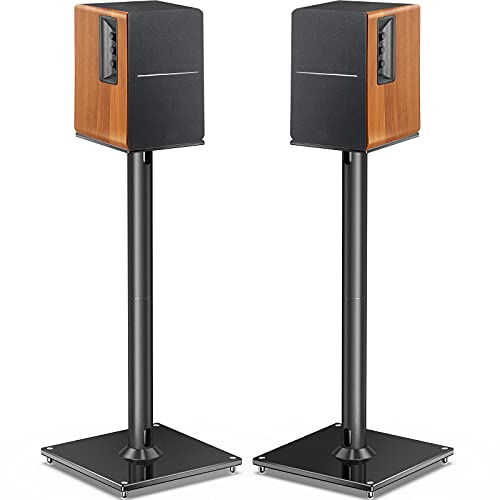
Compatibility And Design: Features a 7.79″ x 7.79″ flat top plate compatible with most bookshelf speakers. The 27.5″ height positions speakers near typical seated ear level.
Stability And Vibration Control: 11.8″ square wide base and included rubber pads on the top plate provide anti-skid support and help absorb vibration for clearer sound.
Use Cases: Marketed as multifunctional—suitable for TV, gaming, studio monitors, and general surround sound systems. The build supports up to 22 lbs per stand.
PERLESMITH Universal Floor Speaker Stands 26 Inch For Surround Sound

Adjustable Top Plate: Glass top plate rotates 45° to fine-tune speaker direction, combined with rubber isolation pads to reduce resonance.
Materials And Stability: Metal construction with an 11.81″ glass base for a sturdy footprint. Includes rubber feet or metal spikes to suit carpet or hard floors.
Compatibility: Rated for up to 22 lbs and designed to fit many popular brands and satellite/bookshelf models.
PERLESMITH Height Adjustable Floor Stands Extend 33.3″ To 45.1″

Adjustability: Telescoping height range from 33.3″ to 45.1″ via a twist-lock design for tool-free changes—suitable for taller setups and surround rear channels.
Top Plate Fit: Adjustable width 4.5″–9″ accommodates many small bookshelf and satellite speakers (note: not ideal for round or irregular shapes).
Load And Stability: Designed for up to 11 lbs per stand, with solid steel construction and non-slip foot pads to maintain balance on varied flooring.
SANUS Speaker Stands Pair Adjustable Height For Satellite Speakers

Purpose-Built For Satellites: Designed for small satellite speakers up to 3.5 lbs, offering a narrow, lightweight option for compact systems.
Height Flexibility: Tool-free collar adjusts height across a 10″ range, from 28″ to 38″, enabling precise placement for listening sweet spots.
Cable Management And Build: Steel construction with a wide base and built-in cable channel keeps wiring neat and supports small speakers safely.
Rfiver Upgraded 45° Swivel Speaker Stands Pair Heavy Duty 28 Inch

Orientation And Immersion: 45° swivel glass top plate enables angling speakers toward the listening position for enhanced stereo imaging.
Construction: Alloy steel pole with a one-piece molded glass base and cable routing holes in the pole. Rated to support up to 22 lbs per stand for larger bookshelf models.
Design Notes: Larger glass base promotes stability and offers a visually clean look for modern interiors, while offering cable concealment.
Buying Guide: How To Choose Speaker Stands For Bookshelf Speakers
Weight Capacity And Stability: Match the stand’s weight rating to your speaker’s weight with margin. For heavier bookshelf speakers, choose stands rated 20+ lbs with wide bases or glass/metal construction to resist tipping.
Height And Listening Position: Choose a height that places the speaker’s tweeter near seated ear level. For seated listening, stands between ~27″ and ~38″ are common; adjustable stands provide flexibility for different rooms and seating arrangements.
Top Plate Size And Shape: Ensure the top plate accommodates your speaker footprint. Square plates around 7.5″–9.8″ suit most rectangular bookshelf models. Adjustable-width plates or spring-loaded brackets help fit varied designs.
Floor Type And Foot Options: Look for stands with rubber pads for hard floors and spike or nail options for carpets. Leveling or adjustable feet help stabilize on uneven surfaces.
Vibration Damping: Rubber isolation pads, decoupling discs, or heavy bases reduce resonance and improve clarity. Consider pads or spikes depending on whether you want coupling or decoupling to the floor.
Angle And Orientation: Swivel or tilting top plates (e.g., 45°) let you toe-in speakers toward the listening area, improving imaging and soundstage without moving the stand base.
Cable Management: Integrated channels or hollow poles help hide wires for a cleaner installation, especially for living rooms or open layouts.
Compatibility With Speaker Shape: Some stands work best with flat-bottom speakers; spring-loaded or adjustable brackets help secure smaller or irregularly shaped units. Round or odd-shaped cabinets may need adapters or dedicated mounts.
Room Aesthetics And Build Material: Glass bases and brushed metal poles offer a modern look; powder-coated steel can be more discreet. Consider visible footprint and color to match decor.
Placement And Surround Considerations: For surround setups, choose lower-height stands for rear channels or taller adjustable stands for front/nearfield roles. Balance symmetry and toe-in for consistent imaging.
Installation And Adjustability: Tool-free height adjustments and quick-lock mechanisms save time when refining positions. Verify ease of assembly and included hardware for your floor type.