
Finding The Right Speaker Stands can improve clarity, imaging, and the immersive effect of a surround sound system. Below is a comparison table of five highly relevant speaker stands chosen for surround sound rear and bookshelf speakers.
| Product | Brand | Height Range / Type | Max Load |
|---|---|---|---|
| SANUS Speaker Stands Pair | Sanus | 28″–38″ Adjustable | 3.5 lbs |
| PERLESMITH Universal Speaker Stands PSSS2 | PERLESMITH | 33.3″–45.1″ Adjustable | 11 lbs |
| Perlegear Universal Speaker Stands PGSS6 (28″) | Perlegear | Fixed 27.5″ Bookshelf | 22 lbs |
| USX MOUNT Universal Speaker Stands | USX MOUNT | 30.0″–39.1″ Adjustable | 11 lbs per stand |
| Perlegear Height Adjustable PGSS11 | Perlegear | 28″–38″ Tool-Free Adjustable | 5 lbs |
SANUS Speaker Stands Pair – Adjustable Height For Satellite & Bookshelf Speakers

This pair of SANUS stands offers a tool-free height adjustment from 28″ to 38″, providing 10″ of tuning to place satellite or bookshelf speakers near ear level. Built from steel with a wide base, the design emphasizes a stable footprint and includes a built-in cable management channel to keep wiring tidy. Designed to hold speakers up to 3.5 lbs, they are compatible with many small satellite models from popular brands.
PERLESMITH Universal Speaker Stands PSSS2 – Height Adjustable 33.3″–45.1″

The PERLESMITH PSSS2 supports speakers up to 11 lbs and features an adjustable top width (4.5″–9″) to fit many rectangular bookshelf and satellite speakers. Height ranges from 33.3″ to 45.1″, using a twist-lock collar for quick changes. Built from solid steel with deep threaded connections and non-slip foot pads, the stand focuses on enhanced stability. Note: not recommended for round or irregularly shaped speakers.
Perlegear Universal Speaker Stands PGSS6 – 28″ Bookshelf Stand (22 lbs Capacity)
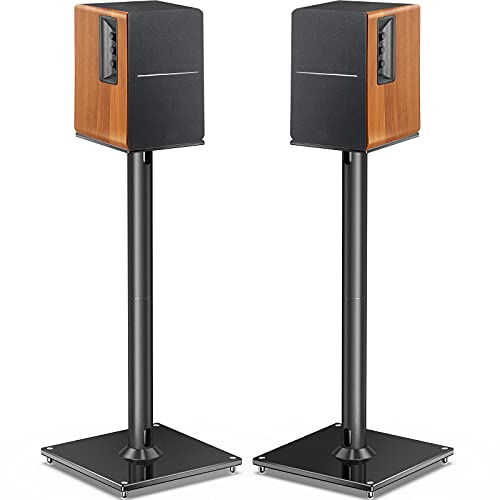
Perlegear’s PGSS6 is a fixed-height bookshelf stand at 27.5″ with a 7.79″ square top plate and a 22 lb capacity, accommodating larger bookshelf speakers and studio monitors. The 11.8″ square base and rubber pads are designed to minimize vibration and improve stability. This model works well for listeners who prefer a stable, single-height setup for rear or front surround channels.
USX MOUNT Universal Speaker Stands – 30.0″–39.1″ Height Adjustable Pair

USX MOUNT stands use a collar adjustment system to change height between 30″ and 39.1″. Each stand supports up to 11 lbs with a sturdy square base and rubber feet for floor protection. The stands accept back screw holes and keyhole mounts, providing multiple installation options for satellite speakers. The square base design improves balance, and included metric screws suit many common models.
Perlegear Speaker Stand Pair PGSS11 – 28″–38″ Tool-Free Adjustable

The PGSS11 pair from Perlegear features a tool-free twist lock for height adjustments ranging from 28″ to 38″, a 10.63″ round base for improved stability, and compatibility with threaded holes, keyholes, or no-hole setups via included hardware. Designed for small bookshelf and satellite speakers up to 5 lbs, these stands emphasize easy setup and tested stability with load and tilt checks.
Buying Guide — How To Choose Speaker Stands For Surround Sound
Selecting stands for surround sound requires matching stand features to your speakers, room, and listening goals. Below are key considerations and comparative perspectives to guide a purchase.
1. Match Load Capacity To Your Speakers
Check your speaker’s weight and choose stands with a capacity that exceeds it. Small satellite speakers typically need 3–11 lbs capacity; larger bookshelf speakers often require stands rated for 15–22 lbs. Overcapacity improves safety and stability.
2. Height And Adjustability
Surround channels typically perform best when tweeters are close to ear level. Look for stands with a height range that places the speaker at listening-ear height from the primary seating position. Adjustable stands (e.g., 28″–38″, 30″–39″, or higher) offer flexibility to fine-tune placement.
3. Top Plate And Mounting Options
Decide whether you need a flat top plate (universal) or threaded/keyhole compatibility for direct mounting. Some stands include both options; others are limited to flat tops or fixed plates. If your speakers have specific mounting holes, confirm thread size or keyhole fit.
4. Base Design And Stability
Wide square or round bases increase stability and reduce tipping risk. Consider stands with deeper threaded connections, larger base footprints, or added weight in the base for extra steadiness. Non-slip pads and carpet spikes help on different floor types.
5. Cable Management
Built-in cable channels or hollow poles keep speaker wire tidy and out of sight, reducing trip hazards and preserving room aesthetics.
6. Vibration Control And Isolation
Rubber pads, isolation feet, or glass top plates with damping reduce resonance and unwanted coloration. If you want tighter bass and clearer mids, consider models with included isolation pads or tops designed to decouple the speaker from the stand.
7. Room Size, Placement And Listening Position
Measure the distance from seating to speaker locations. Taller stands suit larger rooms or rear surrounds placed farther back. For small rooms, lower stands or fixed-height stands can prevent reflections from ceilings and walls.
8. Aesthetics And Materials
Steel poles and glass or alloy bases are common. Choose finishes that match your décor and consider weight and footprint when placing stands in tight spaces.
9. Installation And Tool Requirements
Tool-free collars and twist locks speed setup and make height changes easier. If you plan to reposition frequently, choose quick-adjust models over fixed stands that require tools.
10. Compatibility Checklist
- Speaker weight vs. stand load capacity
- Top plate size vs. speaker footprint
- Mounting hole type: threaded, keyhole, or none
- Desired height range for ear-level positioning
- Floor type and required feet/spikes
Use the above factors to compare the included products: SANUS and Perlegear models focus on compact satellite and bookshelf use with good stability and cable management; PERLESMITH and USX MOUNT provide higher adjustable ranges and tougher weight capacity for heavier speakers; fixed or heavier-base Perlegear stands suit larger bookshelf speakers or studio monitors. Evaluate your speaker type, room, and mounting needs to select the optimal stand.