
Best Speakers for 5.1 Surround Sound: Clear Picks for Home Theater Setups
Answering the search for speakers that deliver solid 5.1 surround performance, these five options emphasize clarity, balanced bass, and easy setup for American homes. Each product is best for different living spaces and user needs—whether you want cinematic Dolby Atmos depth, flexible wireless rear channels, or budget-friendly 5.1 packages. The following selections are organized to help you compare setup complexity, power, and intended use—from compact apartments to larger living rooms.
| Product | Best For | Key Benefit |
|---|---|---|
| ULTIMEA 7.1ch Aura A40 Pro | Large rooms and immersive atmospherics | 7.1 with discrete rear outputs and VocalMatrix |
| ULTIMEA Poseidon M60 5.1 | Simple setup with solid 5.1 punch | Dolby Atmos and VoiceMX |
| ULTIMEA Poseidon D50 5.1 | Budget-friendly home theater | Adjustable surround with wireless subwoofer |
| Saiyin 5.0 Home Theater | Flexible placement and clear dialogue | Four speaker system with strong center |
| Monoprice 5.1 Channel | Value-focused, easy expansion | Four satellites and center with 8″ sub |
ULTIMEA 7.1ch Surround Sound Bar With Subwoofer

The ULTIMEA 7.1ch Aura A40 Pro system uses 7.1 discrete outputs and a trio of primary channels plus four surround speakers. VocalMatrix algorithm isolates voices and redistributes them for precise dialogue across rear channels, while SurroundX delivers higher-fidelity detail. This setup is best for large rooms or home theaters where immersive, cinema-like sound matters most. A caution: the full 7.1 arrangement may require more space and careful rear-channel placement to maximize effect.
ULTIMEA 5.1CH Surround Sound Bar With Subwoofer

This 5.1 channel system emphasizes a straightforward Dolby Atmos-inspired experience with five built-in drivers and a dedicated wired wooden subwoofer. VoiceMX drama-clarifying technology helps ensure dialogue remains crisp, even at lower volumes, while the 300W total output provides a solid home-theater baseline. It’s a good pick for mid-sized rooms or apartments where a simple, effective 5.1 setup is desired, with minor latency optimization in real-time DSP. Best for viewers who want strong surround without extra rear speakers.
Saiyin 5.0 Home Theater System

The Saiyin 5.0 system features four full-range bookshelf speakers plus a center channel, delivering a broad surround field with strong dialogue clarity. The flexible placement approach allows mounting on shelves or walls, aiding room-specific soundstage optimization. This option is best for users who want a traditional 5.0/5.1 feel with emphasis on flexible placement and clear vocal reproduction. Limitation: it uses a non-wireless center or rear arrangement, which may affect room cable routing for some layouts.
Monoprice 5.1 Channel Home Theater System
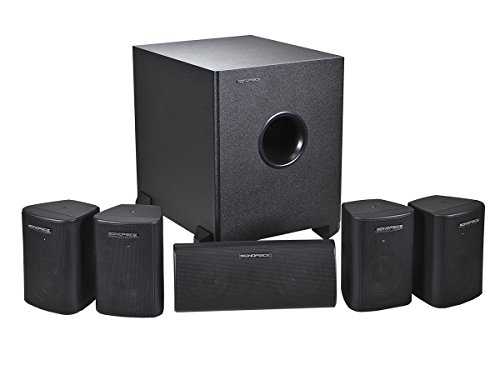
The Monoprice 5.1 system emphasizes value and a straightforward upgrade path with four satellites, a center speaker, and an 8″ powered subwoofer. It uses standard RCA and digital/optical inputs and supports easy integration into existing receivers. It’s best for budget-conscious setups where you still want a true 5.1 experience, but avoid this if you need wireless rear channels or a compact footprint for very small rooms.
ULTIMEA 7.1ch Dolby Atmos Sound Bar With Subwoofer

This 7.1ch system combines a 7.1 layout with Dolby Atmos and dual-up firing channels for height-enhanced sound. Aura A60 rear speakers wirelessly connect with the bar to form a complete surround field. This option is best for rooms sized up to mid-to-large areas where elevated height channels and a wide soundstage improve immersion. Note: Not compatible with DTS for certain content, which may affect some formats.
ULTIMEA 7.1ch Dolby Atmos Surround Sound System

This 7.1ch Atmos setup focuses on a large immersive field with four surround speakers and an advanced subwoofer, ideal for home theaters that demand multidimensional sound and accurate voice localization. The system supports app control and HDMI eARC for easy integration with modern TVs. Better for: users who want a feature-rich Atmos experience with minimal cable clutter. Caution: setup can be more involved to optimize rear channel synergy in smaller rooms.
Buying Guide: Key Purchase Considerations
- Room size and layout: Larger rooms benefit from true 7.1 or 7.1.2 configurations with wireless rear channels, while smaller spaces can optimize with compact 5.1 systems.
- Speaker type and placement: Look for sets offering rear surrounds, center channel clarity, and subwoofer impact. Wireless rear speakers simplify placement in tight spaces.
- Dolby Atmos and SurroundX: Atmos adds height effects; SurroundX blends multiple drivers for surround density. Decide if height channels are essential for your viewing habits.
- Voice clarity features: DSP-based VoiceMX or similar technologies help dialogue remain intelligible at modest volumes, especially when scenes are dense with effects.
- Connectivity: Ensure HDMI eARC/ARC support, optical inputs, and Bluetooth options align with your other devices. Wireless subwoofers and rear speakers reduce cable clutter but verify compatibility with your room setup.
- Ease of setup: Some systems tout ready-to-go in under a minute, others require careful placement and calibration. Consider your tolerance for optimization steps.
FAQs
- What does 7.1ch imply for my home theater? It means seven main channels plus a dedicated subwoofer for more precise surround imaging, including additional rear channels for immersion.
- Is Dolby Atmos necessary for great home theater sound? Atmos enhances vertical height cues and height-based effects, but a strong 5.1 or 7.1 system can still deliver excellent immersion.
- Are wireless rear speakers worth it? They reduce cables and improve placement freedom, but wireless performance depends on interference and distance from the bar.
- Do I need a separate subwoofer? For most movies and games, a dedicated subwoofer adds low-frequency depth that smaller satellite speakers cannot match.
- Can these systems be used with streaming devices? Yes, most include HDMI ARC/eARC or optical inputs compatible with TVs and streaming players.
- How important is center-channel clarity? It’s crucial for dialogue-heavy scenes, ensuring voices stay clear over background effects and music.