
Best Speakers for Stage Piano: Clear, Portable Options for Live and Practice
Whether you’re performing on small stages, gigging at private events, or practicing at home, choosing the right speaker system for a stage piano is crucial. This guide highlights five versatile options that balance power, portability, and sound quality. Each pick is best for different scenarios, from compact practice rooms to frontline stage use. The listed products are chosen for reliability, ease of use, and how well they complement a stage piano’s tonal range.
Buyer-friendly overview: the top choices below cover powered stage monitor-style speakers, keyboard amplifiers, and compact PA solutions. Use the comparison notes in each section to decide which is best for you, and consult the Buying Guide for practical decision factors and setup tips.
Product Comparison Snapshot
| Product | Best For | Power | Notes |
|---|---|---|---|
| Monoprice Stage Right SRD212 | Live stage performances and events | Up to 1200W | DSP presets, Bluetooth streaming, Class D amp |
| Donner DKA-20 Keyboard Amplifier | Keyboard practice and small gigs | 20W | Two-channel with separate controls |
| Peavey KB 1 | Practice rooms and small venues | 20W | Two channels, compact design |
| Roland KC-600 | Compact stage setups and rehearsals | 200W | Four-channel mixing keyboard amp |
| Yamaha CK Series CK88 | Stage piano with built-in speakers | Integrated speakers | Three-split sound options, authentic keyboard voice |
Monoprice Stage Right SRD212 12-Inch Powered Speaker

The SRD212 is a 12-inch powered speaker with up to 1200 watts of Class D power. It includes five DSP presets controlled by a single knob, enabling quick adaptation to vocal, piano, or backing track playback. Best for: small-to-midsize live performances where you need a robust, versatile monitor or front-of-house solution. A key limitation is that DSP presets may require fine-tuning for some room acoustics, so use the presets as a starting point.
Donner DKA-20 Keyboard Amplifier

This 20-watt two-channel keyboard amplifier is designed for electric keyboard practice and small performances. It features independent volume controls for each channel, a built-in EQ with Treble, Middle, and Bass, and a frequency range suitable for keyboards. Best for: keyboard players needing a compact, affordable amp for practice or busking. Caution: 20 watts may be limited for louder stage environments, so consider pairing with a PA if needed.
Peavey KB 1 Keyboard Amplifier
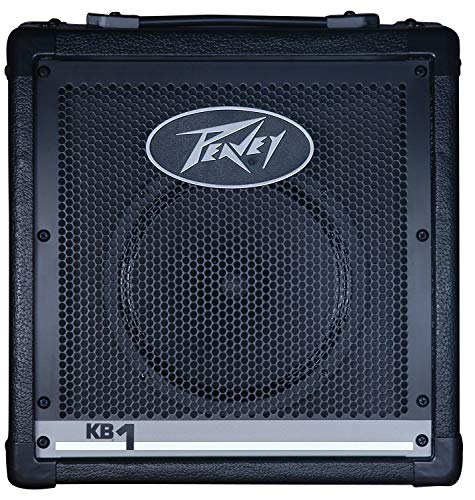
The Peavey KB 1 delivers 20 watts through an 8-inch speaker with two separate channels. Its compact footprint makes it a practical choice for practice rooms or small gigs where space is at a premium. Best for: solo performers and keyboardists who need a simple, reliable practice-and-performance solution. Limitation: lacks extensive onboard effects or high SPL for large stages.
Roland KC-600 4-Channel Keyboard Amplifier

The KC-600 is a 200-watt four-channel keyboard amplifier with a redesigned power amp and a custom two-way speaker system (15-inch woofer and horn). It’s a versatile solution for stage use, rehearsal rooms, and small venues. Best for: players needing multiple inputs with solid bass response and a compact, portable package. Caution: 200 watts may still require additional PA support for very large audiences.
Yamaha CK Series CK88 Stage Keyboard With Built-In Speakers

The CK88 offers built-in 88-key keyboard action with a focused piano and keyboard voice set. It supports multiple sounds including organ types for versatility in live and studio settings. Best for: keyboard players who want an all-in-one instrument with integrated amplification for small stages or private events. Limitation: built-in speakers may not satisfy larger venues; plan for an external PA if needed.
Roland KC-80 3-Channel Mixing Keyboard Amplifier

The KC-80 is a compact 50-watt, three-channel mixer-based keyboard amplifier. It emphasizes stable power delivery with a two-way speaker system and is suitable for smaller venues or practice rooms. Best for: players who need a lightweight, affordable option with basic mixing capabilities. Caution: lower power means less headroom in louder environments.
Coolmusic Drum Amplifier DM20 (20W) for Keys and Drums

The DM20 provides 20 watts with a 6.5-inch woofer and 2-inch tweeter, suitable for practice and small setups. It supports Bluetooth for background music playback and multiple input connections. Best for: practice spaces or casual performances where wireless audio playback is convenient. Caution: not ideal for large stages due to power and speaker size.
Buying Guide: Key Considerations For Stage Piano Speakers
What size venue are you targeting?
For small rooms or private sessions, compact amps or keyboard amps (20W–50W) may suffice. For small to mid-size stages, a powered 12″ or larger speaker (200W–600W range) can deliver usable SPL without external PA. For large venues, plan a PA system or monitor loudspeakers in combination with a stage piano.
Should you choose a dedicated keyboard amp or a general PA speaker?
Keyboard amps are designed to reproduce keyboard voices clearly and often include inputs for other instruments. PA speakers are better for larger audiences and can be paired with mixers for multiple sources. Consider your typical use: practice and small gigs favor keyboard amps; larger venues benefit from PA-compatible powered cabinets.
What about built-in speakers on a keyboard?
Built-in speakers are convenient for practice and quick setups. For live performances, external amplification is typically needed to achieve adequate stage presence and audience coverage. Use built-ins as a practice tool or as a monitor in small venues if the mains are adequate.
Power, impedance, and connections: what matters?
Check power handling (watts), impedance (ohms), and input types (XLR, 1/4″ TS/TRS, RCA). Two-channel or multi-channel options provide flexibility for keyboards, microphones, and playback devices. Ensure your mixer, keyboard, and amp can connect without adapters that affect signal quality.
Portability vs. performance: where is your balance?
Front-of-house speakers deliver maximum sound but can be heavier. Keyboard amps are often lighter and simpler to transport but may have limited headroom for large crowds. Choose based on how often you travel with gear and how much space you have on stage or in transport.
FAQ: Quick Answers For Stage Piano Speakers
- What’s the best option for practice at home? A compact keyboard amplifier or built-in-speaker keyboard is usually sufficient for practice, with optional external speakers for later-stage expansion.
- Do I need Bluetooth on stage speakers? Bluetooth is convenient for playing backing tracks or metronomes from a mobile device, but wired connections and high-quality monitors are generally preferred for live sound due to stability and latency considerations.
- How do I choose between 2-channel and multi-channel amps? Two-channel amps are adequate for a keyboard plus a microphone or playback device. Multi-channel models are better when you need separate control over multiple sources or instruments.
- Is 200W enough for small venues? If the venue is intimate or you’re using a PA system, 200W can be sufficient, but you may still want external subs or additional amplification for larger rooms.
- Should I buy a powered speaker or an passive speaker with an amp? Powered speakers simplify setup and reduce cables; passive speakers require an external amplifier. Powered speakers are generally easier for solo stage pianists.
- What’s a good starter setup for a stage piano? A compact keyboard amp or a versatile powered speaker (around 100–200W) paired with a small mixer is a solid starting point for small gigs and practice rooms.