
Compare Top Stereo Speaker Switch Boxes
| Product | Key Feature |
|---|---|
| Pyle PSS4 4-Zone Speaker Switch Selector | SPEAKER SELECTOR |
| Pyle PSS6 6-Zone Speaker Switch Selector | Up To 6 Separate Speaker Pairs |
| ADWITS 2-Channel Speaker Switcher | 2-Way With 150W RMS Per Channel |
| Pyle PSLSW4 4 Channel Speaker Selector | Independent Volume Controls, 100W Max Per Channel |
| TENEALAY 2-Way Speaker Selector P21 | 2-Way, 80W Max Per Channel, 8–16Ω |
Choosing the right stereo speaker switch box keeps multiple speaker pairs connected without swapping cables, helps zone audio, and protects amplifiers. The table above highlights five practical options that suit apartment setups to multi-room systems.
Pyle 4-Zone Speaker Switch Selector – PSS4
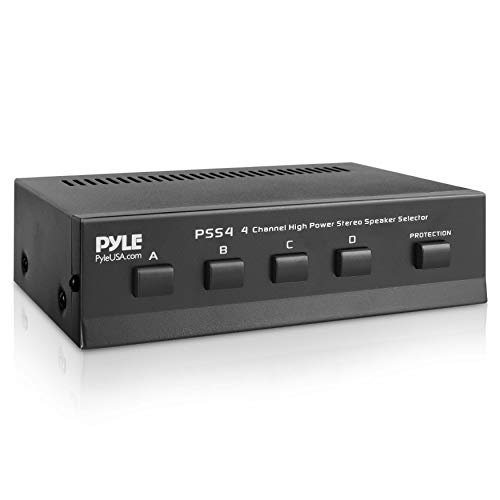
Brand: Pyle
Features: SPEAKER SELECTOR
This compact passive distribution box supports connecting up to four speaker pairs to a single stereo amplifier. It uses simple switch controls to select which zone(s) are active. As a non-powered unit it requires no setup beyond wiring, making it suitable for basic multi-zone setups where source switching and minimal electronics are preferred. The selector is designed for straightforward installation with screw terminals compatible with common speaker wire gauges.
Pyle 6-Zone Speaker Switch Selector – PSS6

Brand: Pyle
Features: Up To 6 Separate Speaker Pairs To Your Stereo System
This Pyle model expands multi-zone capability to six speaker pairs, useful for larger homes or installations with multiple listening areas. It functions as a distribution hub allowing selection of individual or multiple zones. As a passive switcher it relies on your amplifier’s capacity; confirm the amplifier can handle the combined speaker load or use impedance protection strategies. The unit’s clear labeling simplifies identifying zones during installation and use.
ADWITS 2-Channel Speaker Switcher Selector Box

Brand: ADWITS
Features: 2 Way Stereo Speaker Control, 150W RMS Per Channel, Play Either Pair Or Both
This two-way switcher is aimed at simple A/B installations: connect two speaker pairs to one amplifier and choose A, B, or both. Its 150W RMS per channel rating indicates suitability for modestly powered home audio systems. The model is practical for comparing speaker sets, directing audio to a patio or secondary room, or routing to two stereo zones. Terminal clamps make wiring accessible for standard speaker cable.
Pyle 4 Channel Speaker Selector With Volume Controls – PSLSW4
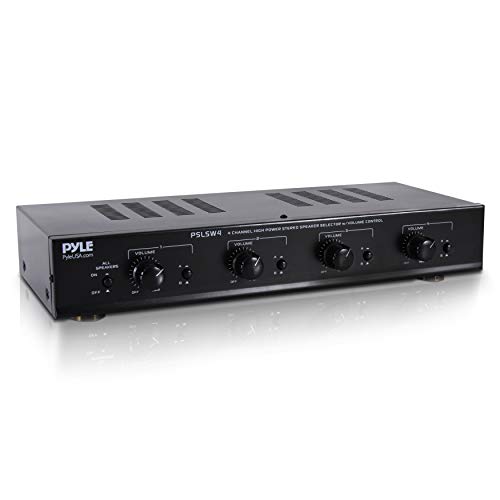
Brand: Pyle
Features: 100 Watt Max Per Channel, Controls 4 Speaker Pairs, Independent Volume Controls, Screw-Type Terminals
This controller adds per-zone volume control to the multi-zone selector concept. Rated at 100W max per channel for 8Ω speakers, the PSLSW4 allows independent volume adjustment for each connected pair, enabling customized listening levels across rooms. The push-button activation for each zone simplifies operation while screw terminals accept up to 14AWG wire for secure connections. This model suits users who want zone-level attenuation without a powered distribution amplifier.
TENEALAY 2-Way Speaker Selector Switcher Box – P21

Brand: TENEALAY
Features: Controls 2 Speaker Pairs, 80W Max Per Channel, Works With 8–16Ω Speakers
This two-way switcher offers basic A/B or combined operation for two speaker pairs. The stated 80W max per channel and 8–16Ω compatibility make it suitable for smaller amps and a variety of speaker types. It uses parallel switches to operate two sets and is a compact option for quick switching and light-duty multi-room needs. Its passive design keeps installation simple while preserving signal integrity at moderate power levels.
Buying Guide: Choosing A Stereo Speaker Switch Box
Selecting the right switch box depends on system size, amplifier capability, speaker impedance, and usage goals. Below are key considerations and comparison perspectives to guide your decision.
Number Of Zones / Outputs
- Pick 2-way units for simple A/B comparisons or single extra room routing.
- Choose 4, 6, or 8-zone models when planning multiple listening areas or distributed audio across a home.
Power Handling And Impedance
- Confirm the switch box’s power rating per channel and match it to your amplifier’s output to avoid clipping or damage.
- Check impedance compatibility (e.g., 8Ω, 4Ω, 16Ω). Passive switchers change load on the amp; use impedance-protecting circuitry or limit simultaneous zones if necessary.
Passive Vs Active (Powered) Switchers
- Passive units are simple, affordable, and require no power. They work well for low to moderate power systems but offer limited impedance protection.
- Active or powered distribution amplifiers provide isolation between zones, better protection for the amp, and often per-zone volume control; they are preferable for complex or high-power installations.
Volume Control And Per-Zone Adjustments
- If you need different listening levels in each room, choose a selector with independent volume controls.
- Volume control on passive boxes offers attenuation but not the same performance as dedicated multi-zone amplifiers.
Connection Types And Installation
- Look for screw terminals or banana plug compatibility for ease of wiring and reliability.
- Verify wire gauge support (e.g., 12–14 AWG) based on cable runs and power needs.
Use Cases And Practical Considerations
- Homeowners with a single amp and several passive speakers can use a multi-zone passive selector, but avoid activating all zones simultaneously unless the selector or amp supports the combined load.
- Comparing speakers or amps: A/B switchers with true isolation are useful for quick swaps without re-wiring.
- For outdoor or commercial applications, choose models rated for the expected power, and consider weatherproofing or enclosure solutions if exposed to elements.
Protection And Safety
- Consider models with built-in impedance protection or fuses to prevent amplifier overload.
- Ensure proper ventilation and secure mounting to avoid electrical hazards.
Price Versus Features
- Basic passive switchers are cost-effective for light-duty needs.
- Invest in volume control or powered distribution if you require flexible, multi-room audio with consistent levels and amplifier protection.