
Quick Summary: This guide reviews five reliable stereo speaker volume control devices for home audio systems, including in-wall rotary controls, multi-zone speaker selectors, and a USB-powered desktop option. The table below lists the selected products with brand and key capability for easy comparison.
| Product | Brand | Key Capability |
|---|---|---|
| OSD SVC100 In-Wall Volume Control | OSD Audio | 100W, impedance matching, up to 8 speaker pairs |
| Pyle PLSHVC412 4-Channel Selector | Pyle | 4 channels, individual volume, 4×100W max |
| Pyle PVCD15 In-Wall Dual Knob Control | Pyle | Dual rotary knobs, installs in standard junction box |
| Recoil VC-R100 In-Wall Volume Control | RECOIL | 100W, 12-step rotary, supports multiple speaker pairs |
| Pyle PSLSW6 6-Channel Selector | Pyle | 6 channels, independent on/off and volume control |
OSD 100W In Wall Volume Control Impedance Matching
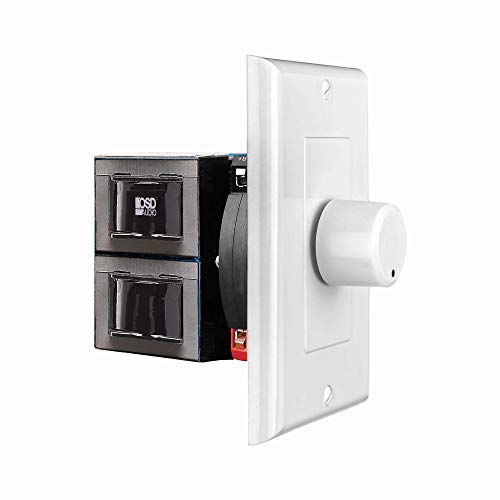
Brand: OSD Audio. The SVC100 Is Rated At 100 Watts Per Channel With Minimal Bass Roll-Off. It Features Front-Mounted Adjustable Jumpers That Allow Adding Up To Eight Pairs Of 8-Ohm Speakers Simultaneously. The Built-In Impedance Protection Stabilizes The Load Back To The Amp To Help Prevent Overheating When Multiple Speakers Are Paralleled. Use Case: Ideal For Dedicated In-Wall Zones Where You Need Local Volume Control Without Overloading The Receiver.
Pyle 4 Channel High Power Stereo Speaker Selector With Volume Control

Brand: Pyle. This 4-Channel Selector Supports 4 X 100W Max Power (With 8-Ohm Speakers) And Lets You Operate Up To Four Distinct Speaker Pairs. It Accepts Up To 14-Gauge Wire And Has Individual Volume Control Per Pair So You Can Tailor Levels For Separate Rooms. The Cabinet Includes A Heat Sink For Durability. Use Case: Best For Multi-Room Systems Where One Amplifier Feeds Multiple Zones And Individual Control Is Required.
Pyle Home In-Wall Stereo Volume Control Plate Dual Knob
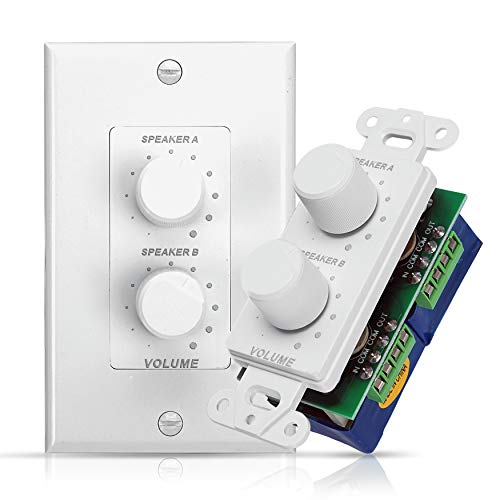
Brand: Pyle. The PVCD15 Installs In A Standard Junction Box Like A Light Switch And Provides Two Independent Rotary Knobs To Control Two Speaker Sets. Rated For 120W Load Handling, The Unit Is Designed For Simple Installation And Operation. Operation Notes Include Setting The Amplifier’s Volume Low Before Adjusting Remote Volume Knobs. Use Case: Good For Rooms Where Two Local Speaker Pairs Need Separate Volume Adjustment Via A Single Wall Plate.
Recoil VC-R100 100W Impedance Matching Wall Mount Volume Control

Brand: RECOIL. The VC-R100 Is Rated At 100W Per Channel And Includes Adjustable Jumpers To Add Multiple 8-Ohm Speaker Pairs While Maintaining Full Hi‑Fi Frequency Response With Minimal Low-Frequency Roll-Off. The 12-Step Linear Rotary Provides Precise Local Volume Adjustment. White And Ivory Plate Options Are Included For Matching Décor. Use Case: Suited For Hi‑Fi Zones Where Maintaining Frequency Response And Matching Impedance Are Important.
Pyle 6 Channel Speaker Selector Switch Multi Zone Controller

Brand: Pyle. This Compact Selector Controls Up To 6 Speaker Pairs With Independent On/Off And Volume Controls. Designed For Use With 8-Ohm Speakers, It Handles 100W Max Per Channel And Uses Screw-Terminal Connectors That Accept Up To 14AWG Wire. Use Case: Best For Larger Multi-Room Systems Where Multiple Zones Need Independent Activation And Level Adjustment From One Central Box.
Buying Guide: How To Choose A Stereo Speaker Volume Control
Selecting The Right Volume Control Depends On System Topology, Power Handling, Installation Preference, And Desired Control Granularity. Below Are Key Factors To Compare:
- Type And Mounting: In-Wall Rotary Controls Offer Local, discreet control and clean aesthetics. Tabletop selector boxes centralize control for multiple zones without wall installation.
- Power Rating: Match The Control’s Wattage Rating To Your Amplifier And Speakers. Common Ratings Are 100W Per Channel; choose higher-rated hardware for more powerful systems.
- Impedance Matching And Protection: If You Plan To Parallel Multiple Speakers, impedance matching or protection circuitry prevents overloading the amplifier and preserves sound quality.
- Number Of Zones/Channels: Choose a unit with the appropriate channel count: 1–2 for single-room plates, 4–6 for multi-room selectors.
- Individual Volume Control: Decide Whether Each Zone Needs Its Own Volume Knob Or If Simple On/Off Switching Is Sufficient. Rotary pots provide smooth adjustment; stepped controls provide repeatable positions.
- Wire Gauge And Connectors: Check That Terminals Accept Your Speaker Wire Gauge (14AWG Is Common) And That Connector Type Matches Your installation preference (screw terminals vs. spring clips).
- Frequency Response And Bass Roll-Off: High-quality controls minimize low-frequency roll-off. Look For Specs Or Notes That Indicate Minimal impact On Bass.
- Installation Ease: In-wall plates should fit standard junction boxes; selector boxes should be sized for closet or AV racks. Consider whether you need professional installation.
- Heat Dissipation: Multi-channel selectors handling several loads may generate heat; metal housings and heat sinks help with longevity.
- Aesthetics And Plate Options: If visible, choose finishes (white, ivory, metal) that match room decor.
Comparison Perspectives
- Small Single-Room Setup: In-wall dual-knob plates provide local control with minimal space impact.
- Multi-Room With Central Amp: 4- or 6-channel selector boxes give centralized control and independent volume per zone.
- High Speaker Count: Units With Impedance Matching Or Protection Allow Multiple Pairs To Be Paralleled Safely.
- Ease Of Use Vs. Precision: Stepped rotary controls offer repeatable settings; smooth pots give finer adjustments but may drift over time.
Use the product features above to match your system’s amplifier power, speaker impedance, desired number of zones, and installation preferences for the best fit.