Best Stereo Speakers for Record Player: Clear, Room-Filling Sound Without a Receiver
Answering the common search for “stereo speakers for record player,” this guide highlights five compatible powered bookshelf options designed to pair with turntables without needing a separate amplifier. These picks suit vinyl enthusiasts who want easy setup, solid compatibility, and controllable sound. Best for small to medium rooms, bedrooms, or desks, each option supports turntables via AUX, RCA, or optical inputs, with Bluetooth streaming as an added convenience. The following table compares core specs and sound focus at a glance.
| Product | Main Strength | Best For | Limitations |
|---|---|---|---|
| RIOWOIS Powered Bookshelf Speakers | Multiple wired inputs, Bluetooth 5.3 | Turntable with AUX or Optical/ARC to TV | Requires powered source; check compatibility with your turntable |
| Edifier R1280T | Two AUX inputs, classic warm sound | Dual-device listening with easy switching | Limited modern digital inputs beyond AUX/RCA |
| Electrohome Huntley | Built-in amplifier, versatile connections | Turntable, TV, PC, streaming | Compact footprint; bass may be less deep in very small rooms |
| Saiyin Bluetooth Bookshelf Speakers | 40W x 2 with dual inputs | BT-enabled vinyl playback, TV/audio | Bluetooth-dependent setup may require BT transmitter on turntable |
| OHAYO 60W Computer Speakers | Higher power, 3.5mm/USB/RC input | Desktop vinyl setups, gaming/PC use | Not primarily designed for turntables; check input compatibility |
RIOWOIS Powered Bookshelf Speakers

Model: DS6701NP. Key connections include AUX, Optical, and TV-ARC for flexible setups. It is designed to operate without a separate receiver or amplifier, ideal for direct connection to a turntable or computer. Bluetooth 5.3 enables wireless streaming from smart devices. The 2.75-inch woofer emphasizes compact but clear mids and highs, suitable for small to medium rooms. Best for vinyl enthusiasts who want a minimal setup and easy device switching. Limitation: powered speakers require compatible input sources; ensure your turntable can connect via AUX or Optical/ARC if using a TV as a hub.
Edifier R1280T Powered Bookshelf Speakers
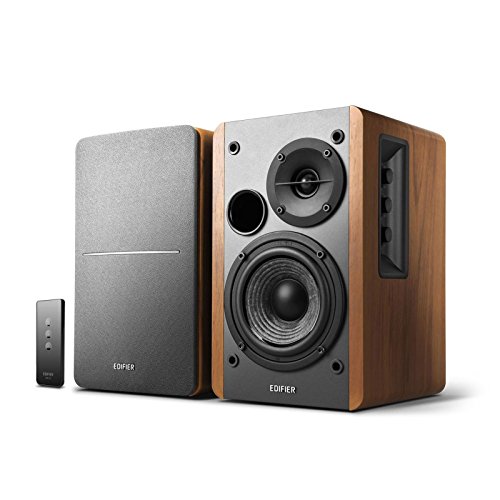
R1280T delivers 42 Watts RMS with dual AUX input. The 13mm silk dome tweeter and 4-inch woofer provide natural, studio-like sound. A remote control adds convenience, and bass/treble controls are accessible on the side for quick tone shaping. Best for listeners who want a warm, balanced sound and easy device switching from two AUX sources. Caution: primarily analog-focused inputs; adding digital sources may require extra adapters or DACs.
Electrohome Huntley Powered Bookshelf Speakers

With a built-in amplifier and multiple connection options, the Huntley offers flexible pairing for turntables, TVs, PCs, and wireless streaming via Bluetooth 5.0. The 3-inch drivers deliver warm, natural sound across a compact enclosure. Best for buyers who want an all-in-one package without an external amp. Limitation: smaller drivers may not reach deep bass in bigger rooms; consider placement to optimize bass response.
Saiyin Bluetooth Bookshelf Speakers

40W x 2 powered bookshelf speakers with Optical and AUX inputs and a subwoofer output for future expansion. They pair well with Bluetooth-enabled turntables and can connect to TVs via optical input, offering a comprehensive home theater-like experience. Best for vinyl listeners desiring a broader system with a sub-out option. Caution: Bluetooth compatibility depends on your turntable’s transmitter; verify that your device supports BT if you plan wireless playback.
OHAYO 60W Computer Speakers

These compact 60W speakers combine 3.5mm, USB, and RCA/auxiliary inputs for versatile desktop audio. The 3.5mm and USB options simplify setup for a direct turntable-to-speaker connection where a preamp isn’t required. Best for users who want strong desktop performance and easy plug-and-play with multiple devices. Limitation: not specialized turntable speakers; ensure correct input for a direct vinyl connection to avoid mis-match with older turntables.
Buying Guide
What should you consider when choosing stereo speakers for a record player?
- Input compatibility: Look for AUX, RCA, or optical inputs to match your turntable or system. If your turntable lacks a built-in preamp, a speaker with a built-in amp helps simplify setup.
- Power and room size: Higher wattage improves headroom in larger spaces but can overwhelm small rooms. Match speaker power to room acoustics and listening preferences.
- Sound character: Do you prefer a warm, vintage vinyl feel or a bright, detailed modern sound? Driver size and enclosure influence treble clarity and bass depth.
- Connectivity options: Bluetooth is convenient for wireless streaming from phones or computers, but wired connections typically offer more stable audio for vinyl playback.
- Subwoofer and expansion: If you crave deeper bass, select models with a dedicated subwoofer output or a clear path to add one later.
- Placement and acoustics: Position speakers at ear level and avoid wall-based reflections. Room layout impacts perceived bass and imaging.
FAQ
- Can I connect a turntable directly to powered bookshelf speakers? Yes, if the speakers include an AUX or RCA input and a built-in amp, you can connect directly from the turntable’s output.
- Do I need a separate amplifier with these speakers? Not necessarily. Models with built-in amplification eliminate the need for an external receiver or amp, but some setups may still benefit from an external preamp or DAC depending on your turntable.
- Is Bluetooth playback good for vinyl? Bluetooth is convenient for streaming other sources, but vinyl playback itself is wired. Use Bluetooth for secondary devices and keep vinyl through a wired path for best fidelity.
- What’s the difference between 2.0 and 2.1 sound? A 2.0 system uses two speakers with no dedicated subwoofer. A 2.1 system adds a subwoofer for lower bass frequencies, improving depth in many setups.
- How should I place speakers for best vinyl sound? Place them at ear height, about 6–12 feet apart (adjust to room size), and away from walls to minimize bass boom. Angle slightly toward the listening position for better imaging.