
Best Stereo to Mono DI Box Solutions for Clean, Reliable Audio
When you need to convert stereo to mono for PA systems, recording rigs, or live sound, choose a DI box or stereo-to-mono summing device that preserves signal integrity and minimizes noise. The top picks below are ideal for musicians, DJs, presenters, and A/V technicians who want reliable mono outputs without risking amplifier or source damage. Each option is best for a particular setup—choose based on input type, output needs, and whether you require isolation or ground-loop control. The quick summary table after the intro highlights the standout use-case for each product.
| Product | Best For | Key Benefit |
|---|---|---|
| SPRODIO SC21 | Summing two-channel line to mono | Accurate mono sum without damaging sources |
| Kopul LT-PDI | Laptop or device to PA | Balanced mono mic-level output for long runs |
| SPRODIO K2 | Stereo to mono with two mono outputs | Clear summed signal, simple setup |
| OSD Audio SMC21 | Easy stereo-to-mono with isolation | Gold-plated connectors, easy install |
| Radial ProAV1 | Multimedia devices to mono PA | Flexible inputs with stereo-to-mono summing |
SPRODIO Single Stereo to Mono Converter

The SPRODIO SC21 converts a stereo input into two summed mono outputs, allowing a single speaker to reproduce both channels. It is described as superior to a Y-cable because it prevents potential damage to outputs and preserves signal integrity. Input connectors are Stereo L/R RCA; outputs are two Mono RCA jacks. Best for users who need a simple, safe mono sum from a stereo line-level source to drive a single amp or speaker. Caution: ensure RCA connections are correctly matched to your equipment’s line signal levels.
Kopul LT-PDI Laptop One-Channel Passive Direct Box
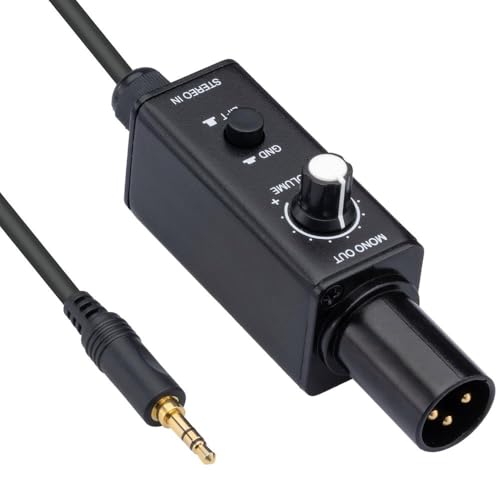
The Kopul LT-PDI is a high-quality passive direct box designed to convert unbalanced stereo line-level signals from laptops, smartphones, and tablets into a balanced mono mic-level signal. This makes it ideal for PA systems, mixing consoles, and audio interfaces where long cable runs are involved. It offers ground-lift capabilities to reduce hum. Best for presenters and mobile setups that need clean, balanced mono output from consumer devices. Limitation: passive design means no active gain; ensure your source level suits the mic/line input of your destination.
SPRODIO Single Stereo to Dual Mono Converter (K2)

This SPRODIO model converts stereo input to two summed mono outputs, facilitating a single speaker to reproduce both channels. It is presented as a safer alternative to Y-cables for preserving output integrity. Input is Stereo L/R RCA; outputs are 2 x Mono RCA. Best for venues or studios where a single mono feed must reflect the stereo content without risking source damage. Caution: verify that the mono outputs align with your amplifier’s input expectations.
OSD Audio SMC21 Stereo to Mono Converter

The OSD Audio SMC21 offers a stereo-to-mono summing capability with upgraded gold-plated RCA inputs/outputs and an independent 1:1 ratio audio transformer to preserve signal integrity. It installs easily between stereo source outputs and the right/left inputs of a power amplifier with no external power required. Best for consistent mono results in fixed installations or portable rigs. Limitation: transformer-based design may introduce slight phase differences if used in complex stereo setups.
Bolanle DB2 Passive 2-Channel DI Box

The Bolanle DB2 is a dual-channel passive DI box that converts high-impedance signals to low-impedance XLR outputs, suitable for electric guitars, basses, and synths. It includes a ground lift switch to reduce hum and interference, and an input-level contour to accommodate different instruments. Best for multi-instrument setups requiring separate channel handling and noise isolation. Limitation: being passive, it requires adequate gain from the source to achieve strong output levels.
Buying Guide
- What is your primary use case? Live stage, studio recording, or on-the-go presentations? Choose a device that matches your need for portability, isolation, and gain structure.
- Do you need isolation or ground-loop reduction? If you frequently encounter hum, look for DI boxes with ground lift or transformer isolation.
- What input/output compatibility do you require? Ensure the device supports your actual signal type (unbalanced stereo, balanced mono, RCA, XLR) and speaker/PA interface.
- Is passive or active the better choice? Passive DI boxes are reliable and low-noise but rely on adequate source level; active options provide gain but require power.
- How important is signal integrity for mono summing? Prefer devices with 1:1 transformers or dedicated summing circuitry to preserve frequency response and minimize crosstalk.
FAQ
- What does a stereo-to-mono DI box do? It sums stereo channels into a mono signal while often providing impedance matching and sometimes isolation.
- When should I use a ground lift? Use it when you detect hum caused by ground loops between devices.
- Are DI boxes safe for amplifiers? Yes, when used as intended with proper input/output connections, they protect both source and amplifier by providing proper impedance and signaling levels.
- What’s the main difference between passive and active DI boxes? Passive DI boxes require no power and rely on transformer-based isolation, while active DI boxes use a power source and can provide gain for low-output devices.
- Can I use a stereo-to-mono adapter for live sound? Yes, but a dedicated DI box or summing device is generally safer for high-powered systems and longer cable runs.
- Which device is best for laptops? The Kopul LT-PDI and similar laptop-oriented DI boxes are designed for converting unbalanced stereo to balanced mono for PA systems.