
Best Stereo to RCA Cables for High-Quality Audio Connections
When selecting a stereo to RCA cable, the key is reliable signal transmission with minimal interference. These cables are ideal for connecting portable devices, TVs, or gaming consoles to home stereos, amplifiers, or external speakers. This guide highlights five top options and explains which buyers they suit best. Whether you need compact travel-friendly cables or longer runs for a living room setup, you’ll find choices that balance durability, sound quality, and ease of use.
Summary of chosen products:
- JSAUX RCA to 3.5mm Cable — 6.6 ft, best for portable devices to home stereo systems
- UGREEN 3.5mm to RCA Cable — 6.6 ft, best all-around durability and durability
- MCSPER RCA to 3.5mm AUX Cable — 6.6 ft, best value for multi-device setups
- FosPower 3.5mm to RCA Cable — 10 ft, best for longer runs and flexible placement
- Amazon Basics 3.5mm Aux to 2 RCA — 8 ft, best for budget, reliable everyday use
JSAUX RCA To 3.5Mm Cable 6.6Ft

Best for portable devices to home stereo setups. This cable uses dual shielding and a gold-plated connector to reduce interference and preserve stereo detail. The design supports bi-directional audio transmission, making it versatile for both playback and recording scenarios. The color-marked red and white RCA plugs simplify left-right connections, and the 6.6-foot length offers flexibility in compact living spaces. A potential limitation is the length for very long runs where a thicker shield might be preferred for additional EMI resistance.
UGREEN 3.5mm To RCA Cable 6.6Ft

Best for durable, high-quality connections in both home and professional environments. The cable emphasizes gold-plated connectors and copper conductors for low signal loss and minimal interference. It supports 1/8″ to RCA connections and resists EMI and RFI, helping preserve clarity in complex setups. Durability is highlighted by a long bend lifespan and a flexible jacket. Choose this if you need reliable performance over many connections and finger-friendly plugs for quick setups.
MCSPER RCA To 3.5mm AUX Cable

Best for multi-device setups and versatile use with smartphones, tablets, and HDTVs. This 6.6-foot cable supports bidirectional audio transmission, letting you play audio from mobile devices to RCA-equipped speakers or project audio back from RCA devices to a 3.5mm speaker. It’s well-suited for casual home theaters and dorm rooms. A caveat is that signal quality can vary with very long runs or low-noise requirements, so consider shorter lengths for critical listening.
FosPower 3.5mm To RCA Cable 10Ft

Best for longer runs where distance between devices matters. The cable features a beveled plug design to ensure full seating even with cases on, and it uses copper braid shielding plus aluminum foil to limit EMI/RFI. This makes it a solid choice for living rooms with furniture obstacles or setups where speakers sit farther from the source. The longer length may introduce a tad more cable management effort and potential tangling if not stored properly.
Amazon Basics 3.5mm Aux To 2 RCA Cable

Best for budget-conscious buyers seeking dependable everyday use. The 8-foot length offers a practical balance between reach and manageability. The dual-shielding and gold-plated 3.5mm plug deliver clearer sound with reduced corrosion concerns. It is a straightforward option for standard home audio setups. Limitations may include fewer premium features like extra shielding layers found in higher-end models, which could matter in interference-heavy environments.
Amazon Basics 2RCA Stereo Cable 4Ft
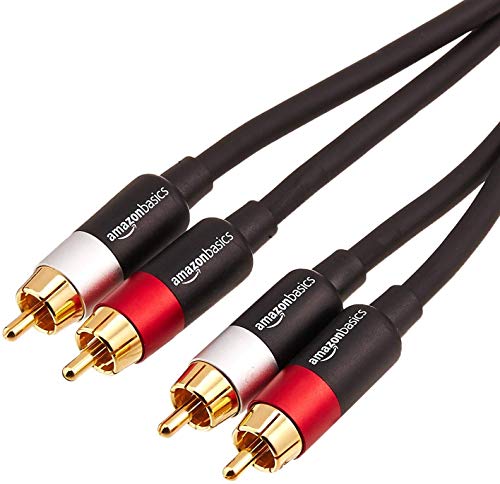
Best for short-distance needs and simple setups in small spaces. This 4-foot option focuses on providing clear, stable stereo transmission with gold-plated plugs and a compact footprint. It’s suited for under-TV connections or compact desktop stereo systems. For larger rooms or longer routes, consider a longer cable to avoid tension on connectors or signal loss from overly tight runs.
Buying Guide: Key Considerations For Stereo To RCA Cables
- Length: Choose length that fits your space without excessive slack or tension on connectors. Longer runs may require better shielding to minimize interference.
- Connectors: Gold-plated 3.5mm and RCA plugs reduce corrosion and improve contact reliability. Ensure the color-marked RCA plugs match left and right channels.
- Shielding and Conductors: Dual shielding and copper conductors reduce EMI/RFI and preserve audio fidelity. Higher-end options may offer more robust shielding for sensitive environments.
- Durability: Look for braided shielding, flexible jackets, and sturdy strain relief for longer cable life, especially in high-usage zones.
- Bi-Directionality: Some cables support bidirectional audio transmission, which can add flexibility for different playback setups.
- Use Case: For travel or dorm rooms, compact and tangle-free designs are advantageous. For home theaters, longer cables with strong shielding may be preferable.
Frequently Asked Questions
- What is a stereo to RCA cable used for?
- Do I need shielded cables for RCA audio?
- Are gold-plated connectors necessary?
- How long should a stereo to RCA cable be?
- Can I use these cables for video as well as audio?
- What should I choose if I’m on a budget?
It connects devices with a 3.5mm stereo output to devices with RCA inputs, such as amplifiers, speakers, or hi-fi systems.
Shielding helps reduce interference from other electronics, particularly in busy spaces or long cable runs.
Gold plating improves corrosion resistance and contact reliability, which can preserve signal quality over time.
Match length to your setup: short for tight spaces, longer for rooms with flexible layouts. Avoid excessively long runs if unnecessary.
These cables primarily carry stereo audio; many setups require separate video cabling for non-audio signals.
Budget-friendly options like Amazon Basics provide reliable basic performance for common home audio tasks.