Best Guitar Strings for Any Style: Bright Acoustics and Versatile Electrics
Answering the common buyer question, these are strong picks for players seeking reliable, easy-to-use strings across acoustic and electric guitars. The top five selections cover bright acoustic tones, smooth playability, and dependable longevity for various skill levels. Best for beginners starting with acoustics, players seeking a balanced acoustic tone, and electric players needing reliable, widely available sets. The following table summarizes the five chosen products to help compare basics at a glance.
| Product | Type | Gauge Range | Best For |
|---|---|---|---|
| D’Addario EJ11 Acoustic 80/20 Light | Acoustic | 12-53 | Bright, bold acoustic projection |
| Belfort Light Phosphor Bronze Acoustic | Acoustic | Light | Low-tension, pain-free playing |
| Ernie Ball Regular Slinky Electric 10-46 | Electric | 10-46 | Widely used across genres, reliable life |
| Ernie Ball Super Slinky Electric 9-42 | Electric | 9-42 | Classic lighter feel for fast playing |
| Ernie Ball Earthwood Phosphor Bronze, 12-54 | Acoustic | Medium Light | Warm tone with clear projection |
D’Addario EJ11: 80/20 Bronze Light Acoustic
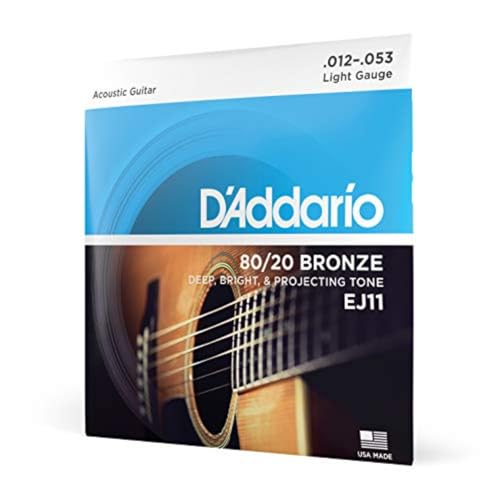
The EJ11 set uses precision wound 80/20 bronze strings over a hexagonal high-carbon steel core. The wrap wire creates a bold, bright acoustic sound with strong projection, suitable for players seeking a clear, lively voice from their acoustic guitar. This 6-string set is a classic choice for many traditional acoustic players and fingerstyle performers who want a crisp, ringy attack. Best for players who want a traditional bright tone and reliable intonation across the fretboard.
Who it’s best for: beginners and intermediate players who prefer a bright, projecting tone and standard light gauge feel. Why selected: widely recognized for consistent tension and tuning stability in everyday playing. Caution: 80/20 bronze can sound brighter and may be less resistant to corrosion in humid environments compared with phosphor bronze.
Belfort Light-Force Phosphor Bronze Acoustic

Bellfort’s LightForce strings are designed in Germany and feature 80/20 phosphor bronze with a focus on easy playability and durability. They claim a pain-free playing experience due to reduced finger pressure, making them appealing for players who tend to fatigue or have a lighter touch. The all-around design suits rhythm players and fingerstyle players who need endurance without sacrificing tone. Best for players who value comfort and a versatile, bright acoustic voice.
Who it’s best for: players seeking low-effort playing with a bright but balanced tone. Why selected: includes coating and alloy choices aimed at improving durability and tuning stability. Caution: the coated construction may influence brightness slightly versus uncoated phosphor bronze in some guitars.
Ernie Ball Regular Slinky Electric (10-46)

Regular Slinky electric strings are a long-standing standard in electric guitar playability. The 10-46 gauge range provides a balanced feel that suits a wide range of genres from blues to rock. Element Shield Packaging helps keep the strings fresh from manufacturing to installation. This set is best for players who want dependable, versatile electric strings that perform consistently across styles and have a familiar feel for many players.
Who it’s best for: electric players who want a trusted, versatile gauge. Why selected: industry-standard feel that works across genres. Caution: players with a preference for ultra-light or heavy gauges should consider alternatives like the 9-42 or 11-48 sets.
Ernie Ball Super Slinky Electric (9-42)

Super Slinky offers one of the lighter electric string options with a 9-42 gauge, favored for fast fretwork and bending. The lightweight construction facilitates quick playing and a smooth feel, making it well-suited for beginners practicing clean technique and advanced players seeking nimble response for intricate riffs. Best for players who want a classic, light feel and easy playability.
Who it’s best for: players who emphasize speed and articulation. Why selected: remains a staple for players who do a lot of lead work or pop-and-rock styles. Caution: lighter gauges can break more easily on aggressive picking or heavy picking dynamics.
Ernie Ball Earthwood Phosphor Bronze Acoustic

Earthwood Medium Light phosphor bronze strings deliver a warm, rich tone with strong projection. The combination of plain steel strings and phosphor bronze wrap provides clarity across the fretboard, making them a versatile choice for players who strum, fingerpick, or perform light to moderate chord voicings. Best for players seeking a balanced acoustic voice with a traditional feel.
Who it’s best for: players who want a warm and clear acoustic tone with reliable tension. Why selected: widely used by acoustic players for a consistent, musical voice. Caution: medium-light gauges may require slightly more finger pressure on very hard strumming or picking styles.
Buying Guide: Strings For Your Guitar — What To Consider
- Guitar type: Choose acoustic sets (bronze or phosphor bronze) for brighter acoustic tones, or electric sets (nickel) for classic electric feel and sustain.
- Gauge preference: Light gauges are easier to press and good for beginners; medium or heavier gauges offer more volume and durability for aggressive playing.
- Material and coating: Bronze strings are bright and projection-heavy; phosphor bronze last longer and resist corrosion; coated strings last longer but can feel slicker and slightly alter brightness.
- Tension and playability: Lighter tensions reduce finger fatigue but may break sooner; higher tension provides stability in tuning and a tighter feel.
- Coatings and longevity: Coated strings resist corrosion, useful for players who sweat or strum vigorously; they can be pricier and may have slightly less brightness.
- Playing style and genre: Blues and rock players may prefer lighter, quicker-action strings; jazz players often choose heavier gauges for richer sustain and tone.
Frequently Asked Questions
- What gauge is best for beginners on acoustic guitar? A light gauge (around 12-53) is typically easiest to press and play, reducing finger fatigue for beginners.
- Should I choose phosphor bronze or 80/20 bronze for acoustic strings? Phosphor bronze offers a balanced, warm tone with good durability; 80/20 bronze is brighter with crisper projection but may corrode faster in humid conditions.
- Do coated strings last longer? Yes, coated strings resist corrosion and last longer, especially for players with acidic sweat or frequent playing sessions, though they can feel slicker and may slightly alter brightness.
- Are light gauge electric strings better for beginners? Often yes, because they are easier to press and bend, but choose based on your playing style and comfort level.
- What makes a string set versatile for multiple genres? Sets with balanced tension and a stable winding core tend to perform well across rhythm and lead parts in rock, blues, and pop.
- Is there a difference between standard and heavy gauge electric strings? Heavier gauges offer more tension, sustain, and tone thickness, while lighter gauges are easier to play and bend.