
Best Short Scale Bass Strings for Clear Tone and Playability
If you play a short-scale bass (around 30.5 inches), you want strings that fit, feel comfortable, and deliver reliable tone across styles. This guide highlights five top options that are commonly recommended for short scale basses. Each choice targets different players—from jazz-focused players seeking a smooth flatwound or tapewound feel to rock players preferring brighter rounds. The selections aim to help you choose strings that are easy to fret, intonate well, and stay balanced across the fretboard. A quick buying matrix is provided below to compare core strengths at a glance.
| Product | |||
|---|---|---|---|
| Ernie Ball Short Scale Regular Slinky Nickel Wound | Nickel Round Wound | All-around playing, versatile genres | Bright, balanced tone with solid tension on 30.5″ scale |
| D’Addario XL Chromes Flat Wound ECB81S | Flat Wound | Jazz and smooth, dark tones | Even smoother finger feel and mellower sustain |
| DR Strings Hi-Beam Round Core Short Scale | Round Core, Bright Tone | Modern rock / fusion textures | Clean highs with a strong mids presence |
| D’Addario Tapewound ETB92S | Tapewound Nylon Wrapped | Vintage vibe, upright-like thump | Warm, focused depth with unique feel |
| Rotosound RS66S Swing Bass 66 | Stainless Steel Round Wound | Classic rock, blues, and metal | Balanced brightness with durable feel |
Note: Each product listing includes short-scale compatibility and core tonal characteristics described by manufacturers. The table above helps you quickly compare the main tonal directions and intended players for these five options.
Ernie Ball Short Scale Regular Slinky Nickel Wound

These strings are engineered to fit short scale basses around 30.5 inches. They are compatible with most bass types and playing styles and produce a bright, balanced tone. Best for players seeking reliability and versatility in a single set. Also suitable for players transitioning from standard scale to short scale without sacrificing tension or feel.
Best for: Players who want a classic nickel round-wound feel with immediate response on a 30.5″ scale. Better for players who value brightness and even intonation across the fretboard. Choose this if you prefer a familiar round-wound texture with solid durability. Caution: Round wounds can feel a bit rougher on the fingers for extended practice sessions compared to flatwound or tapewound options.
Ernie Ball Short Scale Super Slinky Nickel Wound

This short-scale set emphasizes a brighter, balanced tone with a little extra tension for improved articulation. The Super Slinky gauge combination suits players who want more snap in riffs while maintaining comfortable playability on the 30.5″ scale. It complements a wide range of playing styles from funk to rock and blues.
Best for: Players needing a touch more tension and punch without sacrificing comfort. Better for aggressive picking or fast runs. Choose this if you want crisp note definition on the low B and mid-range strings. Limitation: Slightly stiffer feel than lighter sets, which may affect beginners who prefer ultra-soft action.
D’Addario XL Chromes Flat Wound ECB81S

XL Chromes flats use flattened stainless steel wire, delivering a mellower, darker tone with a silky-smooth feel. The flatwound construction reduces finger noise and promotes long sustain. The short-scale version maintains proper tension and intonation on 30″ to 30.5″ basses. The HEX-CORE design supports consistent precision.
Best for: Jazz players or those seeking a vintage vibe with a polished, quiet attack. Better for smooth lines and precise intonation across the neck. Choose this if you want a more traditional flatwound experience. Limitation: Tone can be too soft for aggressive rock or metal styles that demand bright attack.
DR Strings Hi-Beam Round Core Short Scale

DR Strings Hi-Beam short-scale set features a round core design that delivers a modern tone with bright overtone clarity and strong projection. Handmade in the USA with professional-grade construction, these strings are designed to provide a crisp, dynamic response across a variety of genres. The short-scale construction aligns with typical 30.5″ basses for consistent tension.
Best for: Players who want a loud, present attack and clear harmonics for modern rock or fusion. Better for players who play with picking and percussive slaps. Choose this if you value supreme note clarity. Caution: Brighter responses can be more fingerboard-fatiguing for some players over long sessions.
D’Addario Bass Tapewound ETB92S Short Scale

Tapewounds provide a vintage, upright-bass-like thump with a warm, deep tone. The flat, smooth surface and nylon-wrapped design reduce finger noise and offer a unique feel compared to standard roundwounds. These strings are versatile enough for players exploring jazz, blues, and classic tones on a short-scale bass.
Best for: Players seeking a vintage, mellow voice with a refined attack. Better for jazz-oriented playing or players who want a more controlled, thumpy response. Choose this if you want a distinctive warmth that sits differently in mixes. Limitation: The tonal character may be too warm or soft for players who primarily rely on bright options for modern genres.
Rotosound RS66S Swing Bass 66 Short Scale
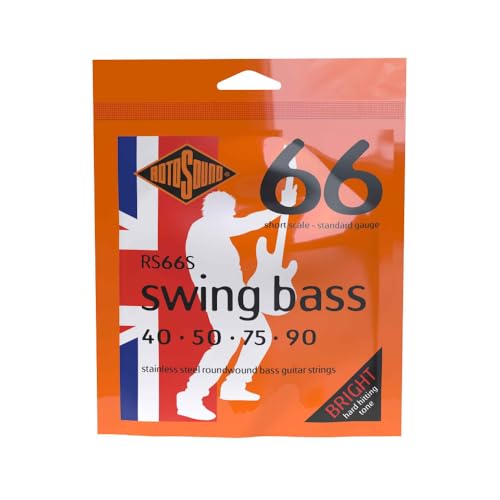
RS66S Swing Bass 66 strings are stainless steel round wounds designed for short scales. Known for their bright, punchy tone and durable feel, they offer straightforward maintenance and reliable intonation. The short-scale construction suits players who enjoy classic rock, blues, and metal textures with strong presence on the upper strings.
Best for: Players who want a classic, bright tone with solid bite for riffs and rock grooves. Better for players who value durability and consistent feel across sessions. Choose this if you want a robust, audience-friendly presence. Caution: Stainless steel rounds can feel stiffer than lighter gauges, potentially challenging beginners or players with lighter finger pressure.
Buying Guide: Short Scale Bass String Considerations
What should you consider when choosing short-scale bass strings?
- Tone goal: Do you want bright, balanced rounds; a smooth flatwound; or a warm, vintage vibe? Choose accordingly.
- Play style: Aggressive picking, slapping, jazz comping, or fingerstyle all demand different tensions and textures.
- Feel and tension: Short-scale strings can feel looser or tighter than standard scales. Consider gauges that optimize comfort and intonation.
- Durability and maintenance: Stainless steel rounds are durable; flats and tapewounds require smooth handling to preserve tone.
- Intonation and setup: Short-scale sets should maintain accurate intonation along the fretboard; some brands include hex-core for consistency.
Frequently Asked Questions
- What defines a short-scale bass string set?
Short-scale sets are designed specifically for basses around 30 inches to 30.5 inches, ensuring proper tension and intonation on that scale length. - Which string type is best for jazz on short scale?
Flatwound or tapewound strings typically deliver mellower, deeper tones that align well with jazz conventions on short scales. - Are there durability differences between stainless steel and nickel strings on short scale?
Yes. Stainless steel rounds tend to be more durable and brighter, while nickel rounds offer balanced brightness with good feel; flats and tapewounds emphasize feel and warmth over brightness. - Can I mix string types on a short-scale bass?
It’s possible, but it changes tension and tone across strings; most players choose a cohesive set for balanced tone. - How often should short-scale strings be changed for best tone?
String change frequency depends on playing style, but typical players replace strings every 1–3 months with moderate playing, or sooner for aggressive styles. - Do short-scale strings affect intonation?
Properly matched short-scale sets maintain intonation better on a 30.5″ scale; if in doubt, consider professional setup after string changes.