
Best Studio Mics for Vocals: Top XLR and USB Options for Your Home Studio
If you’re shopping for studio mics for vocals, the goal is clear: find mics that deliver clean, detailed vocal capture with low self-noise and consistent performance across different rooms. This guide highlights five strong picks spanning USB and XLR designs, tailored for home studios, podcasters, singers, and voiceover artists. Each option is explained with who it’s best for, why it was chosen, and any practical limitations to consider.
Below is a quick, at-a-glance table to help compare the selected models. It covers the main focus for vocals, ideal use case, and connector type.
| Product | Best For | Connector |
|---|---|---|
| RØDE NT1 Signature Series Studio Condenser Microphone | Professional vocal tracks in controlled studios | XLR |
| Shure SM4 XLR Studio Condenser Microphone Kit | Close-mic vocals with low noise | XLR |
| Audio-Technica AT2020 Cardioid Condenser | Project/home studios on a budget | XLR |
| FIFINE T669 Studio Condenser USB Microphone | Direct PC or laptop recording, quick setup | USB |
| Dejasound Upgraded Studio Recording Microphone with Isolation Shield | Home studios needing isolation and a compact setup | USB |
RØDE NT1 Signature Series Studio Condenser Microphone
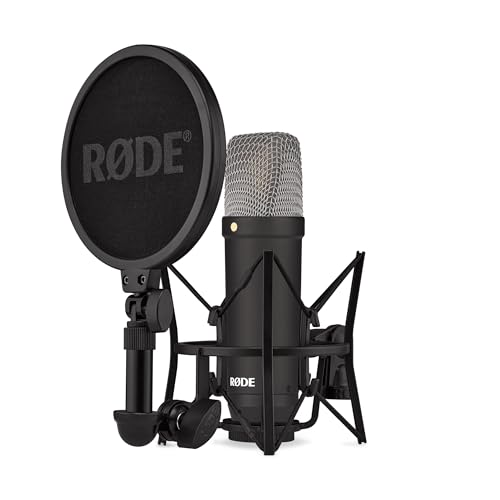
Best for professional vocal work in quiet recording spaces. The NT1 Signature Series is built around a large-diaphragm condenser with a history of trusted vocal voicing. It ships with a shock mount, pop filter, and XLR cable, making it a complete setup when paired with an audio interface. Its low self-noise helps keep the vocal signal clean during quiet passages and intimate deliveries.
Why chosen: It’s ideal when a “hit-records” sound is desired and you want minimal self-noise between takes. The main limitation is that you’ll need additional gear (interface, cables) to record, since it’s an XLR microphone.
Best for: Vocals in a treated home studio or semi-professional setup where you already plan to use a dedicated audio interface.
FIFINE T669 Studio Condenser USB Microphone

Best for rapid setup and plug-and-play recording of vocals, podcasts, and streaming. The T669 offers a direct USB connection, which simplifies workflow for users without audio interfaces. It includes a desktop stand arm, an 8.2-foot USB cable, and a double pop filter to help reduce popping sounds. The cardioid pickup pattern minimizes side noise, but you’ll still want a quiet recording environment for best results.
Why chosen: Excellent for beginners or creators who need a simple path from voice to computer without extra gear. A noted limitation is dependency on USB power and potential needs for room treatment to reduce background noise.
Best for: Solo podcasting, voiceover work, or bedroom studios needing a quick setup and straightforward workflow.
Shure SM4 XLR Studio Condenser Microphone Kit

Best for close-miking vocals with refined detail and reduced off-axis noise. The SM4 uses a high-quality dual-diaphragm capsule to deliver smooth lows and detailed highs, paired with a cardioid pattern that helps isolate the voice in imperfect acoustic spaces. Its design emphasizes a natural, balanced vocal tone across a wide dynamic range.
Why chosen: The mic’s noise rejection and proximity handling make it reliable for varied vocal styles. A practical caveat is that, as an XLR mic, it requires an interface or mixer to record.
Best for: Home studios aiming for studio-grade vocal clarity with consistent performance in less-than-ideal rooms.
ZealSound Podcast Microphone K66 USB

Best for creators needing reliable USB capture with built-in noise reduction options. The K66 uses a USB connection and offers a wide frequency response with a cardioid pattern to emphasize vocal clarity while limiting ambient noise. It includes convenient features such as a mute button and monitoring options, making it suitable for live streaming and voice work.
Why chosen: Strong value for multi-platform creators who want quick setup and versatile compatibility. A caution is that USB mics may not deliver the same professional headroom as an XLR setup in larger rooms.
Best for: YouTubers, podcasters, and streamers who value plug-and-play convenience and immediate results.
Audio-Technica AT2020 Cardioid Condenser
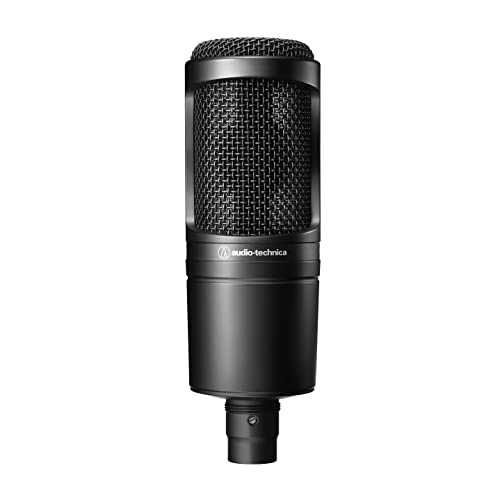
Best for budget-conscious vocal tracking with solid, versatile performance. The AT2020 is a side-address condenser known for its wide dynamic range and good SPL handling, making it a reliable choice for home project studios and beginner setups. It does not come with USB; you’ll use it with an interface for best results.
Why chosen: A cost-effective entry into quality vocal capture with a reputation for dependable, transparent sound. Limitation: requires an audio interface and some acoustic treatment to maximize performance.
Best for: New home studios seeking a proven, affordable path to clear vocal recordings.
Professional Studio Isolation Shield with Pop Filter

Best for reducing room reflections and preventing plosive sounds when using any open-electret or dynamic microphone. This isolation shield pairs with a pop filter to improve vocal clarity in untreated rooms. It is compatible with several mic types but is sold as an add-on item rather than a standalone mic.
Why chosen: A practical enhancement for home studios that struggle with reflected sound. Limitation: not a stand-alone mic solution and requires compatible mounting.
Buying Guide: Key Considerations for Studio Mics For Vocals
- Sound character: Condenser mics (like NT1 and AT2020) offer detailed high end and are common for vocals, while dynamic mics are more forgiving in untreated spaces.
- Connectivity: USB mics are convenient for quick setups; XLR mics provide more professional flexibility with an interface and outboard gear.
- Self-noise and proximity effect: Lower self-noise helps clean quiet passages; consider mics with a stable cardioid pattern to minimize room noise.
- Room treatment: Even the best mic benefits from a treated room or using a reflection shield and pop filter.
- Use case: For podcasts or voiceover, USB mics with built-in monitoring can simplify workflows; for music vocals, an XLR path with a good preamp often yields superior headroom.
FAQ
- What is the difference between USB and XLR mics for vocals? USB mics are plug-and-play with fewer other devices needed, while XLR mics require an interface but generally offer higher quality preamps and more system flexibility.
- Do I need a pop filter for vocals? Yes, a pop filter helps reduce plosives and ensures cleaner vocal recordings, especially for close-miked singing and speech.
- Is room treatment important for vocal mics? Yes. Treated rooms reduce reflections and standing waves, improving mic performance and consistency across takes.
- Can I use any mic for podcasts? Yes, but USB mics are often easier for beginners; however, a dedicated XLR mic with an interface can provide better long-term quality.
- What should I consider when choosing a mic for singing? Consider proximity effect, frequency response, and noise floor. A large-diaphragm condenser is common for studio vocal tracks, with an appropriate room and preamp.
- Do isolation shields improve vocal recordings? They help reduce reflections and room noise, particularly in untreated spaces, but are not a substitute for proper mic choice and room treatment.