
Best 8-Inch Studio Monitors for Accurate Mixing and Production
In the world of audio production, an 8-inch studio monitor strikes a balance between bass extension and nearfield clarity. This guide highlights five solid options for different needs—from budget-conscious setups to professional studios—so you can pick the right 8-inch monitor for your room, workflow, and monitoring preferences. Each entry describes who it’s best for, why it stands out, and a practical limitation to consider. Ideal buyers include home project studios, music producers seeking clear low-end, and video editors needing reliable reference monitors.
| Product | Best For | Key Strength |
|---|---|---|
| Yamaha HS8 (Per Pack) | Professional studios needing flat, translation-focused sound | Low distortion, accurate low end |
| PreSonus Eris Studio 8 | Budget-minded producers with broad mixing needs | Wide sweet spot with good HF detail |
| Mackie CR8BT | Creative setups needing Bluetooth and tone-shaping | Integrated Bluetooth and EQ tone control |
| JBL 308P MkII | Near-field monitoring with accurate bass | Updated transducers and boundary EQ |
| KRK Kreate 8 | Content creators needing clear mids and versatile woofer | Aramid woofer and textile tweeter |
Yamaha HS8 Studio Monitor (8″, Pair)

This studio monitor uses an 8-inch cone woofer and a 1-inch dome tweeter to deliver low-distortion sound with a defined bottom end. It provides a frequency response from 38 Hz to 30 kHz and a 60-watt power draw. Best for professional studios and rooms where flat, precise monitoring is essential. Limitation: per-pack configuration means you’ll need to pair two units and manage imaging carefully in smaller rooms.
PreSonus Eris Studio 8

These 8-inch two-way monitors are designed for music production with a 1.25-inch high-frequency transducer and a custom-tuned 120° H x 60° V EBM waveguide for a wide sweet spot. They’re well-suited for small control rooms and multi-purpose studios. Limitation: while offering broad imaging, some users may prefer tighter bass for critical sub-bass monitoring.
Mackie CR8BT 8″ Creative Reference

CR8BT combines studio-grade sound with an integrated tone control and Bluetooth. It offers TRS and RCA inputs for interfaces, a 3.5 mm input for gaming or PCs, and a built-in headphone output. Best for users who want versatile playback alongside professional monitoring. Limitation: Bluetooth can introduce latency if used for critical mixing; use wired connections for accuracy.
JBL 308P MkII 8-Inch
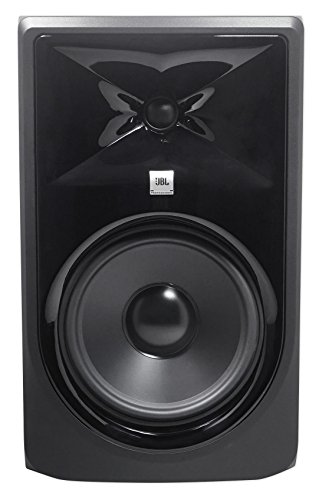
The JBL 308P MkII offers 112W of powered two-way monitoring with an 8-inch woofer and a 1-inch tweeter. It features updated transducers and a boundary EQ to maintain neutral low-end response when placed near walls. Best for near-field studios needing reliable bass extension and imaging. Limitation: may require room treatment to prevent bass buildup in smaller spaces.
KRK Kreate 8 Powered Studio Monitor

The KRK Kreate 8 uses an 8-inch aramid woofer and a 1-inch textile dome tweeter for clear mids and tight bass. It’s a lightweight, wood-cabinet design with a Class-D amplifier and USB input, making it a practical choice for content creators and home studios. Limitation: lighter cabinet construction may be more prone to transit or placement-induced vibrations in untreated rooms.
Buying Guide: Key Considerations for 8-Inch Studio Monitors
What room size is appropriate for 8-inch monitors? For small to medium rooms, 8-inch monitors provide a balanced blend of bass extension and nearfield clarity without overwhelming the space. If your room is particularly reflective, plan for acoustic treatment and speaker placement to maximize imaging.
What connectivity and compatibility matter? Look for balanced XLR or TRS inputs for clean signal transfer, plus optional RCA or USB paths for convenience. Some models add Bluetooth, which is helpful for casual listening but should be avoided for critical mixing.
How important is stereo imaging and sweet spot width? Waveguides and horn-loaded designs expand the listening area. Monitors with wider angles help during collaborative sessions and when your listening position isn’t perfectly centered.
What about power and headroom? Higher-powered monitors can handle louder mixes with less distortion, but efficiency and room response matter more in real-world setups. Consider bi-amped designs for cleaner HF and LF control.
Should you prioritize brand and tuning? Brands like Yamaha, JBL, and KRK often provide well-known reference sound with consistent production. If your goal is translation across listening environments, prioritize flat response and room calibration options over flashy features.
Frequently Asked Questions
- What is the advantage of an 8-inch monitor?
They offer deeper bass than smaller monitors while staying practical for nearfield use in home studios. - Do all 8-inch monitors require room treatment?
Best results come with treatment; monitors themselves are part of the solution, not a substitute for acoustics. - Is Bluetooth advisable for critical mixing?
No. Bluetooth is convenient for casual listening but can introduce latency and compression; use wired connections for mixing. - Which brand is most neutral for mixing?
Brands like Yamaha and JBL are known for translation-friendly monitors, but room treatment and placement are equally important. - What should I check before buying an 8-inch monitor?
Look for accurate frequency response, input options, room compatibility, and whether the monitor supports your primary workflow (music production, video, or gaming). - Are two monitors necessary for a good stereo image?
Yes. A matched pair provides consistent imaging and helps with phase accuracy. Consider room layout to optimize placement.