
Best TF Card Dash Cam Memory Cards for Stable Footage and Quick Access
If you’re shopping for a TF card dash cam, choose memory cards that deliver fast read/write speeds, reliable durability, and ample capacity for loop recording. This guide highlights five cards that perform well in dash cams and security cameras, with clear notes on who each is best for. Each option is evaluated for continuous recording, data safety, and easy file transfer.
The table below summarizes the five recommended products, helping you compare capacities, speeds, and ideal use cases at a glance.
| Product | Capacity | Read Speed (MB/s) | Best For |
|---|---|---|---|
| MindStor 64GB Micro SDXC | 64GB | Up to 90 | Dash cams requiring fast app performance and reliable day-to-day use |
| MindStor 128GB Micro SDXC | 128GB | Up to 90 | 24/7 loop recording in higher-capacity deployments |
| Speederlash 64GB Micro SD Card | 64GB | Up to 90 | HD video recording and broad device compatibility |
| SANDISK 128GB Ultra microSD Card | 128GB | Up to 195 | Heavy capture needs and fast offload to computer |
| SECULINK 32GB TF Card | 32GB | Up to 20 | Security camera and dash cam setups with steady 1080P needs |
MindStor 64GB Micro SDXC Memory Card
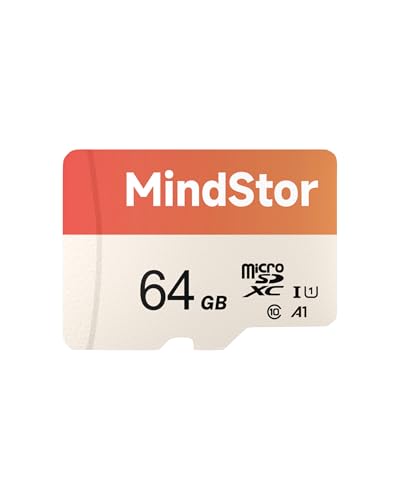
Brand: MindStor. Capacity: 64GB. Speed: Up to 90MB/s read. Class: A1, U1; includes adapter. Features highlight fast read and reliable durability, including resistance to temperature, shock, water, and X-ray exposure. Best for dash cams needing quick access to footage and smooth app performance on Android devices. Limitations: real-world speeds may differ from advertised due to device and usage conditions.
Why this is best for: Dash cam users who require stable Full HD recording and quick file transfers without frame drops. The card’s 90MB/s read speed supports faster retrieval of event clips and smoother backups. Consider this if your dash cam operates in varying temperatures and you want resilient data protection.
MindStor 128GB Micro SDXC Memory Card

Brand: MindStor. Capacity: 128GB. Speed: Up to 90MB/s read. Features: Designed for dashcams and security cameras with 24/7 loop recording, prevents frame drops, and includes an SD adapter. Best for: Users who need extended recording time without swapping cards and who operate in challenging temperatures. Caution: Real-world performance varies with device compatibility and storage formatting.
Speederlash 64GB Micro SD Card with Adapter

Brand: Speederlash. Capacity: 64GB. Speed: Up to 90MB/s read; U3 A1 rated for faster app performance and sustained HD video. Features broad compatibility and an SD adapter. Best for: Customers seeking a versatile card that can handle HD video capture and rapid file transfers across devices. Limitation: May vary in write speed depending on the card’s age and formatting.
SANDISK 128GB Ultra microSD Card

Brand: Sandisk. Capacity: 128GB. Speed: Up to 195MB/s read (128GB-1.5TB models). Features ultra storage expansion up to 1.5TB and quick offload with a USB reader. Best for: High-capacity demand scenarios with rapid data transfer needs, ideal for longer dash cam sessions and quick multimedia transfers. Caution: Actual speeds depend on device and card class; higher capacities may require compatible readers for peak performance.
SECULINK TF Memory Card FAT32 Format 32GB

Brand: SECULINK. Capacity: 32GB. Class: C10; read/write up to 20MB/s. Features continuous recording support for security cameras and dash cams. Best for: Budget setups requiring reliable 1080P support and basic data management. Limitation: Lower write speeds may limit performance in high-frame-rate recording or rapid file drops.
Buying Guide
What capacity should you choose for a dash cam card? For most daily driving use, 64GB is sufficient for several hours of footage, while 128GB or higher is better for long trips or multiple cameras. If you frequently pull footage to a computer, higher read speeds help with faster offloading. Choose cards with UHS-I, U3, or A1 ratings to ensure smooth video capture and app performance.
What speeds matter for dash cams? Read speed affects how quickly you can access and back up footage, while write speed influences ongoing recording without dropped frames. For 1080P recording, U1/A1 cards with sustained write performance are typically adequate; for 2.7K–4K or extended recording, prefer U3 and higher sustained write speeds.
Durability and compatibility should not be overlooked. Look for cards that are water, shock, X-ray, and temperature resistant. An SD adapter is useful for transferring files to a computer or phone. Ensure your dash cam supports the card’s format and capacity to avoid compatibility issues.
Formatting and maintenance tips. Use the dash cam’s recommended file system (often exFAT). Regularly format the card after backing up important footage. Keep extra cards on hand to avoid gaps during trips or extended surveillance periods.
Frequently Asked Questions
- What capacity is best for dash cams? For daily use, 64GB is often sufficient; 128GB or larger is better for long trips or multi-camera setups.
- Do higher read speeds improve dash cam performance? Yes, higher read speeds improve file transfer times and playback when reviewing footage on a computer.
- Will these cards work with all dash cams? Most dash cams support standard microSD/TF cards; check your device’s supported capacity and speed class before purchasing.
- What is the difference between U1 and U3 cards? U3 supports higher sustained write speeds, beneficial for higher-resolution recording and rapid file handling.
- How should I format the memory card? Use the dash cam’s recommended format (often exFAT) and reformat after backing up important clips.
- Are these cards durable for harsh conditions? Many are designed to be waterproof, shockproof, and temperature resistant, making them suitable for outdoor use and extremes.