
Best Tremolo Pedal With Expression Input for Expressive Playing
The buyer searches for a tremolo pedal that also accepts an expression input to modulate effects in real time. This guide compares five top options, highlighting who each pedal is best for, and why they stand out. It covers classic amp-style tremolo, transparent expression control, and compact, passive designs for pedalboard efficiency.
Summary of chosen products
| Product | Brand | Best For | Notes |
|---|---|---|---|
| Supro Tremolo | D’Angelico | Players seeking amp-style tremolo with selectable modes | Expression pedal input, versatile modes |
| SONICAKE Vexpress | SONICAKE | Pedalboard users needing simple dual function | Passive + automatic mode switching |
| JOYO JF-09 | JOYO | Those chasing optical tremolo with true bypass | Two-knob control, flexible rate and intensity |
| Lefiko Volume & Expression | Lefiko | Guitarists needing combined volume and expression control | Passive design, silent tread |
| Btuty 2-in-1 | Btuty | Compact two-in-one pedal for streamlined boards | Volume and expression in one unit |
Supro Tremolo – Amplitude and Harmonic Tremolo Drive Pedal

The Supro Tremolo delivers both amplitude and harmonic tremolo through a compact chassis. It offers switchable Tremolo modes and an expression pedal input for live control of depth or rate. Best for players who want classic, VOX-like wobble with real-time expressive adjustments via an external pedal. Caution: consult the manual for which expression parameters are mapped to which controls, as defaults may vary by mode.
M-AUDIO EX-P Keyboard Expression Pedal

This expression pedal is designed to expand and unlock full creative control on keyboards and controllers. It can manipulate any MIDI-assignable control in real time, including volume, modulation, panning, and filter sweeps. Best for players who need broad compatibility and a universal control surface for live performance or studio work. Limitation: relies on a compatible MIDI or expression input on the target device.
SONICAKE Passive Volume & Expression EXP Guitar Pedal
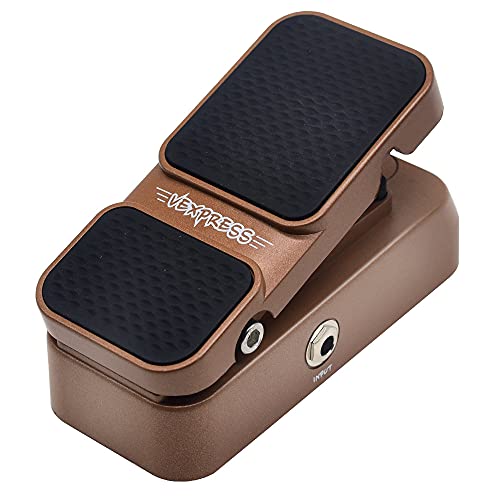
The SONICAKE Vexpress combines passive volume and expression control in a single miniature footprint. The auto-detection feature switches between Volume and Expression modes based on connection, making it a flexible option for varied setups. Best for players wanting a compact, trouble-free solution that works with many instruments. Note: uses TRS compatibility and proper wiring for gradual volume control.
JOYO Tremolo Guitar Pedal JF-09

The JOYO JF-09 uses an optical photoelectric circuit to reproduce authentic tube-amp tremolo. It offers two knobs for Rate and Intensity, with a LED that pulses in time with the effect. Best for players seeking a warm, analog-style tremolo without vintage gear. Limitation: basic controls mean fewer tonal knobs than some analog rivals, but the optical circuit delivers consistent modulation.
Lefiko Volume & Expression Pedal for Electric Guitar

This dual-function passive pedal handles both volume and expression control with no power required. It features a silent tread and non-slip design, making it suitable for quiet stages and studio work. Best for players who want to add volume swells or real-time expression without adding an extra power supply. Caution: ensure proper TRS cable usage to unlock full gradual control.
Btuty 2-in-1 Volume Expression Pedal

The Btuty 2-in-1 pedal merges volume and expression control into a compact unit, ideal for streamlining pedalboards. Best for players who want quick access to dynamic expression without adding separate pedals. Limitation: some users report that the combined function may require careful cable management to avoid crosstalk on crowded boards.
Buying Guide: How to Choose a Tremolo Pedal With Expression
What to consider when selecting a tremolo with expression input?
- Expression mapping: Check how the expression input affects tremolo depth, rate, or other parameters. Some pedals map to multiple controls depending on mode.
- Mode variety: Pedals like the Supro offer multiple tremolo modes; consider whether you want amplitude tremolo, harmonic tremolo, or a mix for sonic versatility.
- Footprint and power: If you prefer compact boards, passive pedals or mini units help save space. For powered options, verify your pedalboard’s power supply compatibility.
- Control ergonomics: Two-knob or more control arrangements affect how easily you dial in sounds during a performance. Optical tremolo (as with JOYO JF-09) tends to deliver smooth modulation.
- Compatibility: Some expression pedals are designed for keyboards or MIDI devices; ensure the device you use can read and respond to the pedal’s expression signal.
- Reliability: True bypass preserves your guitar tone when the effect is off. This is important for preserving signal quality throughout your chain.
FAQ
- Do tremolo pedals with expression inputs work with electric guitars only? Answer: They are commonly used with electric guitars, but some expression-enabled pedals also work with keyboards and other instruments through compatible inputs.
- Is passive expression better than powered? Answer: Passive designs reduce power needs and noise, but compatibility with your setup is key. Active pedals can offer more precise control in some cases.
- What is harmonic tremolo? Answer: Harmonic tremolo modulates the waveform’s harmonic content, creating a richer, more complex pulsing effect than simple amplitude tremolo.
- Can I use expression pedals with multi-effects units? Answer: Yes, many expression pedals control parameters on multi-effects and amp-modelers via their expression inputs.
- Which pedal is best for live use? Answer: Pedals with true bypass, reliable expression mapping, and simple controls (like JOYO JF-09 or Lefiko) are often preferred for quick on-stage tweaks.
- Do I need a separate expression pedal if I buy a two-in-one pedal? Answer: No, but a dedicated expression pedal can offer finer control or easier access depending on your setup.