Best TRS Cables for Guitar: Durable 1/4 Inch Cords for Every Setup
Answering the common buyer question, these TRS cables are designed to deliver balanced stereo or reliable mono signals for guitars, keyboards, and other audio gear. The top picks here cater to different needs: seasoned performers seeking low-noise cables, beginners building a practice rig, and studio users needing robust construction. The following sections showcase five strong options and who they fit best, plus a concise buying guide and FAQs to help you compare at a glance.
- Elebase 1/4 Inch TRS Instrument Cable 10ft 2Pack
- Birvemce 2 Pack Premium TRS Cable 10FT
- Pig Hog PTRS06 High Performance 1/4″ TRS Instrument Cable, 6 Feet
- Pig Hog PTRS15 High Performance 1/4″ TRS Instrument Cable, 15 Feet
- Cable Matters 2-Pack 1/4 Inch TS to TS Electric Guitar Cable
Buying quick reference table (selected products):
| Product | Length | Best For | Key Strength |
|---|---|---|---|
| Elebase 10 ft TRS (2-pack) | 10 ft | Electric guitars, bass, keyboards | Balanced signal, robust build |
| Birvemce 10 ft TRS (2-pack) | 10 ft | Pro audio, studio monitors, DJs | Low noise, braided shield |
| Pig Hog PTRS06 | 6 ft | Live setups, studio use | Balanced TRS, durable jacket |
| Pig Hog PTRS15 | 15 ft | Stage runs, longer instrument chains | Balanced, flexible |
| Cable Matters TS to TS | 6 ft | Guitar to amp, pedals | EMI shielding, solid signal |
Elebase 1/4 Inch TRS Cable 10ft 2Pack
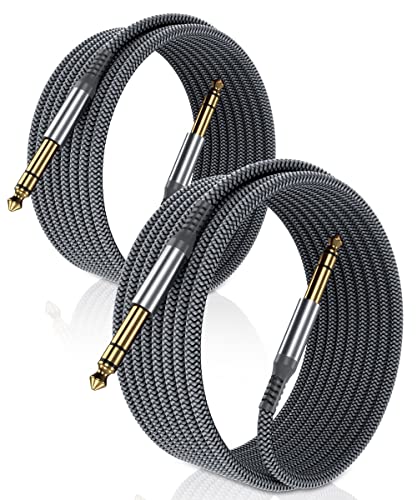
Best for players who value durability and a clean signal. This 2-pack uses a premium copper conductor with two-layer shielding and gold-plated TRS connectors to minimize loss and interference. A thicker, robust jacket with a nylon braided outer layer and aluminum shell enhances longevity. A Velcro strap helps manage excess length for on-stage or studio use. The cable design also aims to resist daily twists and pulls, making it suitable for active performers who move while playing.
Who it’s for: Electric guitarists, bassists, and keyboard players who want a balanced, reliable connection with a touch of style (color options available) and enhanced durability.
Limitation: A non-right-angle option may protrude more in tight pedalboard setups, depending on your rig layout.
Birvemce 2 Pack Premium TRS Cable 10FT

Best for studios and gigs that demand low noise and strong shielding. This 1/4″ TRS cable supports stereo signals, enabling two independent audio channels for more nuanced sound. It uses 128 OFC copper cores with braided shielding and gold-plated connectors to minimize hum and buzz. The durable TPE outer material adds flexibility and long life, making it a sensible choice for frequent setup and breakdown.
Who it’s for: Producers, technicians, and performers who need clear stereo detail and robust construction without frequent replacements.
Limitation: Slightly longer cables may be heavier for some players; consider weight if you move a lot on stage.
Pig Hog PTRS06 High Performance 6 Feet
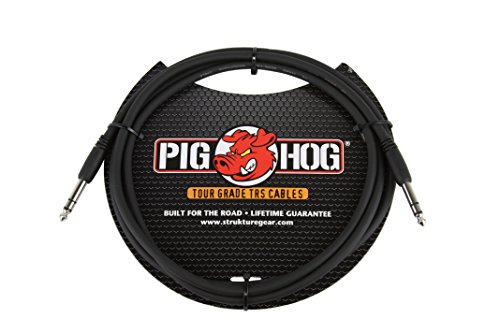
Choose this if you need a balanced 1/4″ TRS connection in a compact 6-foot length. Pig Hog cables emphasize a rugged rubber outer covering and balanced TRS 1/4″-1/4″ connectors to minimize interference. It’s a straightforward option for live setups or studio work where a shorter, dependable run is ideal.
Best for: Musicians who prefer a straightforward, reliable cable without extra features, and for stage players needing a durable short-length option.
Limitation: The 6-foot length may be too short for some pedalboard layouts or larger stages; longer options exist if you need more reach.
Pig Hog PTRS15 High Performance 15 Feet

Best for long signal runs and stage setups where reach matters. The 15-foot length accommodates larger stages, multiple monitors, or distance to amplifiers without sacrificing signal integrity. Like the 6-foot version, this cable uses balanced TRS connectors and a durable outer jacket to resist wear and EMI.
Who it’s for: Players who need extra length to connect guitars or keyboards to amps or DI boxes while maintaining clean signal transmission.
Limitation: Longer runs can introduce potential minor signal loss if the cable isn’t paired with properly shielded gear; testing your specific setup is advised.
Cable Matters 2-Pack 1/4 Inch TS to TS Cable

Best for players focusing on mono signal paths, such as guitar-to-amp or pedal board connections where a TS to TS cable suffices. This two-pack features a straightforward PVC jacket with gold-plated connectors for reliable signal transmission, along with braid shielding for EMI reduction.
Who it’s for: Beginners or musicians who want a reliable, budget-friendly option for standard guitar-to-amp setups.
Limitation: This is a TS cable, not TRS; it won’t carry balanced stereo signals, which matter for certain rigs or advanced pedal chains.
Buying Guide: Key Considerations for TRS Cables
- Signal type: Decide between balanced TRS for stereo or mono TRS vs. TS for typical guitar-to-amp connections. Use TRS if your gear supports stereo or balanced lines to reduce noise.
- Conductor and shielding: Look for OFC copper conductors and multi-layer shielding to minimize hum and EMI. Gold-plated connectors add corrosion resistance and better contact quality over time.
- Durability: A tough outer jacket (nylon braid, TPE, or rubber) and solid connector housings extend life in live settings or busy studios. For performers who move around, right-angle or angled connectors can reduce strain.
- Length and handling: Choose length that avoids excessive coil, tangling, or tripping hazards. For stage use, shorter cables reduce signal loss risks; for studios or large rooms, longer runs may be necessary.
- Price vs. value: A higher-quality shield and connector build often justify a higher price through longer life and more reliable performance in demanding environments.
FAQ
- What is the difference between TRS and TS cables?
TRS cables carry balanced or stereo signals, while TS cables carry unbalanced mono signals. Choose TRS when your gear supports stereo or noise-sensitive connections.
- Why is shielding important in guitar cables?
Shielding reduces electromagnetic interference, hum, and buzz, helping preserve signal integrity in noisy environments such as stages or crowded studios.
- Should I choose a longer TRS cable for live performance?
Longer cables offer flexibility, but can introduce more potential signal loss. Pair with proper shielding and keep runs reasonably short if possible to minimize loss.
- Are gold-plated connectors worth it?
Gold-plating resists corrosion and can improve contact reliability over time, especially in frequent plug/unplug scenarios.
- What should I consider when selecting a right-angled connector?
Right-angled connectors reduce strain on the plug and improve cable management on crowded pedalboards or tight amp cavities.
- Can I use a non-balanced cable with a studio monitor or keyboard?
Yes, but balanced TRS cables minimize noise, which is beneficial for studio-quality playback and recording.