Best True Bone Conduction Headphones for Active Lifestyles
Discovering the right bone conduction headphones depends on your activity and priorities. This guide highlights five solid picks ideal for runners, cyclists, gym sessions, and outdoor workouts. Each product section explains who it’s best for, what makes it stand out, and a cautious note to consider before you buy. Whether you want ultra-light comfort, longer battery life, or the tightest open-ear awareness, these options are designed to keep you aware of your surroundings while delivering clear audio.
Summary table of chosen products:
| Product | Best For | Notable Benefit |
|---|---|---|
| SHOKZ OpenRun Pro 2 | Streamlined runners and gym enthusiasts | Dual drivers for balanced 3D audio |
| Yistao Gen 2 Open Ear Headphones | General open-ear comfort with fast pairing | Bluetooth 6.0 and upgraded silicone |
| PSIER Bone Conduction Headphones | Outdoor runners and cyclists | 60 ms low latency and IPX5 |
| DEMICEA True Wireless Bone Conduction Earphones | Long commutes and intense workouts | 60 hours with case, IP68 |
| Yistao True Bone Conduction Headphones | Audio detail with comfort focus | Tuned for open-ear clarity |
SHOKZ OpenRun Pro 2

Best for athletes who want extended workout audio with minimal weight and strong stability. The OpenRun Pro 2 combines dual drivers to deliver clear highs and balanced bass, enhancing motivation during runs or gym sessions. The open-ear design keeps ears free to monitor traffic and surroundings, improving safety during outdoor activities. The wraparound frame and Ni-Ti alloy memory wire support a secure, lightweight fit that stays in place through cardio intervals.
Who it’s for: runners, cyclists, and cross-training athletes who need long wear times and reliable water resistance. Why selected: it emphasizes safety with open-ear listening while providing robust audio performance for motivation and focus. Caution: not designed for swimming; moisture exposure is limited to sweat and rain.
Yistao Gen 2 Open Ear Headphones

Best for users seeking a quick pairing experience and strong audio tuning. This Gen 2 model upgrades to Bluetooth 6.0 with an Ultra-Fast Instant Link chip for faster connections and a notably improved pairing process. The redesigned silicone ear-contact surface provides a softer touch and reduced wearing pressure, making it comfortable for longer sessions. ToneTerra and SonicBoost 2.0 technologies aim to preserve mid-range clarity while delivering fuller bass and detailed highs.
Who it’s for: everyday listeners who value comfort and faster setup for daily workouts or commutes. Why selected: advances in materials and connectivity create a simpler, smoother user experience. Caution: ensure proper fit for smaller ears to avoid slippage during intense movements.
PSIER Bone Conduction Headphones

Best for outdoor athletes who need reliable waterproofing and consistent audio during runs and rides. PSIER uses a next-gen bone conduction approach with an enclosed cavity to reduce leakage by up to 50%, preserving situational awareness. The 13 mm oscillator driver delivers balanced sound with crisp highs and audible mids, suitable for fast-paced workouts. The 5.0 or higher IP rating helps protect against splashes and sweat.
Who it’s for: runners and cyclists who prioritize safety and reliability in variable weather. Why selected: it balances powerful audio with environmental awareness. Caution: note the IP rating as it’s not intended for swimming or submersion.
DEMICEA True Wireless Bone Conduction Earphones
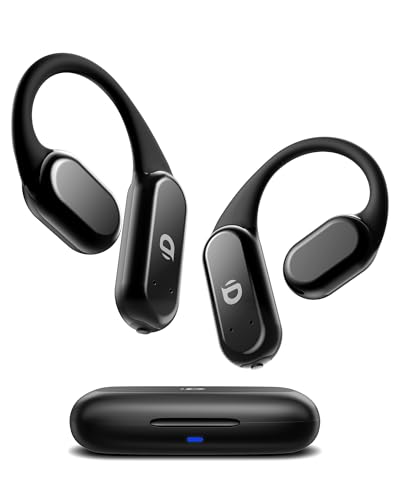
Best for long daily wear with high battery life and rugged durability. These open-ear headphones feature a true bone conduction design with Tone Terra and Sonic Boost to maximize realism and space efficiency. Weighing only 0.28 oz per earbud, the lightweight titanium alloy frame and soft silicone ensure comfort during extended wear. The claimed 60 hours of playback with the charging case makes them a strong choice for multi-day workouts or commutes. Quick-charge provides meaningful playback in short bursts.
Who it’s for: commuters and active users who want extended listening without frequent recharges. Why selected: a combination of ultra-light comfort and long battery life supports long sessions. Caution: ensure a secure fit to prevent feel of movement during high-pace activities; leakage control relies on proper seal architecture.
Buying Guide: Key Purchase Considerations
- Open-ear safety vs. immersion: Open-ear designs keep ears free, offering awareness of surroundings. If safety is paramount for outdoor workouts, prefer models emphasizing leak-proof, clear sound with ambient awareness.
- Battery life and charging: Look for headphones with long playback times and efficient charging. Cases that provide 40–60 hours extra playtime are beneficial for frequent travelers and long gym days.
- Weight and comfort: Ultra-light frames (under 0.3 oz per earbud) reduce fatigue during extended wear. Silicone contact surfaces and adjustable hooks improve stability during runs.
- Water and sweat resistance: IP ratings indicate protection levels. For outdoor use, IPX5–IPX7 models handle sweat and light rain; IP68 is more rugged for varied environments.
- Connectivity and latency: Bluetooth 5.x or 6.x with low latency is important for gaming-style responsiveness and watching media. Faster pairing enhances daily usability.
- Sound quality vs. safety trade-off: Bone conduction provides unique sound via cheekbones, but note that highs and bass can differ from traditional headphones. Look for models with ToneTerra, SonicBoost, or EQ modes for balanced listening.
FAQ
- What is bone conduction, and who benefits most?
Bone conduction transmits sound through cheekbones, keeping the ears open. It benefits outdoor enthusiasts, people who need to stay aware of surroundings, and those with canal sensitivities. - Are these headphones suitable for swimming?
Most bone conduction headphones in this set are not designed for swimming unless explicitly labeled water resistant to submersion; check IP rating and user guidance for water activities. - Will there be sound leakage with open-ear devices?
Some models use technologies to reduce leakage and improve privacy, but expect minor sound escape at higher volumes; settings like ToneTerra can help optimize output. - Is Bluetooth 6.0 worth it?
Bluetooth 6.0 can offer faster pairing and more stable connections, especially on newer devices. It’s advantageous but not essential if you mainly use basic streaming. - Which should I buy for running at dawn or dusk?
Choose models with secure fit, reflective design elements, and IP water resistance suitable for sweat and light rain. Quick pairing and long battery life are pluses for early workouts. - Do bone conduction headphones block outside noise?
They preserve ambient noise awareness, which improves safety outdoors, but users should still exercise caution in high-traffic areas.