
Best Tube Amp Bias Meter: Top Current Probe Tools for Precise Bias Readings
Get precise bias readings for your tube amps with these bias meter probes. This guide helps both hobbyists and technicians choose reliable bias current testers that work across common tubes like EL34, KT88, 6L6, and 6V6. Each top pick is best for a specific use case—whether you need universal compatibility, ease of use, or sturdy construction. A quick summary table follows to compare key attributes at a glance.
| Product | Best For | Key Benefit |
|---|---|---|
| Nobsound 8-Pin Dual Bias Current Probes Tester Meter (CT1-C) | Most versatile for multiple tubes | Wide compatibility, dual meters, robust build |
| Nobsound CT1-C (Cathode Current) | Hands-on technicians | Simple interface, durable copper/ceramic socket |
| AMPTATA M2 Amplifier Bias Tester (M2-EL34) | EL34 and common power tubes | Direct mA readings via multimeter |
| AMPTATA M2-300B Bias Tester | High-end power tubes | Specialized for 300B and similar tubes |
| Dual Bias Current Probes (KBWPCQMPKW / WNUXXXFXEM) | Budget-friendly, simple setups | Compact, no-power setup |
Nobsound 8-Pin Dual Bias Current Probes Tester Meter

The CT1-BOX bias tester offers dual current meters for easy, parallel readings. It targets a broad set of power tubes including EL34, KT88, 6L6, 6V6, 5881, 6550, KT66, KT100, KT120, and 7027. This makes it a strong choice for studios and hobbyists who rebuild or calibrate varied amplifiers. The ceramic socket with gold-plated pins enhances longevity and ensures reliable signal integrity during bias checks. With a maximum test current of up to 100 mA, users gain a clear, stable bias reading for adjustments.
Who this is best for: audio technicians and DIY enthusiasts who work with multiple tube amp configurations. Why selected: broad tube compatibility and durable construction support regular bias work across different rigs.
Caution: ensure proper probe insertion and secure connections to avoid intermittent readings or arcing at higher current settings.
Nobsound Vacuum Tube Amp Amplifier Plate Bias Current Probe Tester (CT1-C)
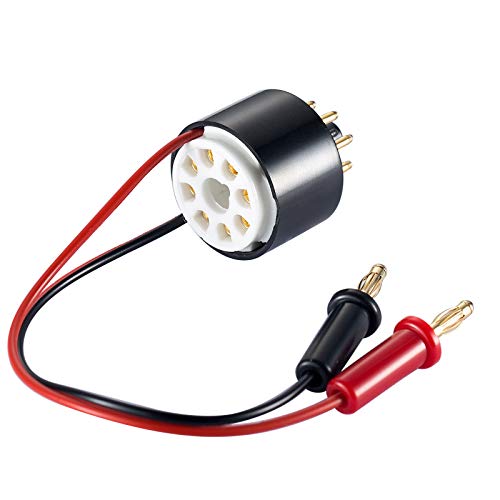
This CT1-P unit focuses on cathode current measurements for a wide range of tubes such as EL34, KT88, 6L6, 6V6, 5881, 6550, KT66, KT100, KT120, and 7027. It emphasizes a simple setup: insert the probe, connect the multimeter, then read the bias in milliamps. Built with copper body construction and a ceramic socket with gold pins, it’s designed for consistent performance and flexibility with test cables up to 23 cm. It’s a practical pick for smaller shops and hobbyists who value straightforward operation.
Who this is best for: technicians who prioritize quick, repeatable bias checks without a complicated workflow. Why selected: simple, direct readings with durable materials for reliable use over time.
Caution: limited accessory length may restrict testing setups with larger chassis or distant test points.
AMPTATA M2 Amplifier Bias Cathode Current Tester (M2-EL34)

This M2-EL34 model is designed to measure cathode current for a range of power tubes, including EL34, KT88, 6L6, 6V6, 5881, 6550, KT66, KT100, and KT120. It provides bias readings via the tube’s mA current, captured through the low-voltage side of the circuit. The simplicity of its multimeter integration makes it a practical choice for technicians who prefer a direct, no-fuss approach to bias checks. It’s compact enough for fieldwork and bench setups alike.
Who this is best for: technicians focusing on common power tubes and EL34-based amps. Why selected: broad compatibility with a simple measurement method.
Caution: verify that the low-voltage side access aligns with your amp’s bias network to avoid misreads.
AMPTATA M2-300B Amplifier Bias Tester

The M2-300B version targets high-end tubes such as 300B, 2A3, 101D, 102D, VT25, VT52, 275A, and other similar power tubes. It measures the cathode current to provide bias readings in milliamps, enabling precise adjustments for classic or boutique amplifiers. The tool’s design emphasizes compatibility with multiple tube types and reliable signal delivery through a copper body and ceramic socket assembly. It suits studios and collectors who frequently work with premium tubes.
Who this is best for: audiophiles and technicians tuning classic or boutique power tubes. Why selected: specialized support for 300B and similar tubes with straightforward readings.
Caution: advanced users should confirm exact tube type compatibility to avoid mismatched bias expectations.
Dual Bias Current Probes Tester Meter (KBWPCQMPKW)

This dual-probe setup is a compact option for EL34, KT88, 6L6, 6V6, and 6550 tube amps. It emphasizes simple ammeter readings per channel, with a focus on non-powered operation. It’s well-suited for users who want a lightweight, quick-check solution without extra wiring complexity. The tool’s dual-channel design aids in parallel bias checks, which can speed up calibration across channels in stereo or push-pull configurations.
Who this is best for: budget-conscious technicians and hobbyists seeking a two-channel bias probe solution. Why selected: straightforward dual-channel readings with minimal setup.
Caution: ensure both channels are properly matched to avoid skewed cross-channel comparisons.
Dual Bias Current Probes Tester Meter (WNUXXXFXEM)
Another budget-friendly dual-probe option, this unit focuses on simplicity and portability for EL34, KT88, 6L6, 6V6, and related tubes. It offers an easy setup and compact form factor, which makes it a practical choice for field technicians and hobbyists who prioritize portability and quick checks. It’s best used for quick baselines or routine maintenance rather than in-depth diagnostic campaigns.
Who this is best for: on-the-go technicians and starter setups. Why selected: lightweight, no-frills bias checking with dual channels.
Caution: limited features may require supplementary tools for complex bias analyses.
Buying Guide: How to Choose a Tube Amp Bias Meter
- What tubes will you test most often? If you work with EL34, KT88, 6L6, and 6V6, look for universal probes with broad compatibility (CT1-C, CT1-P).
- How many channels do you need? Dual-channel meters speed up multi-tube or stereo amp bias checks but may add cost.
- What build quality matters to you? Ceramic sockets with gold-plated pins improve longevity and contact reliability in dusty or humid environments.
- Is ease of use a priority? Simple plug-and-read interfaces reduce setup time for hobbyists and service technicians alike.
- Do you require portability? Compact designs are ideal for fieldwork; ensure the probe length and cable length fit your workflow.
- How will you verify accuracy? Seek meters with clear milliamps readings and low-noise signal paths to minimize reading errors.
- What is your budget? Budget options exist, but prioritize build quality and compatibility for long-term value.
FAQ
- What is a bias meter used for in tube amplifiers? It measures the cathode current to help adjust tube bias for optimal performance and longevity.
- Can I use any meter with a standard multimeter? Some bias probes are designed to work with existing multimeters, but ensure the probe type matches your multimeter’s input.
- Are dual-channel probes worth it? Yes, they allow simultaneous bias checks on two tubes, which can save time in balanced or stereo configurations.
- Do bias meters require calibration? Most meters rely on factory-built accuracy; if you notice inconsistent readings, verify connections and probe integrity before recalibration considerations.
- What safety considerations exist when bias testing? Always power down and discharge capacitors before connecting probes to avoid shock and equipment damage.
- Which option is best for beginners? A simple, easy-to-use CT1-P or similar unit with clear instructions is ideal for newcomers.