
Best Tweed Amps With Reverb for Classic Fender Tones
Looking for a classic tweed amp with built-in reverb that delivers authentic vintage vibes and reliable performance? These five models represent solid options for players who want the Tweed aesthetic plus spring or analog reverb for spacious, bell-like echoes. They’re well-suited for players ranging from home hobbyists to gigging musicians seeking warm clean tones and lush overdriven sounds.
Below is a quick summary of the selected products to help you compare at a glance. The table lists each model and its standout strengths without pricing or warranties, so you can quickly decide which amps to explore further.
| Product | Best For | Why It Stands Out |
|---|---|---|
| Fender Blues Deluxe Reissue, Tweed | Classic blues and clean-toned players | 40W with premium reverb and a midrange-voiced speaker for stage presence. |
| Fender Blues Junior Guitar Amplifier, Lacquered Tweed | Portable gigging players | Warm tube tone with built-in spring reverb and a FAT option for thicker voices. |
| Fender ’65 Princeton Reverb, Tweed | Studio and small-venue players | 1×12″ tube amp with reverb and tremolo in a compact format. |
| Peavey Classic Series 30 II, Tweed | Budget-conscious tweed lovers | Spring reverb, classic tweed covering, and versatile two-channel preamp. |
| Fender ’65 Twin Reverb, Tweed/Oxblood Grille | Loud clean headroom with lush reverb | Two 12″ speakers and traditional reverb in a tweed-era shell. |
Fender Blues Deluxe Reissue, Tweed

The Blues Deluxe Reissue is a 40-watt tube combo featuring classic Fender clean and overdriven tones, served by a 1×12″ Eminence speaker with enhanced midrange that helps sustain through dense mixes. This model is best for players who want dependable Fender personality in a traditional tweed cabinet, with a robust reverb that sustains long echo tails in blues and rock settings.
Best for: Players seeking bold stage presence with rich reverb and strong midrange projection. Why selected: It pairs a familiar Fender voicing with a tweed aesthetic and a dedicated, room-filling reverb tail.
Caution: The robust power and cabinet size may be less ideal for ultra-light portable setups or very small rooms where significant loudness isn’t needed.
Fender Blues Junior Guitar Amplifier, Lacquered Tweed

The Blues Junior is a compact 15-watt tube amp with EL84 power tubes and 12AX7 preamp tubes, designed for warm blues tones and studio scenarios. It includes an on-board spring reverb for expansive echo effects and a foot switchable FAT option to add thicker tones. It’s a strong choice for players prioritizing portability, feel, and a classic tweed look with a practical reverb shelf.
Best for: Individuals prioritizing portability with authentic tube feel and reverb in a small footprint. Why selected: It delivers the quintessential tweed vibe in a travel-friendly package and includes signature Fender reverb for a roomy sound stage.
Caution: At 15 watts, it’s best suited for practice rooms or small venues; louder gigs may require a larger amp or an additional PA stage system.
Fender ’65 Princeton Reverb, Tweed

The ’65 Princeton Reverb is a 12-watt tube combo with reverb and tremolo housed in lacquered tweed. It’s ideal for studio work or small stages where a crisp, intimate tone with shimmering tremolo is desired. The single 12″ speaker enhances midrange clarity, enabling clear chord definition with reverb that sits well in a mix.
Best for: Players seeking a compact, studio-friendly tweed amp with classic tremolo and reverb. Why selected: Its size and voice deliver a truly American vintage vibe perfect for nuanced blues, jazz, and light rock textures.
Caution: Lower wattage means limited headroom in loud live environments; it shines best in controlled spaces or with mic’ing for larger venues.
Fender ’65 Twin Reverb, Tweed/Oxblood Grille
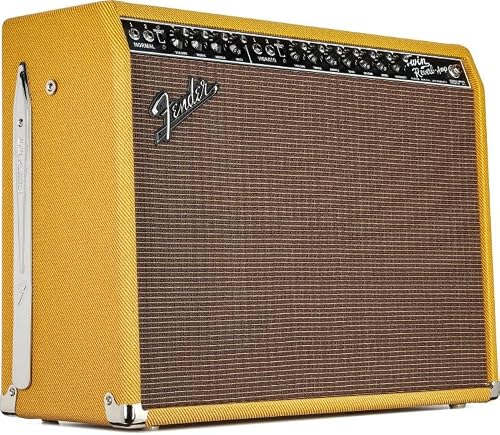
The ’65 Twin Reverb offers a larger 2×12″ speaker setup with reverb in a tweed-themed shell. It’s designed for players seeking substantial headroom, shimmering clean tones, and studio-like depth on stage. The model is better for players who want a wider soundstage and the power to carry a band mix without sacrificing the classic tweed aesthetic.
Best for: Musicians needing loud, clean headroom with classic Fender reverb in a tweed package. Why selected: It combines iconic tone with substantial output and a traditional look that complements vintage gear collections.
Caution: This model is heavier and bulkier; consider transport needs and venue accommodations before purchase.
Fender Tone Master Deluxe Reverb, Blonde

While not tweed in finish, the Tone Master Deluxe Reverb uses advanced digital modeling to reproduce the Deluxe Reverb’s circuitry and headroom with a modern 22-Watt digital power stage. It includes a Jensen n-12k neodymium speaker for efficiency and dynamic range. This model is a high-fidelity option for players who want the classic Deluxe Reverb vibe in a reliable, lighter rig with modern conveniences.
Best for: Technically minded players and venues needing consistent performance with a lighter footprint. Why selected: It preserves the famous sound while offering digital reliability and manageable weight.
Caution: It’s not a traditional tube-driven amp; purists seeking all-tube reverb may prefer older tweed tube models above.
Buying Guide
What to consider when choosing a tweed amp with reverb
Power and room size matter. Larger venues benefit from higher wattage (40W and up) for clean headroom; smaller rooms may prefer 12-15W amps for controllable volume. Reverb type matters too; spring reverb delivers classic, tactile echo tails that pair well with blues and rock. If you plan to record, consider speaker choice and cabinet construction to shape your tone before mic’ing.
Finish, aesthetics, and compatibility
Tweed finishes evoke vintage aesthetics and can influence stage presence and visual appeal. If you value portability, compact models with robust reverb can be more practical. For those who gig with a band, amps with solid-state modeling or bigger cabinets may offer more reliable performance in variable environments.
Wattage, speakers, and tonal goals
Different speaker configurations sculpt high-end clarity and midrange. A 12″ speaker is common for Princeton and Blues Junior, while 2×12″ setups on larger models provide more spread and headroom. Consider your preferred genre: blues and jazz players often lean toward clean headroom and warm overdrive; rock players may favor more pronounced midrange and punch from tweed cabinets.
Durability and maintenance
Classic tweed amps are built to last but rely on tube health and cabinet integrity. If you perform frequently, evaluate weight, portability, and serviceability. Models with built-in reverb reduce the need for external effects, simplifying live rigs.
Connectivity and expansion
Some amps offer external speaker capability or effects loops. If you require stage versatility or recording flexibility, look for models with flexible inputs, outputs, and robust reverb routing options.
FAQ
- Do tweed amps with reverb sound different from modern blackface or silverface amps?
Yes. Tweed-era amps typically emphasize a warmer midrange, a more compressed response, and a characterful breakup, while other eras may provide broader headroom and different EQ emphases. - Is a larger wattage always better for gigs?
Not necessarily. For smaller venues, 15-40W can be ideal, but for very loud stages, a larger headroom option or a powered extension may help. - Should I choose a tube or digital model?
Tube amps deliver traditional dynamics and touch response; digital or modeling amps aim for consistency and tonal versatility with lighter weight. - Are tweed amps hard to maintain?
Maintaining tubes, transformers, and reverb tanks requires periodic checks, but standard service is straightforward for most guitar techs. - Which amp is best for blues and jazz players?
Models with strong clean headroom and rich spring reverb, like the Blues Deluxe or Princeton Reverb, are popular choices for nuanced blues and light jazz tones.