
Best Two Channel Wireless Headphones for Car, TV, and Home
Two-channel wireless headphones let two viewers listen simultaneously without interfering with each other. This guide focuses on reliable IR or RF models that support dual channels, work with car rear-seat systems or home TV setups, and avoid Bluetooth when not needed. The top picks below suit families, couples, and travelers who want independent volume control and clear dialogue. A quick buying table follows to compare key details at a glance.
| Product | Channel Type | Best For | Notes |
|---|---|---|---|
| RP Accessories IR-601B | 2-Channel IR | Families with multiple screens in a car | Simple, easy pairing with rear entertainment systems |
| Avantree Duet | Dual Wireless (not direct TV to headphones) | Couples or relatives sharing a TV | Independent volume per user |
| Avantree HT41899 | Dual Bluetooth / Transmitter | Smart TVs and two viewers | Versatile with multiple connections |
| SIMOLIO Dual Wireless Headphones (IR) | 2-Channel IR | Home theater or car rear seats | Tone control and independent volume |
| SIMOLIO 2 Pack Wireless Car Headphones (IR) | 2-Channel IR | Two kids or watchers in a car | Not Bluetooth; strong for car DVD systems |
RP Accessories IR-601B Infrared Wireless Headphones
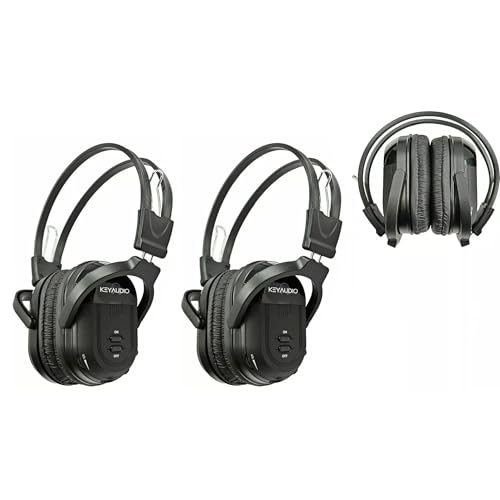
Best for: Families with multiple rear-seat screens. These 2-channel IR headphones pair with common car TV/DVD transmitters for backseat viewing. They are designed for seamless adoption with minimal setup and provide two distinct channels to avoid cross-watching disputes.
Why selected: The model emphasizes easy listening and family-friendly use, making it a practical choice for long trips. The dual-channel feature helps separate content on two monitors without interference.
Caution: Infrared requires a direct line of sight to the transmitter; obstructed seating can reduce performance.
Avantree Duet – Dual Wireless Headphones for TV Watching

Best for: Couples or two viewers who want to watch TV at different volumes without impacting others. The Duet system provides independent volume control for each listener and a shared transmitter base.
Why selected: It supports shared TV watching with clear dialogue through voice clarity features. It’s a flexible option for people who use a standard TV setup with an external transmitter.
Caution: Not a direct Bluetooth TV connection; check that your TV has an appropriate output (optical or AUX) for the included transmitter.
Avantree HT41899 – Dual Wireless TV Headphones with Transmitter

Best for: Viewers with modern TVs that support multiple connection options. The HT41899 works with optical, AUX, or Bluetooth-enabled TVs. It can function directly via Bluetooth on some Smart TVs, or through the included transmitter when needed.
Why selected: It adapts to a wide range of TV outputs, making it a versatile choice for households with different TV models. The ability to use Bluetooth directly on some smart TVs expands compatibility.
Caution: If using with a non-Bluetooth TV, ensure you pair via the transmitter and verify your TV’s output options beforehand.
SIMOLIO Dual Wireless Headphones for TV (IR)

Best for: Home theater or car rear-entertainment where independent listening matters. These infrared headsets provide two-channel options with tone control and independent volume.
Why selected: Tone control helps tailor treble, normal, or bass to suit different listening preferences, while each headset can be adjusted without affecting the other.
Caution: Infrared range and line-of-sight requirements apply; obstacles can impact performance.
SIMOLIO 2 Pack Wireless Car Headphones (IR)

Best for: Families with multiple riders in a single vehicle. The 2-pack offers two independent channels for two occupants to watch different programs.
Why selected: These IR headphones are designed for universal rear entertainment systems in cars, making set up quick and simple for road trips.
Caution: Not Bluetooth; ensure your car’s DVD/IR system supports the included or compatible transmitter for best performance.
Buying Guide
What to consider when choosing two-channel wireless headphones for cars, TVs, or home theater
- Connection type: Infrared (IR) works best with line-of-sight to the transmitter; Bluetooth or RF options can offer more flexibility but require compatible devices.
- Channel separation: Look for models that clearly label 2-channel operation to prevent cross-talk when two viewers watch different programs.
- TV or system compatibility: Check outputs (optical, AUX, RCA) or whether the device uses an external transmitter. Some TVs require Bluetooth pairing only, while others need a separate base transmitter.
- Independent volume and tone control: Choose products that allow each user to adjust volume and, if available, tone (treble/bass) without affecting the other listener.
- Range and line of sight: IR systems depend on proximity and unobstructed sightlines. RF/Bluetooth may offer more forgiving ranges, especially in cars or large rooms.
- Comfort and wear: If used for long rides or extended TV sessions, select models with cushioned earpads and a lightweight build.
FAQ
- What is the difference between IR and Bluetooth wireless headphones?
IR headphones use line-of-sight to a transmitter, good for dedicated setups like cars and home theaters. Bluetooth headphones connect directly to some TVs or use a transmitter, offering more flexibility in some environments. - Can two people watch different programs with these headphones?
Yes, many two-channel IR or dual-headphone systems provide separate channels or independent volume control, enabling different content per listener. - Do I need a special transmitter for all these headphones?
Most IR models need a compatible IR transmitter. Some Bluetooth-enabled sets require a TV with Bluetooth or a transmitter base, depending on the product. - Are these headphones suitable for kids?
Yes, several options emphasize easy operation and comfortable design suitable for children, but always supervise use and manage volume levels. - What should I check before buying for car use?
Verify that the car’s rear entertainment system supports IR or the included transmitter, check the number of channels, and ensure seating alignment does not block the signal. - What is the typical range for IR headsets?
IR range often varies by model but typically reaches around 40–60 feet in open space; obstacles reduce the effective distance.